Caravaggio
The man who dragged painting out of the heavens and into a dim Roman tavern.
Style and technique
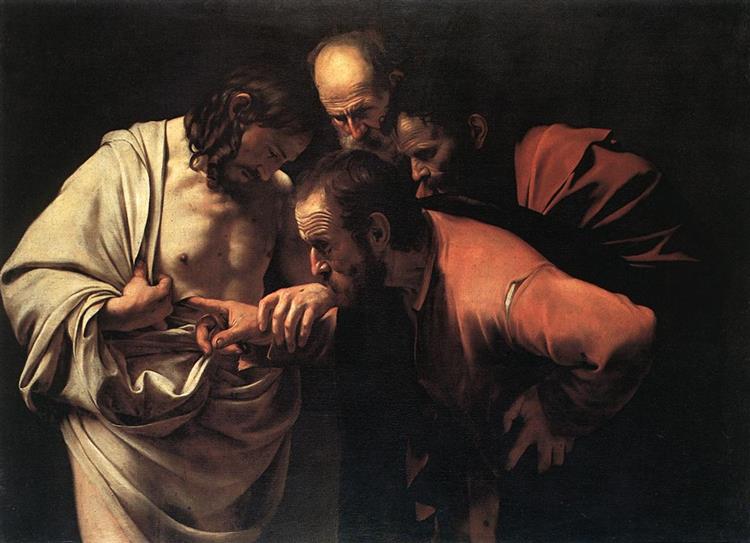
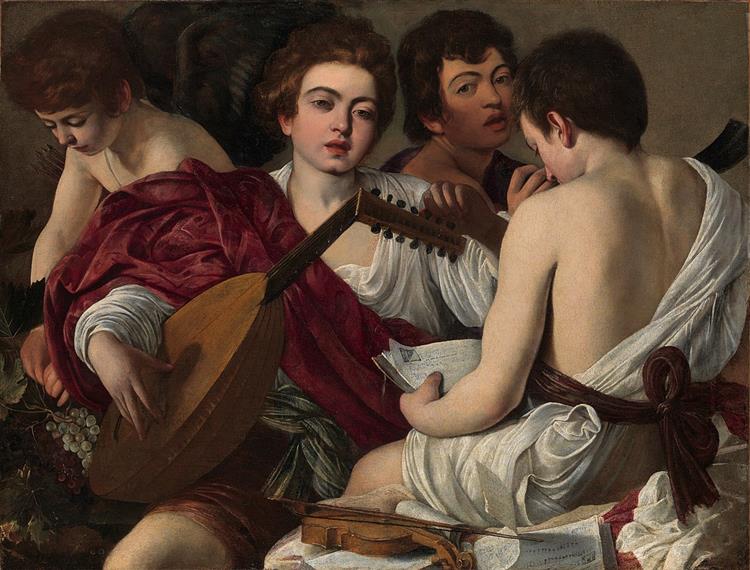
Caravaggio painted with a fierce, almost rude honesty that broke nearly every rule of his time. Where most painters of the late 1500s built scenes through soft shadows and graceful idealisation, he plunged his figures into total darkness and lit them with one violent shaft of light. This is tenebrism — Italian for 'darkness' — and Caravaggio is its inventor.
The trick is simple but radical. The effect feels like a photograph taken in a cellar with a single bulb. It still feels modern today, four hundred years later.
He also worked from life, with no preliminary drawings. That was almost unheard of around 1600. Renaissance painters trained for years to compose figures from memory and imagination; Caravaggio hired the prostitute who lived next door, told her to hold the dagger, and painted what he saw. His Madonnas had dirty feet. His apostles had calloused hands. Critics called it vulgar. Patrons called it electrifying — and paid.
Look closely at any Caravaggio and four fingerprints appear straight away.
One light source. The light comes from one specific point, often outside the frame. It enters at a sharp angle and creates hard, theatrical shadows — there is rarely a second light.
The drama is in the hands. Pointing, clutching, grabbing, reaching. Gestures carry the meaning, not the faces.
Real bodies. The faces are drawn from real Roman street life — working models, beggars, courtesans — not classical types. You can almost smell the breath.
The exact heartbeat. He always paints the climax. Not the moment before or after, but the precise instant: the second Judith's blade slices the neck, the breath before Goliath's eyes glaze over.
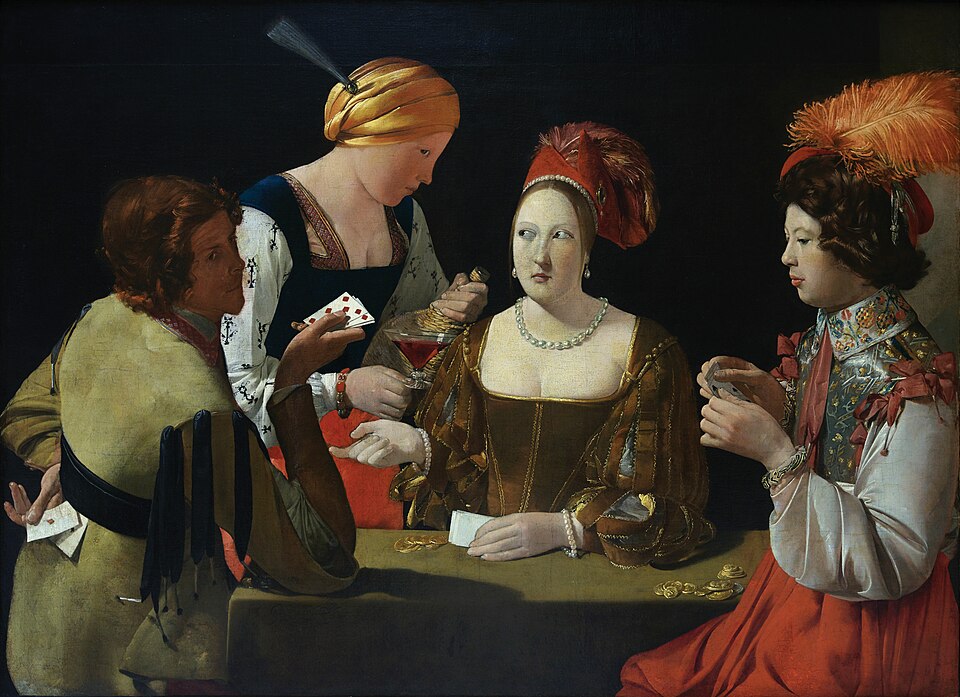
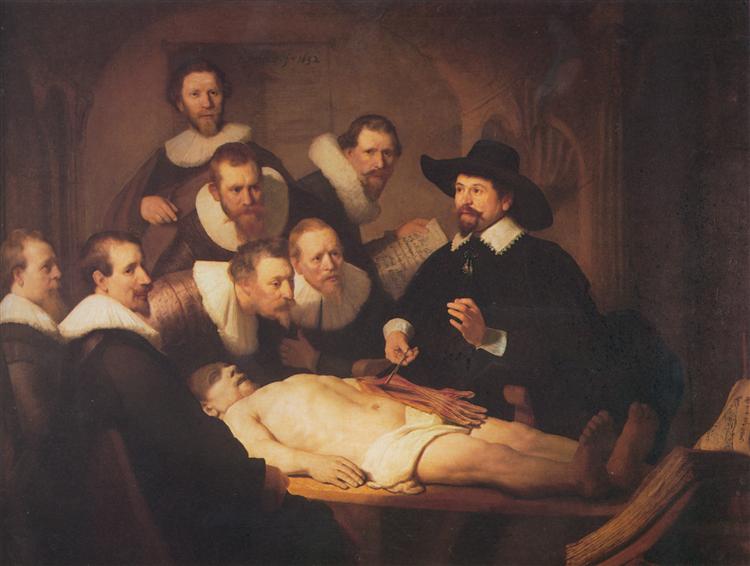
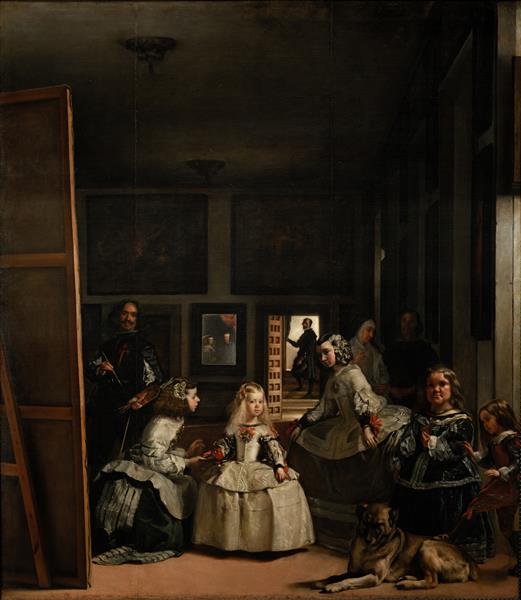
He never opened a workshop, and he had no formal pupils. Yet his influence ran like a fuse across Europe. Within a decade, painters in Naples, Utrecht, Madrid and Lorraine were all working in his manner. Rembrandt pushed his tenebrism into psychology. Georges de La Tour distilled it down to a single candle flame. Velázquez absorbed his looseness. The whole way Western painting handles light shifted because of one short-tempered Lombard who could barely keep out of jail.
Life and legacy
He was born Michelangelo Merisi in or near Milan on 29 September 1571. The 'Caravaggio' that became his calling card was simply the small Lombard town his family came from. His father, a master mason, died in the plague that swept Milan when the boy was six. His mother followed when he was nineteen, leaving him with a small inheritance and no real adult supervision.
He trained in Milan under Simone Peterzano, a former pupil of Titian, and absorbed the loose Lombard tradition of painting straight from nature. By around 1592 he had spent his inheritance and arrived in Rome with nothing — broke, talented, already brawling. For three years he scraped by painting flowers and fruit in the workshops of more established masters. He slept in a hospital ward and ate stale bread when his break finally came: Cardinal Francesco Maria Del Monte, a cultivated patron with a taste for ambiguous portraits of beautiful boys, took him into his palace.
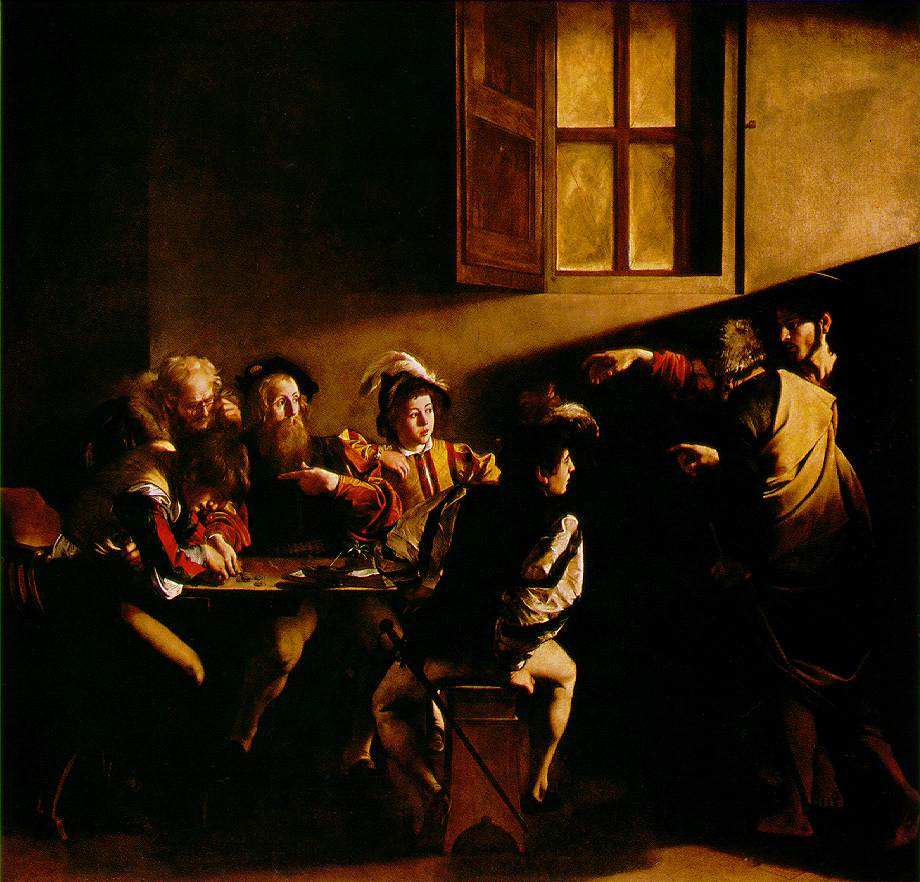
In Del Monte's protection he produced his earliest masterpieces — 'Boy with a Basket of Fruit', 'The Cardsharps', 'The Lute Player'. Word spread fast. In 1599 he was awarded the commission that changed his life: three large canvases for the Contarelli Chapel in San Luigi dei Francesi, the church of the French community in Rome. 'The Calling of Saint Matthew' was the centrepiece. When the chapel opened in 1600, Roman painters queued to see it. Nothing like it had ever been painted before, and you can still walk into that chapel today and stand in front of the same canvas, lit by the same window.
The next six years were Caravaggio's golden age — and also when his life began to come apart. He was a violent man. Court records show him constantly in trouble: a fight over a plate of artichokes, a slashed waiter's face, a libel suit, an assault on a notary. He carried a sword everywhere and refused to register it, which was illegal. The papal authorities tolerated him because he was the most sought-after painter in Rome.
Ranuccio Tomassoni died in a sword fight on a tennis court near the Campo Marzio. Some sources call it a wager over the match; recent research suggests it was a duel over a Roman courtesan named Fillide Melandroni — the same woman who had modelled for his Judith. Caravaggio took a cut to the head; Tomassoni took a cut to the femoral artery and bled to death.
The Pope put a price on his head. He fled south to Naples, where the Spanish viceroy protected him and he kept painting feverishly — the 'Seven Works of Mercy', the 'Flagellation of Christ'. From Naples he sailed to Malta, where the Knights of Saint John inducted him as a knight in 1608, only to expel him a few months later after another brawl. He escaped a Maltese prison and made his way to Sicily, then back to Naples.
By 1610 he was sick, scarred from a near-fatal attack outside a Naples tavern, and desperate for the papal pardon his powerful patrons in Rome were finally arranging. He boarded a small boat with three of his last paintings as gifts for the Pope's nephew. The boat docked briefly at Palo, a port north of Rome, where Caravaggio was arrested by mistake. By the time he was released, the boat had sailed without him — taking the paintings with it. He walked along the malarial coast of Tuscany trying to find them and collapsed at Porto Ercole. He died there on 18 July 1610, aged 38. His body was never identified.
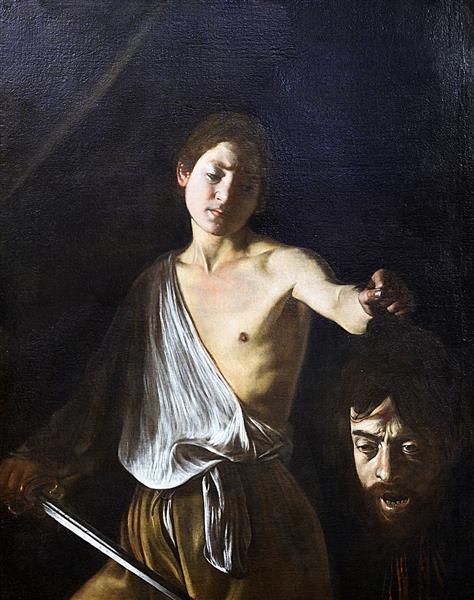
His final canvases are the most haunting things he made. 'David with the Head of Goliath', painted in those last weeks, shows the giant's severed head as his own self-portrait — a confession, a plea, a man holding his own head in his hands.
Five famous paintings
The Calling of Saint Matthew 1600
Saint Matthew, before his calling, was Levi the tax collector. Caravaggio paints him as exactly that: a middle-aged man counting coins at a table in a shabby Roman tavern, surrounded by sharp-dressed thugs and a bored kid. Christ enters from the right, half-cut by the frame, and points across the gloom. A diagonal shaft of light follows his finger. Matthew, caught mid-tally, looks up and points to himself — 'Me?'. The single beam of light does all the theology. There is no halo, no angel, no choir. Just dust in a dirty room and a man being summoned. The painting was placed in the Contarelli Chapel in 1600 and has never moved. You can still stand in front of it today for the price of a euro coin in the candle-meter.
Judith Beheading Holofernes 1599
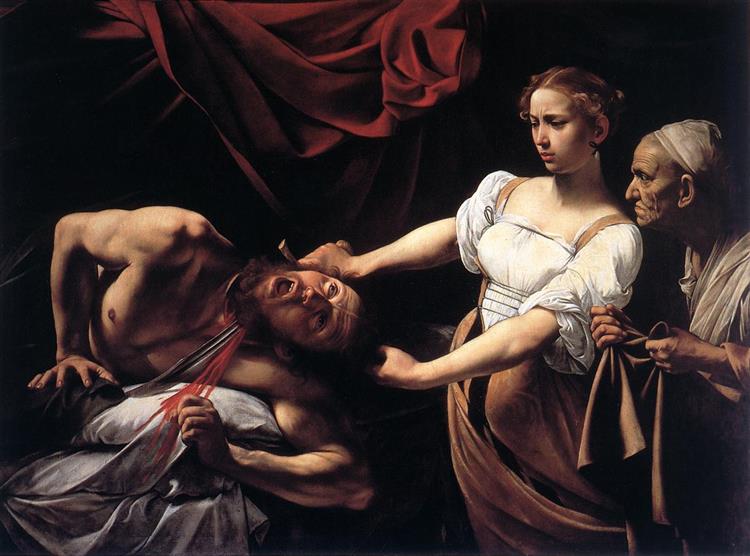
Judith, the biblical heroine who saves her people by seducing and decapitating an enemy general, was painted dozens of times in the late Renaissance. Most versions are politely allegorical. Caravaggio paints the actual cut. Holofernes is mid-scream, eyes rolled back, blood arcing across the white sheet. Judith herself is the shock — she is young, almost prim, leaning back as if afraid the blood will spatter her dress. Her old maid stands beside her, lips pressed tight, ready with the cloth. The model for Judith was Fillide Melandroni, a Roman courtesan Caravaggio knew well. The same woman, possibly, that the duel with Tomassoni would later be fought over.
Conversion on the Way to Damascus 1601
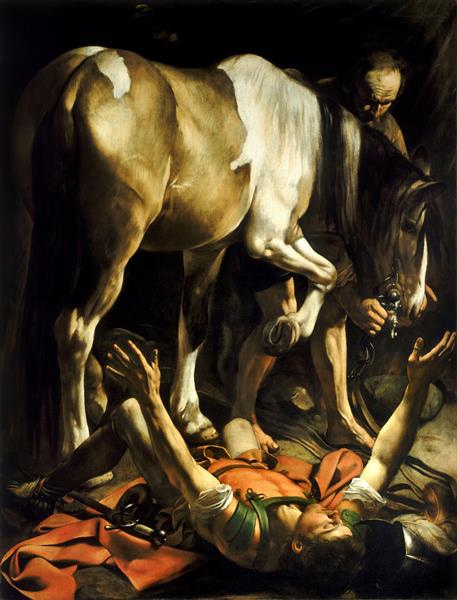
Saul, a young persecutor of Christians, is on the road to Damascus when a divine light strikes him from the sky. He falls from his horse, blinded, and rises a few minutes later as Saint Paul. Caravaggio's solution is breathtaking. The horse fills almost the entire canvas, calm as a shire-horse at a watering trough. Underneath it lies Saul, arms thrown wide, eyes shut, bathed in light. There is no Jesus, no angel, no clouds. The miracle is happening in absolute silence inside Saul's own skull, and Caravaggio paints exactly that: the horse barely notices its rider has fallen. It hangs in Santa Maria del Popolo in Rome, beside its companion piece on Saint Peter.
David with the Head of Goliath 1610
This is one of the last three paintings Caravaggio made, and it is the most autobiographical thing he ever did. Goliath's severed head — eyes still half-open, mouth slack — is a self-portrait. The face is Caravaggio's own, painted from a mirror in a dim room in Naples or on a Tuscan beach in his final weeks. The young David looks down at the head with an unreadable expression: not triumph, not relief, almost pity. The painting was sent to Cardinal Scipione Borghese in Rome, the man helping Caravaggio negotiate his pardon for the Tomassoni murder. It is at once a gift, a confession, and a request: 'I have already been beheaded. Please let me come home.' The pardon was granted three days too late.