Artemisia Gentileschi's Judith: the one where the women do the work
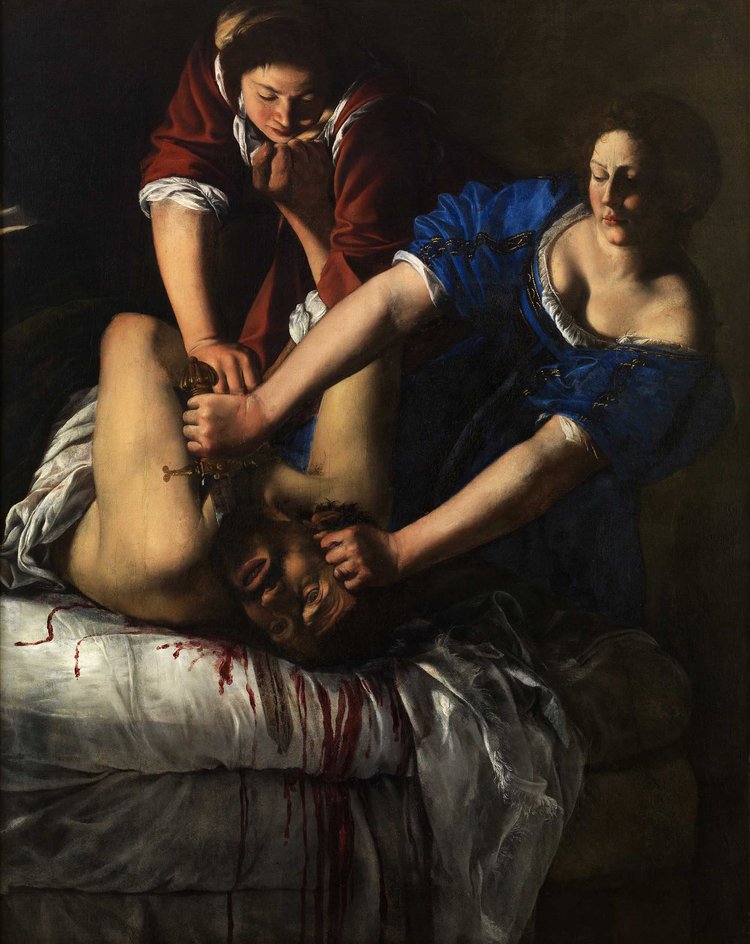
Every painter in Rome painted this story. Only one of them noticed that beheading a man takes two people, both hands and a braced stance.
The subject was a standard commission. Judith, a widow in a besieged city, gets the enemy general drunk and cuts off his head. Caravaggio painted it. Botticelli painted it. Klimt painted it three centuries later as a woman in gold with half-closed eyes. Artemisia Gentileschi painted it as work.
The three tells
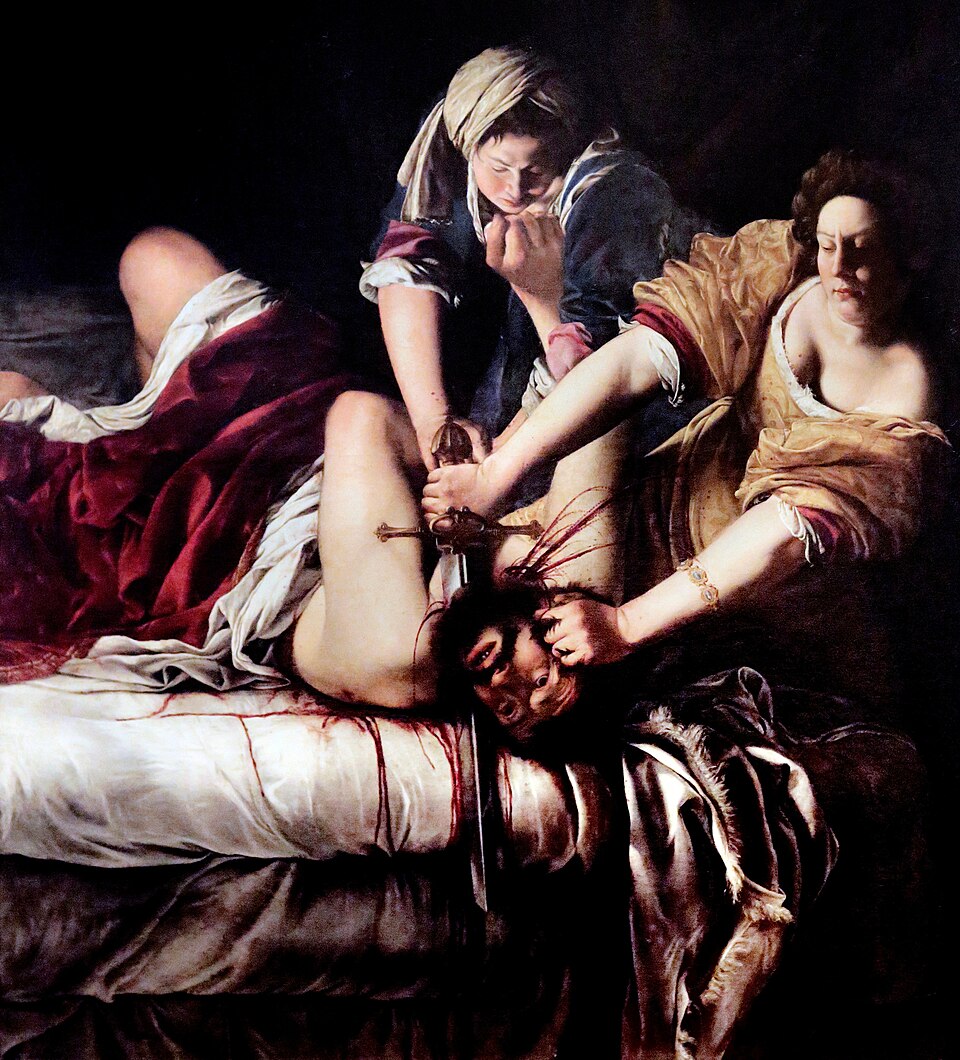
Look first at who is doing what. In almost every other version the maidservant is an old woman standing off to one side with a sack, waiting to be handed the head. Here she is in the middle of the canvas with her whole weight on Holofernes' chest, pinning him down. Second, look at the arms: straight, locked, sleeves shoved back above the elbow, one hand twisting into his hair to hold the head still. These are not poses — they are the positions a body actually takes to apply force. Third, the blood. It leaves the neck in arcs and soaks into the mattress where it lands, instead of decorating the composition.
Other painters staged an execution. She painted the physics of one.
Why it looks like this
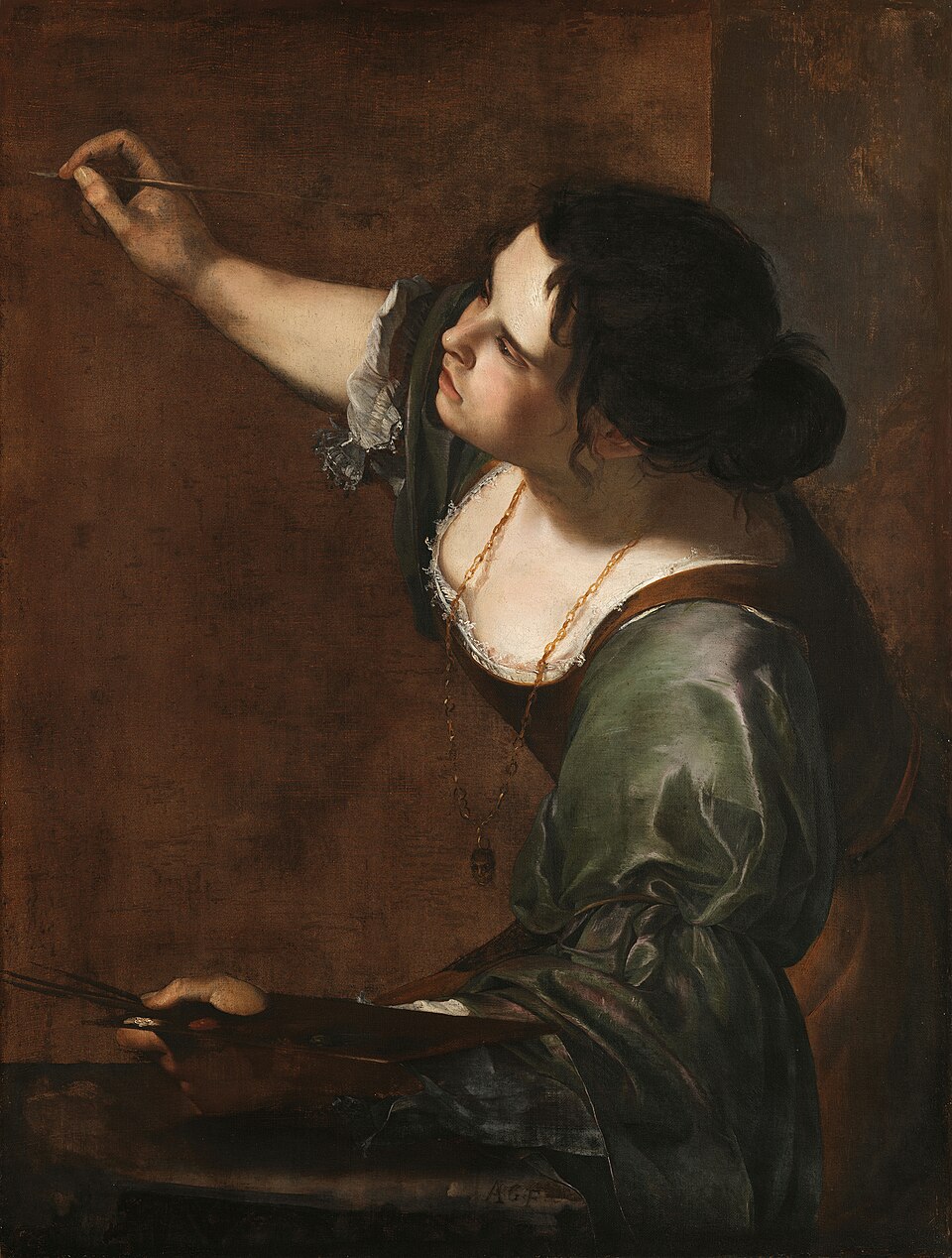
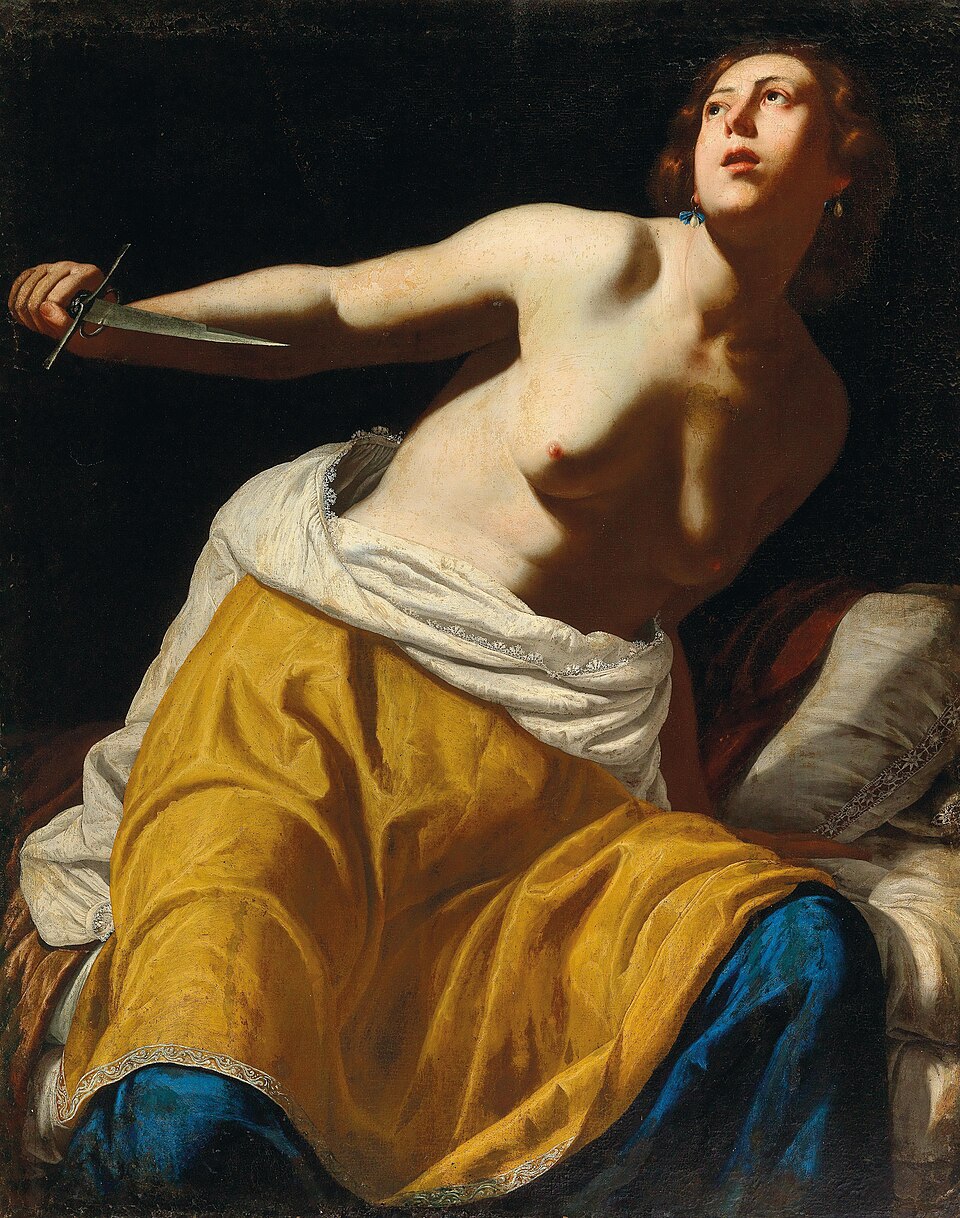
Artemisia learned the hard light from her father Orazio, who had taken it from Caravaggio: a single harsh source from the upper left, blackness behind, no landscape and no sky to soften anything. What she added was weight. Her figures brace, grip and lean; cloth bunches where a hand pulls at it; a forearm goes taut where it takes a load. She returned to this subject more than once across her career, and the later versions get more deliberate about the mechanics, not less.
Look at the gold bracelet on Judith's wrist. The small scenes worked into it show Diana the huntress — Artemis in Greek, the goddess the painter was named after. Scholars read it as a second signature, hidden in the jewellery.
Ready to test your eye?
Try spotting an Artemisia against 1,389 paintings by 118 painters.
Play the quiz →One trap: her father, and Caravaggio
Orazio Gentileschi and Caravaggio painted the same subjects under the same hard light, and Artemisia is routinely mistaken for both. The giveaway is posture. Caravaggio's Judith recoils, arms extended, holding herself away from the mess — the violence is happening to her. Orazio's figures are cooler and more upright, the colour clearer, the whole thing more elegant. Artemisia's women lean in. If the woman in the picture looks like she has decided something and is now following through, it's hers.
More by Artemisia