How to recognise a Monet in five seconds
No black outlines, no straight lines — just colour, patiently repeated. Three tells, one obsessive garden, and the painting that named an entire movement.
Monet is everywhere — tote bags, umbrellas, a million living-room prints — which almost hides how genuinely radical his method was. Forget the water lilies for a second. Here are three tells that give him away in about five seconds, on any painting, from any decade of his career.
The three tells
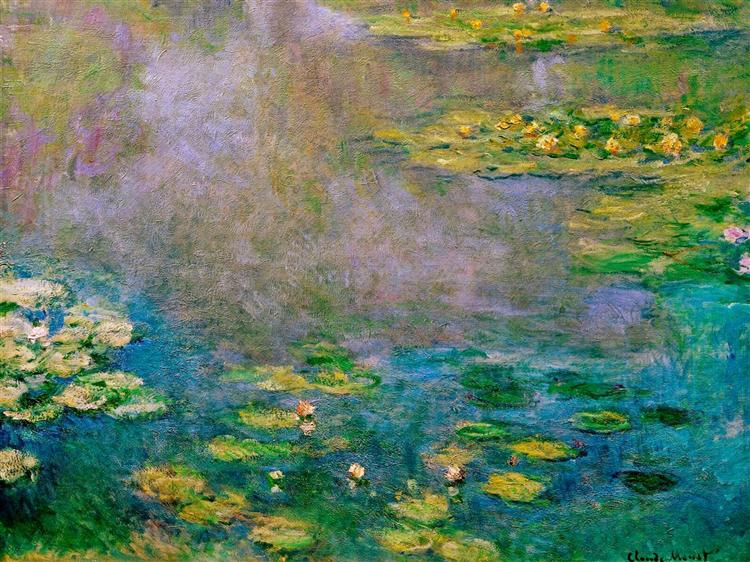
Up close, a Monet barely looks like anything. Step back and it resolves into water, light, a bridge, a cathedral. That gap between chaos and image is the whole trick — built from loose, broken brushstrokes that never quite connect into a line; colour standing in for shadow, so a "black" patch of shade is actually violet or deep blue; and paint applied in thick, confident dabs rather than blended smoothly, so form is suggested rather than drawn.
He wasn't painting a pond. He was painting how long he had been looking at it.
Why it works
Monet wasn't trying to record what a lily pond looks like to a camera — he was recording what light does to it, minute by minute, which is why he painted the same subjects obsessively: the same haystacks, the same Rouen cathedral façade, the same pond, at every hour and every season. The "finished" picture was never really the point. The looking was.
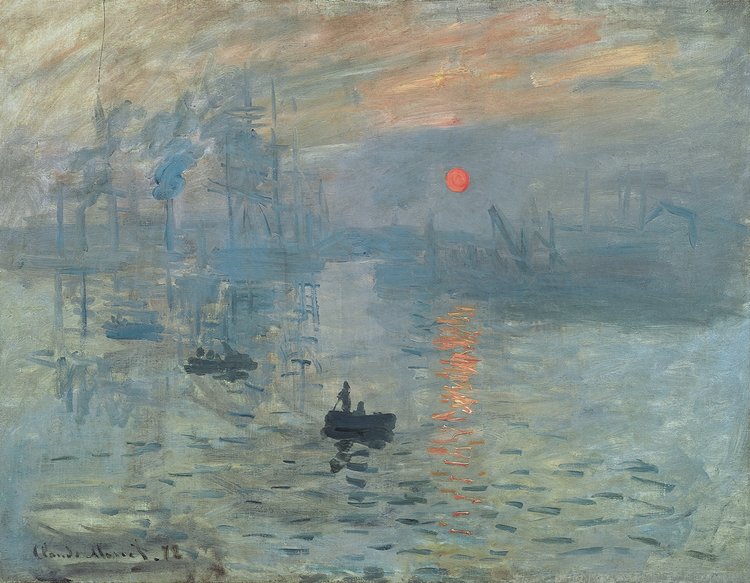
The entire movement is named after one of his paintings. When Monet exhibited Impression, Sunrise in 1874, critic Louis Leroy mocked it in a review titled "The Exhibition of the Impressionists" — meant as an insult. The artists kept the name anyway.
Ready to test your eye?
Try spotting Monet against 1,200+ paintings from 80+ masters.
Play the quiz →One trap: his own circle
Camille Pissarro and Alfred Sisley painted alongside Monet for decades, shared his loose brush and his love of weather and light, and are easy to mix up with him at a glance. The giveaway is subject and mood: Monet fixates on water, gardens and the same motif painted over and over in changing light; Pissarro leans toward busy market streets and rural labour; Sisley stays closer to quiet riverbanks with cooler, more even colour. If a painting feels obsessive about one place, at every hour — that's Monet.
More by Monet