Andy Warhol
He turned soup cans, movie stars and disasters into a single language — and made every other 20th-century painter look old-fashioned.
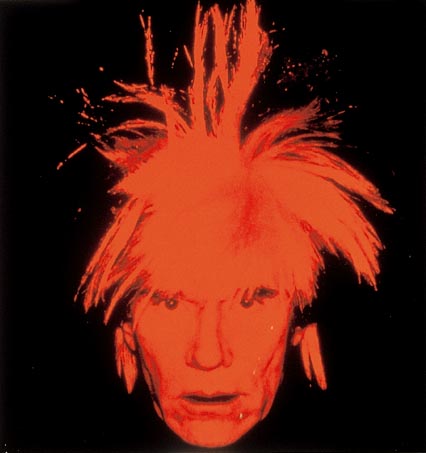
Style and technique
Warhol's central insight was simple and devastating: in the second half of the twentieth century, the most powerful image-makers in the world were no longer painters. They were advertising agencies, photo magazines, Hollywood publicity departments, news wire services. Painting could either keep pretending none of that was happening, or it could absorb the new visual world directly into the canvas. Warhol absorbed it.
He stopped painting in the conventional sense in 1962. From then on, almost every famous Warhol was made by silkscreen — a commercial printing technique that transfers a photographic image through a fine mesh stencil. He took photographs (Marilyn Monroe's publicity still, a Campbell's soup can, a tabloid photograph of an electric chair, a press shot of Mao Tse-tung), had them screen-printed onto canvas in his studio by assistants, and added flat zones of bright commercial colour by hand. The image was usually repeated in a grid — four times, ten times, fifty times — until the original press photograph began to feel both more powerful and completely empty.
Four fingerprints make a Warhol unmistakable.
Silkscreen on canvas. No brushwork in the conventional sense. The image is photographic. The colour is laid down underneath in thin commercial flats — sometimes neon pink, lime green, hot orange, electric blue.
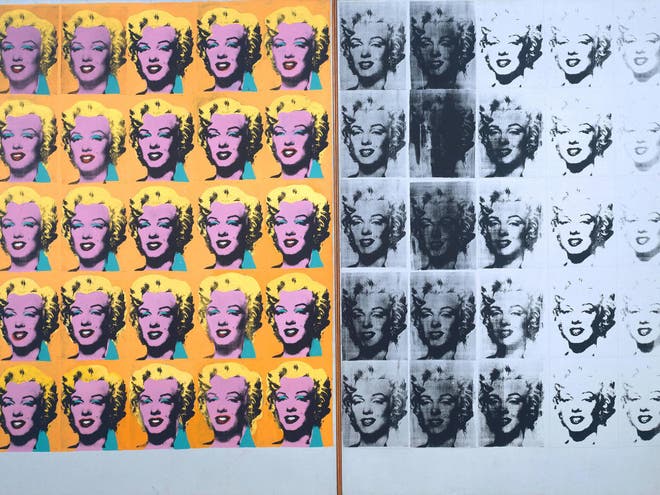
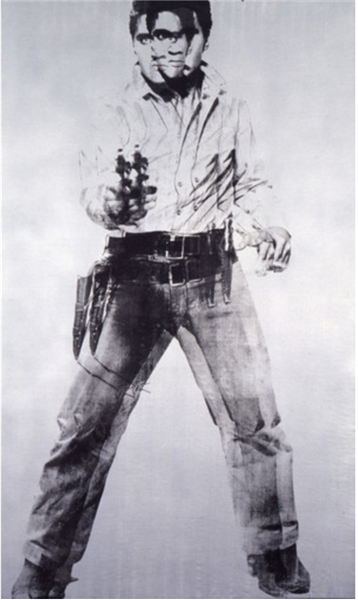
Repetition in grids. Eight Elvises, thirty-two Soup Cans, four Marilyns. The grid is sometimes uniform; sometimes the print degrades from sharp to ghostly across the canvas. Both are deliberate.
Celebrity and disaster as equal subjects. A Marilyn Diptych and a Death and Disaster electric-chair canvas were made the same year, in the same studio, by the same hand. Warhol's idea was that the cult of the celebrity and the cult of the catastrophe came from the same press machine.
Flat artificial colour. Pinks that do not exist in nature. Acid yellows. Cobalt blues laid on top of a photograph of a hearse. The colours are deliberately commercial, deliberately industrial.
He almost never spoke about his work in formal terms. Asked what his paintings meant, he gave answers like: *'If you want to know all about Andy Warhol, just look at the surface of my paintings and films and me, and there I am. There's nothing behind it.'* This was both a strategy and probably also true.
Life and legacy
Andrew Warhola was born on 6 August 1928 in Pittsburgh, Pennsylvania, the third son of two Slovak Catholic immigrants from a tiny village in what is now eastern Slovakia. His father, Ondrej Warhola, was a coal miner and construction worker who had emigrated to Pittsburgh in 1914; his mother, Julia, joined him in 1921. The family was poor, deeply Byzantine Catholic, Slovak-speaking at home.
As a child Andy was sickly. At eight he developed Sydenham's chorea (a nervous-system condition sometimes called St Vitus' dance), spent months in bed, and used the time to draw, cut out movie magazines, collect images of celebrities. The experience shaped almost everything that came afterwards: the bedside collecting of mass-printed images, the obsession with fame, the slight physical fragility.
His father died of tuberculosis-related illness when Andy was 13. The family scraped by on what the older brothers earned. Andy enrolled at the Carnegie Institute of Technology (now Carnegie Mellon University) in 1945 to study commercial art. He paid his way through college selling fruit and vegetables out of trucks. He graduated in 1949 with a degree in 'pictorial design' and moved straight to New York City.
From 1949 to about 1961, Warhol was a commercial illustrator — and one of the most successful in New York. He drew advertising for Glamour magazine, Vogue, the New York Times. He built almost his entire early income from drawing shoes for the I. Miller shoe company, in a delicate blotted-line technique he had developed at college. He won industry awards. He earned, by 1959, around $65,000 a year — equivalent to roughly $700,000 today — purely from commercial work.
And he was deeply unsatisfied. The fine-art world of New York in the 1950s was dominated by Abstract Expressionism — Pollock, de Kooning, Rothko — all of which Warhol respected and felt was already finished. He wanted to make paintings, but with the visual vocabulary he knew best: advertising, comics, news photographs.
In 1961 he made his first paintings of Coca-Cola bottles and Dick Tracy comic-book characters, painting them by hand in oil. They were rejected by his first gallery. The young pop artist Roy Lichtenstein, working in a similar vein, beat him to a major show. In 1962, in a moment of pure clarity, Warhol asked his friend Muriel Latow what to paint, and Muriel told him: 'Paint something everybody sees every day. Like a can of soup.'
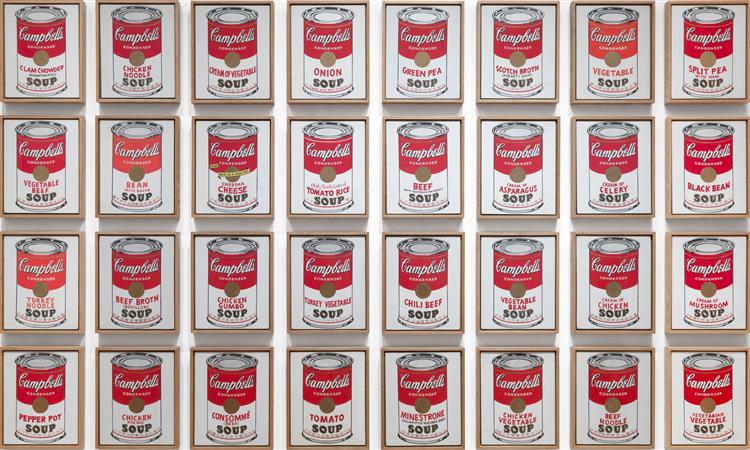
He paid Muriel $50 for the idea, drove to a Pittsburgh supermarket, and bought all 32 varieties of Campbell's soup. He painted each one as a separate canvas. The first show of the 'Campbell's Soup Cans' opened at the Ferus Gallery in Los Angeles in July 1962 — Warhol's debut as a fine artist, at the age of 33.
He never painted by hand again in any sustained way. He learned silkscreen later that year and discovered he could mass-produce photographic images on canvas — Marilyn Monroe (whose publicity image flooded American culture for weeks after her suicide in August 1962), Elvis Presley, Liz Taylor, Coca-Cola, the electric chair, car crashes, race riots — all printed and reprinted in his studio at 231 East 47th Street, which he moved into in early 1964 and christened 'The Factory'.
In the late 1960s Warhol made his most controversial work in his other medium: films. 'Empire' (1964) is an eight-hour static shot of the Empire State Building. 'Sleep' (1963) is six hours of a man sleeping. 'The Chelsea Girls' (1966) is a three-hour split-screen film of his entourage doing nothing in particular. The films are deliberately, almost militantly boring, and they remain influential in cinema today.
On 3 June 1968, the radical feminist writer Valerie Solanas — who had hung around the Factory — walked in and shot Warhol three times in the chest. He was pronounced clinically dead at the hospital before being revived. He spent two months in hospital and wore a surgical corset for the rest of his life. The shooting changed him. The Factory closed to outsiders; security tightened; Warhol stopped going to parties for years. Solanas served three years for attempted murder.
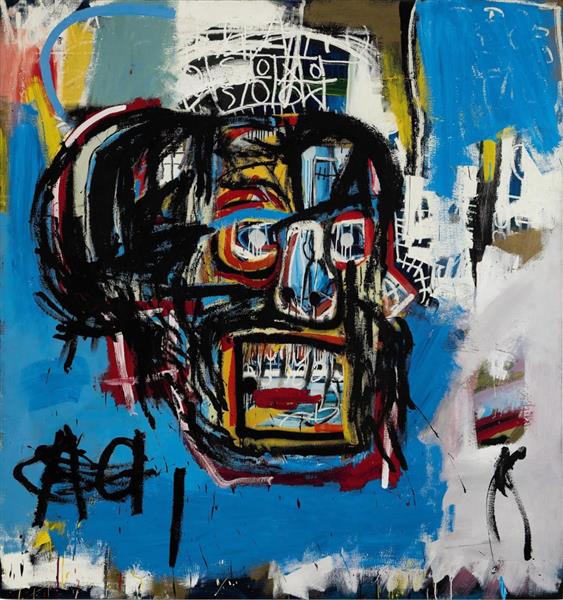
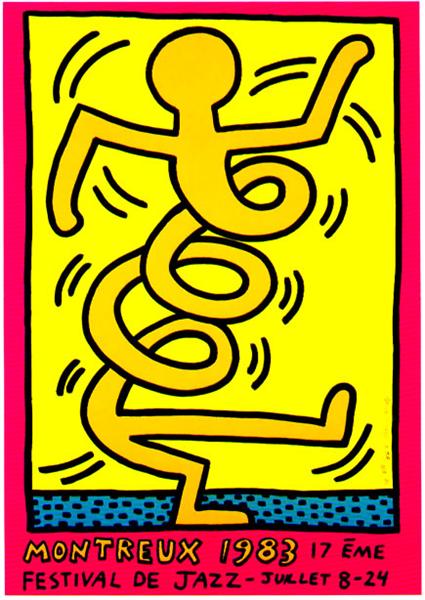
The 1970s and 1980s were Warhol's commercial peak. He started a magazine, Interview. He took portrait commissions for $25,000 a head from celebrities, dictators and CEOs. He produced television, music and theatre. He took up with much younger artists — most importantly Jean-Michel Basquiat and Keith Haring, both of whom he treated as proteges and friends. The two collaborations between Warhol and Basquiat in 1984–85 are some of his last great paintings.
In February 1987 he was admitted to a New York hospital for routine gallbladder surgery — an operation he had been postponing for years out of fear of doctors. The surgery itself went well. He died of a heart attack the following morning, 22 February 1987, aged 58. The post-mortem suggested possible nursing negligence; his estate sued the hospital for $3 million and settled.
He was buried in St John the Baptist Byzantine Catholic Cemetery in a Pittsburgh suburb, in the same Slovak community his parents had come from. The Andy Warhol Museum, the largest single-artist museum in the United States, opened in Pittsburgh in 1994.
Five famous paintings
Campbell's Soup Cans 1962
Warhol's breakthrough as a fine artist. Thirty-two canvases, one for each variety of Campbell's soup that the company sold in 1962, hung in a single line on the wall of the Ferus Gallery in Los Angeles. Each canvas is painted by hand in a flat commercial style — Warhol had not yet started silkscreening — to mimic the look of a printed label. The show was met with bewilderment and modest sales; Irving Blum, the gallery owner, ended up buying the whole set himself for $1,000. He sold them to MoMA in 1996 for $15 million. They have hung together ever since, on a single wall, in the order Warhol stipulated: alphabetical, beginning with Beef and ending with Vegetable.
Marilyn Diptych 1962
Painted within weeks of Marilyn Monroe's death on 5 August 1962. Fifty silkscreened images of the same Marilyn publicity still — taken from a 1953 promotional shot for the film 'Niagara' — printed in two rows of twenty-five on a single canvas. The left half is in saturated commercial colour: hot pink lipstick, blonde hair, blue eye shadow. The right half is in black-and-white, with the print quality deliberately degrading until the rightmost Marilyns are barely visible smudges. Critics often read the diptych as a meditation on celebrity and death — the colour Marilyn fades into the death's-head Marilyn — although Warhol himself denied this. The painting hangs in Tate Modern, London.
Coca-Cola (3) 1962
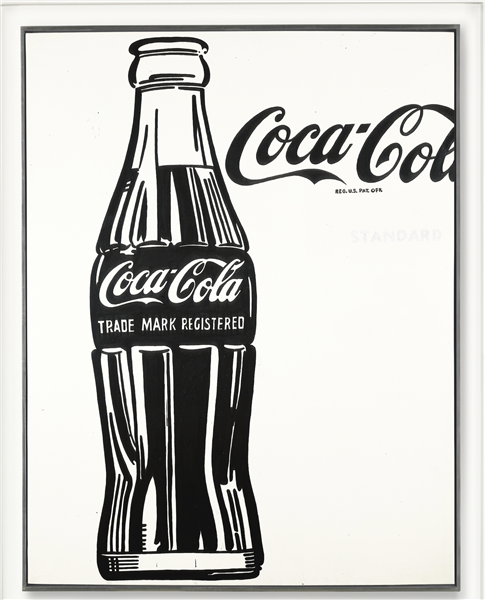
Warhol painted Coca-Cola bottles a dozen times in his early Pop years. This particular canvas — one of the late hand-painted versions before he switched to silkscreen — shows three classic Coca-Cola bottles in profile, painted with the slightly crude, illustrational hand he had used as a commercial artist. He famously said in the 1960s: 'A Coke is a Coke, and no amount of money can get you a better Coke than the one the bum on the corner is drinking. All the Cokes are the same and all the Cokes are good. Liz Taylor knows it, the President knows it, the bum knows it, and you know it.' The line, which appears in his book *The Philosophy of Andy Warhol*, is more or less a summary of his thinking on Pop Art.
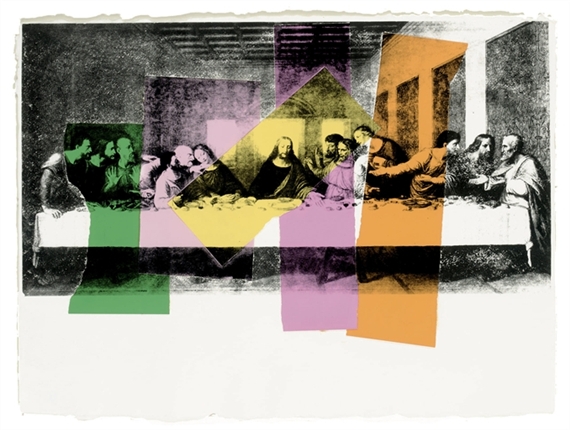
The Last Supper 1986
One of the very last great Warhols. He spent the final eighteen months of his life producing more than a hundred variations on Leonardo's 'Last Supper', for a commission from a Milanese bank that wanted them for a building directly opposite the Santa Maria delle Grazie convent where Leonardo's original fresco still hangs. Warhol had grown up Byzantine Catholic and had attended Mass nearly every Sunday of his adult life — a fact almost no one in the New York art world knew. The 'Last Supper' canvases are silkscreened from cheap reproductions, often layered with corporate logos (a Dove soap symbol, the price tag '6.99'), and they are unmistakably devotional. He died seven months after the show opened in Milan.