Juan Gris
The Cubist who put colour back into the equation — and made it architectural.
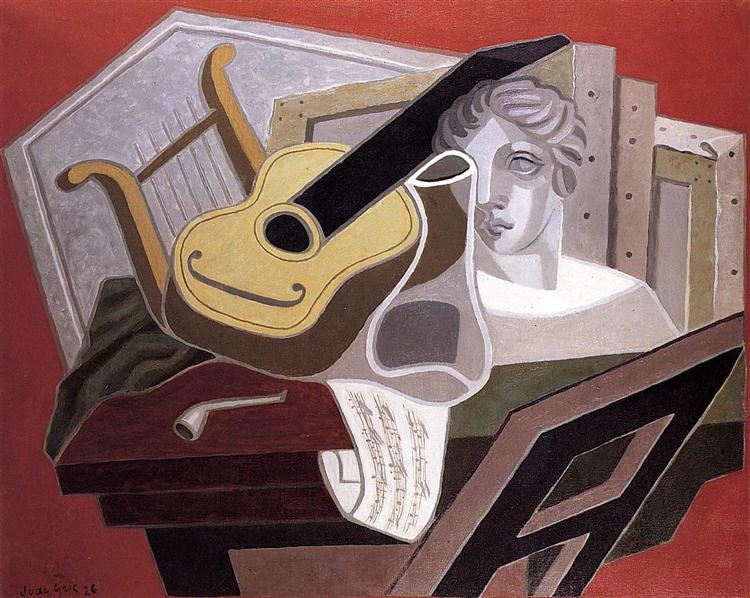
Style and technique
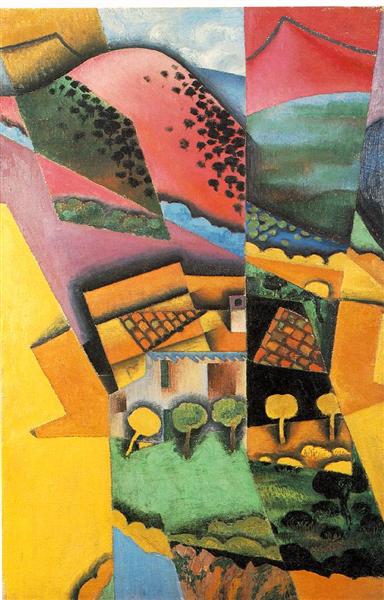
Juan Gris came to Cubism after Picasso and Braque had already invented it, and this latecomer position became his advantage. He could see the whole system from the outside, understand its principles abstractly, and then apply them with a rigour and clarity that his predecessors — who were inventing as they went — did not always achieve.
His method was the inverse of Picasso's and Braque's. They worked from observation to analysis — starting with an object and breaking it apart. Gris worked from architecture to appearance — starting with an abstract geometric structure and then assigning the recognisable elements of a guitar, a newspaper, a glass to the positions already determined by the geometry. This was what he called 'Synthetic Cubism': building the image from the abstract to the particular rather than analysing the particular into abstraction.
The practical result is that his paintings have a composed quality — a sense that every element is where it is for formal reasons — that the more spontaneous Picasso rarely achieved. His still lifes have the logical necessity of a proof: nothing is accidental, everything can be explained.
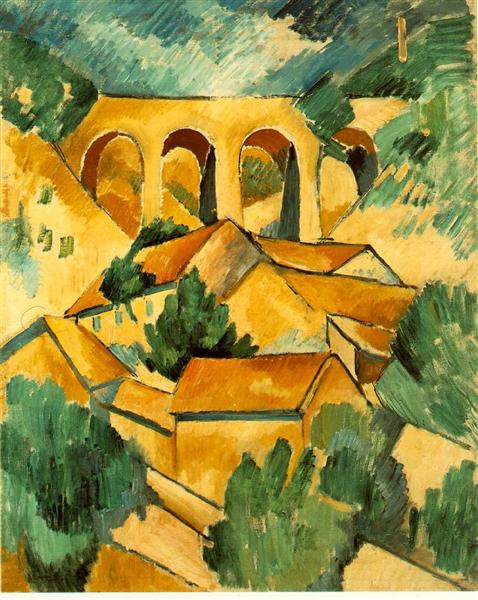
Four fingerprints: the strict geometric substructure visible as the organisation of the composition even when the objects are clearly readable, a colour palette of unusual richness for Cubism, a very specific set of recurring objects — the guitar, the newspaper, the wine glass, the coffee pot, the checked tablecloth — and an elegant surface quality that comes from the combination of geometric precision and rich colour.
Life and legacy
Gris was born José Victoriano González-Pérez on 23 March 1887 in Madrid, the thirteenth of fourteen children of a stationer. He studied engineering in Madrid and took classes in applied arts from 1902 to 1904 before leaving for Paris in 1906 at the age of nineteen to escape military service in the Spanish army during the Moroccan campaign.
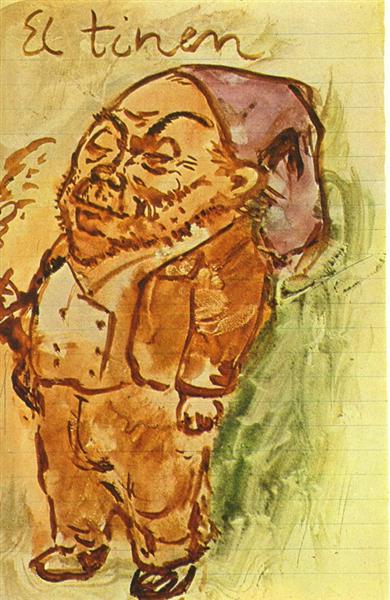
He moved directly into the Bateau-Lavoir building in Montmartre — the same ramshackle collection of studios where Picasso worked — and immediately entered the inner circle of the Paris avant-garde. He supported himself for the first six years by making humorous drawings for journals: 'L'Assiette au beurre', 'Le Charivari', and 'Le Cri de Paris'. The money was irregular; he was often poor.
His painting career did not properly begin until 1910. His first Cubist paintings appeared in 1911 — by which point Picasso and Braque were already three years into the development of the new language — and were immediately among the most rigorous applications of Cubist principles. He showed at the Salon des Indépendants in 1912 and caught the attention of the dealer Kahnweiler, who signed him to an exclusive contract that provided financial security for the first time.
His relationship with Picasso was close, complicated, and never quite symmetrical. Picasso regarded him with a mixture of respect and condescension that Gris bore with considerable patience. His portrait of Picasso (1912), now in the Art Institute of Chicago, is a tribute from the younger man to the master — and also an implicit demonstration that Gris could analyse Cubism's methods as clearly as its inventor.
The First World War stranded him in the south of France with Matisse. Kahnweiler, as a German national, was exiled and his contract with Gris suspended; Gris spent several difficult years without a regular dealer.
From about 1919 his health began to fail — he suffered from pleurisy, probably connected to an earlier kidney infection, and spent long periods in sanatoriums. He was forty years old when he died of renal failure in Boulogne-sur-Seine on 11 May 1927. Picasso was at his bedside.
His relative short career — only about fifteen years of mature work — and his willingness to remain within a strict set of formal constraints means that his entire body of work has an unusual coherence. The catalogue raisonné is dominated by still lifes on tables, and the progression from the more analytical work of 1912–1915 to the warmer, more decorative canvases of 1920–1927 is one of the most clearly readable stylistic developments in modern art.
Five famous paintings
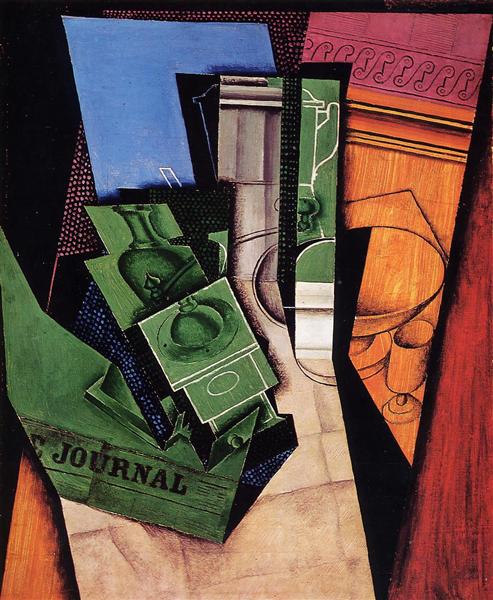
Breakfast 1915
A still life of breakfast objects — a coffee pot, a cup, a newspaper, a bottle — assembled on a table with a chequered cloth. Gris uses Synthetic Cubism: the composition begins with a geometric structure of interlocking rectangles and diamonds, and then assigns the objects to positions already determined by that structure. The newspaper clipping, pasted into the canvas, is legible: it is dated and contains real text. The colour is characteristic of his mature palette — grey-blue, ochre, warm black, white. The painting demonstrates his method at its clearest: abstract structure clothed in recognisable matter. It hangs in the Museum of Modern Art in New York.
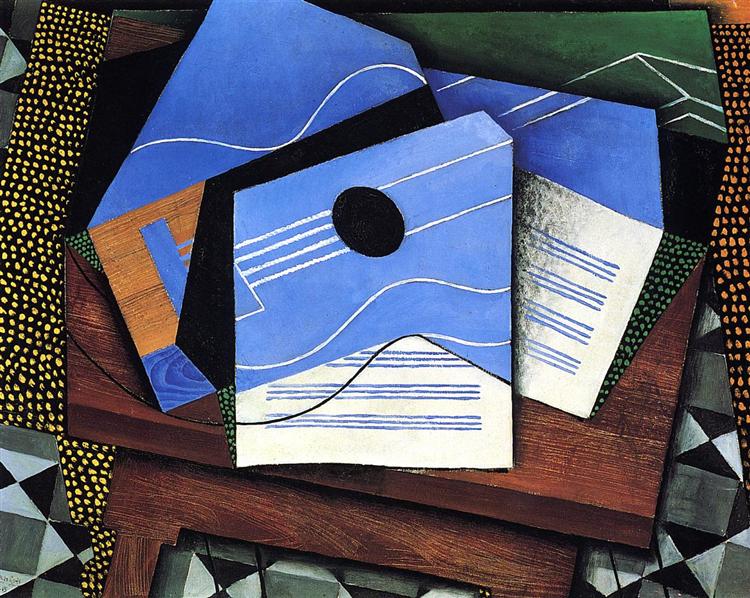
Guitar on a Table 1915
A guitar, a glass, and a newspaper assembled on a table with a checked cloth. The guitar is Gris's dominant motif — its curves, its sound-hole, its strings appear in dozens of his paintings. Here it is reduced to its essential elements: the curved upper bout, the waist, the sound-hole, the strings rendered as parallel lines. The multiple viewpoints of Cubist analysis are still present but the forms are more clearly readable than in Analytic Cubism. The colour — deep blue, warm ochre, grey, black, white — is fully characteristic. The painting shows Gris at the peak of his mature period.
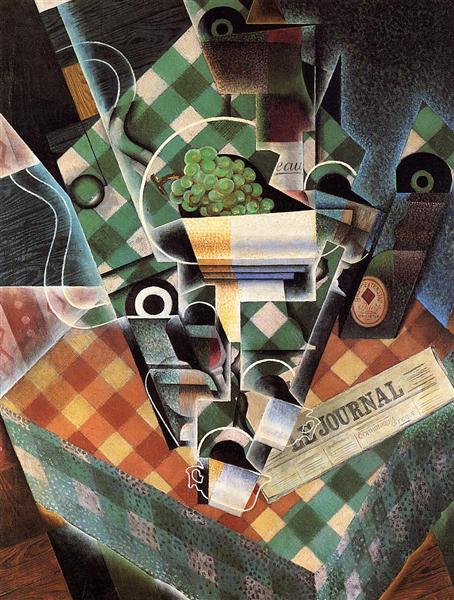
Still Life with Checkered Tablecloth 1915
The chequered tablecloth is Gris's most persistent compositional device: its regular geometric pattern provides a stable, readable base from which the more fragmented still-life elements can depart. Here the cloth occupies the lower half of the composition; above it, a bottle, a glass, and the fragments of a newspaper are assembled in a complex of overlapping geometric planes. The specific olive green and grey of the cloth is one of his signature colours. He returned to this exact compositional problem many times, each version slightly different in the arrangement of the upper elements.
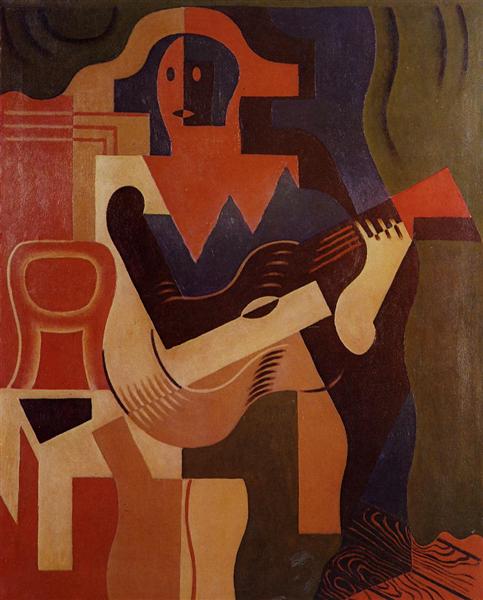
Harlequin with Guitar 1919
A late work, from the period after the war when Gris's Cubism became warmer and more decorative without losing its structural rigour. The Harlequin figure — borrowed from the commedia dell'arte tradition that Picasso also used — is assembled from flat planes of colour: the diamond pattern of the costume, the angular face, the guitar held across the body. The colour is richer and more varied than in his pre-war work: blues, oranges, greens, and the persistent ochre. Gris was working in the south of France in 1919 in a period of relative recovery from his wartime difficulties.