Paul Signac
The sailor-theorist who turned sunlight into pure colour, dot by luminous dot.
Style and technique
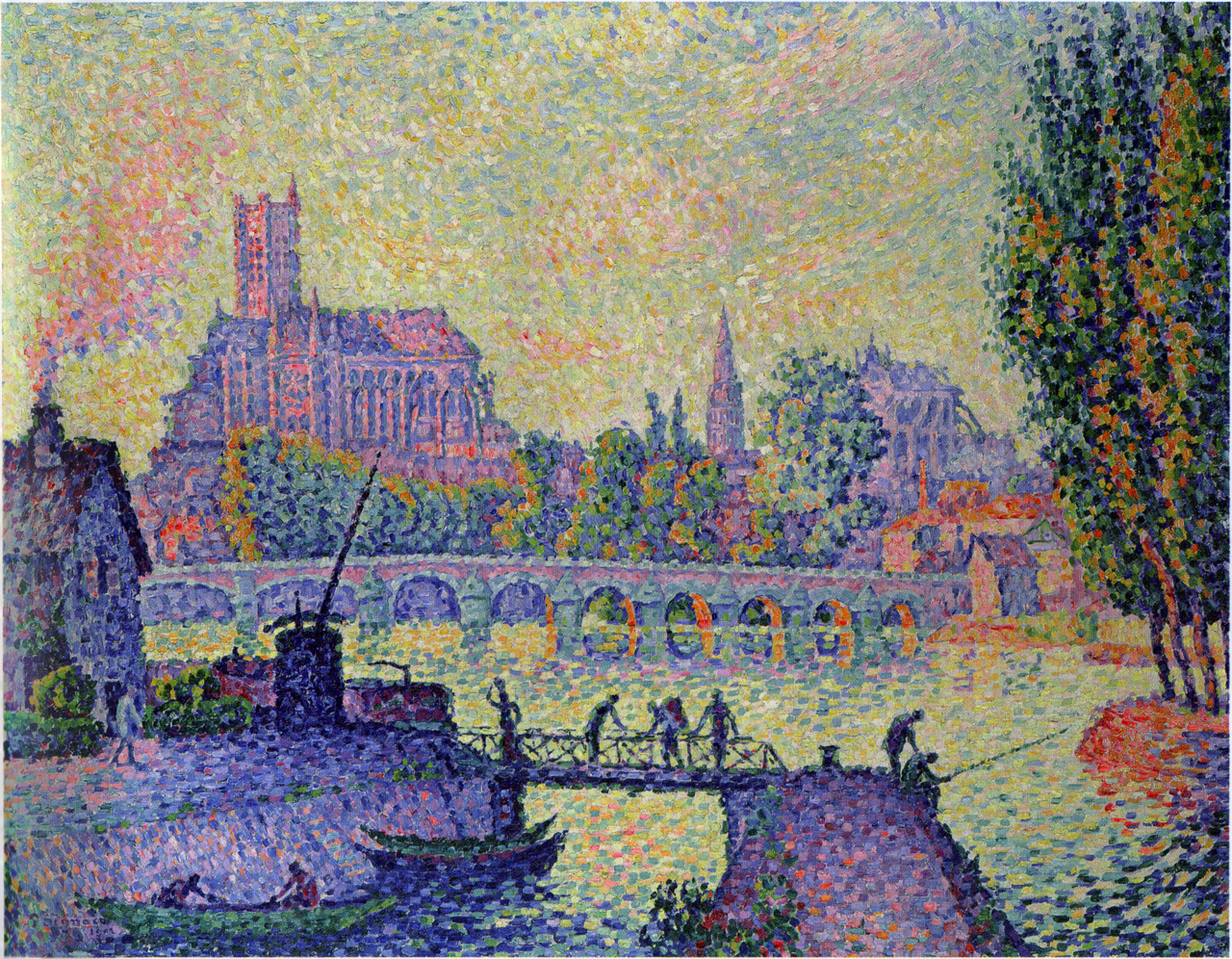
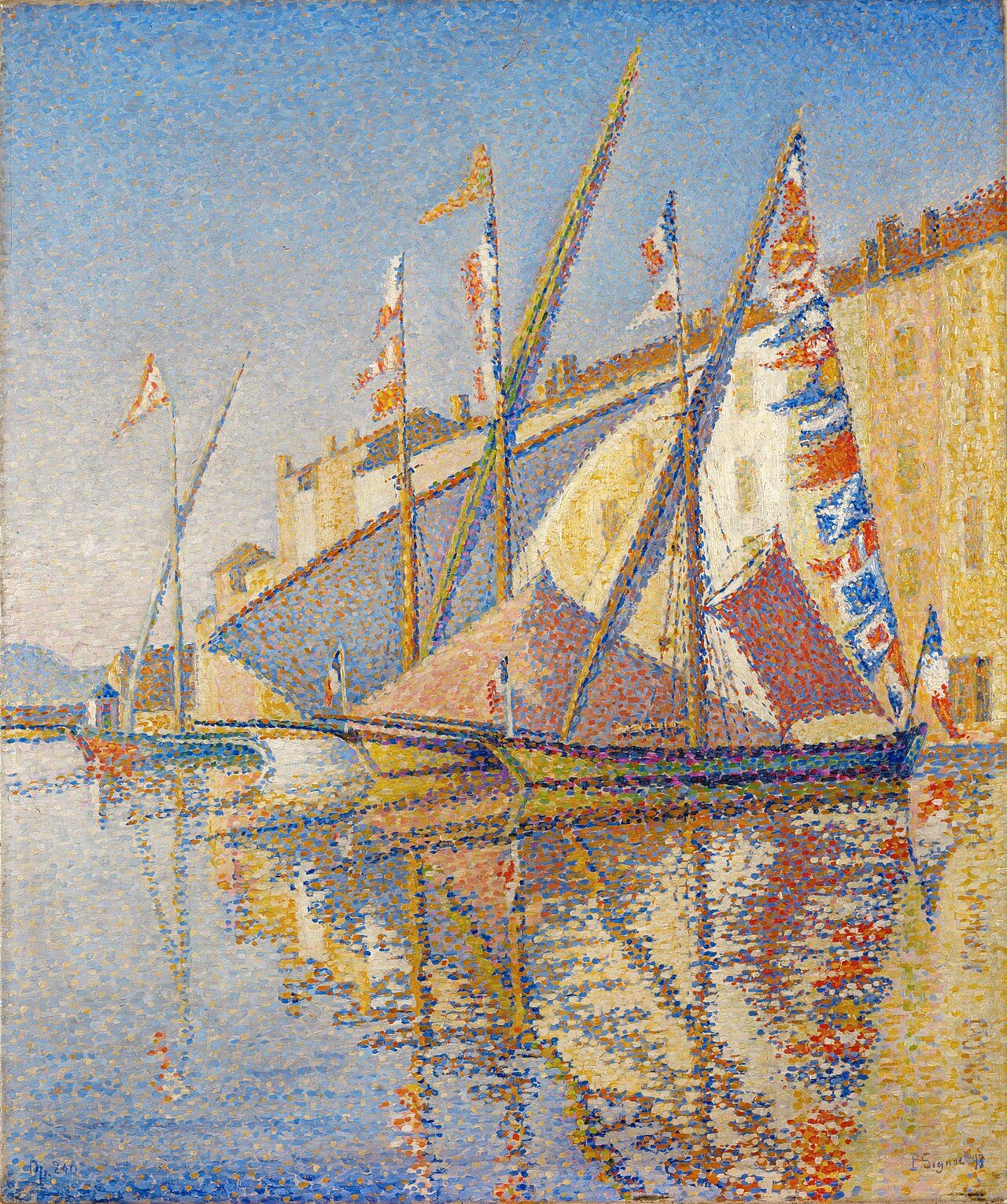
Signac is the man who gave Neo-Impressionism its scientific backbone and its poetic soul. Where his friend and mentor Georges Seurat brought mathematical rigour, Signac brought passion, restlessness and an almost evangelical desire to spread the doctrine of divided colour. His method begins with a single governing principle, borrowed from the chemist Michel Eugène Chevreul and the physicist Ogden Rood: that colours placed side by side on a canvas will fuse optically in the eye of a sufficiently distant viewer, producing a luminosity that no physical mixture of pigments can achieve. This is chromatic divisionism — the deliberate refusal to blend on the palette, and the calculated placement of pure, unmixed touches of colour so that their optical interaction does the mixing instead.
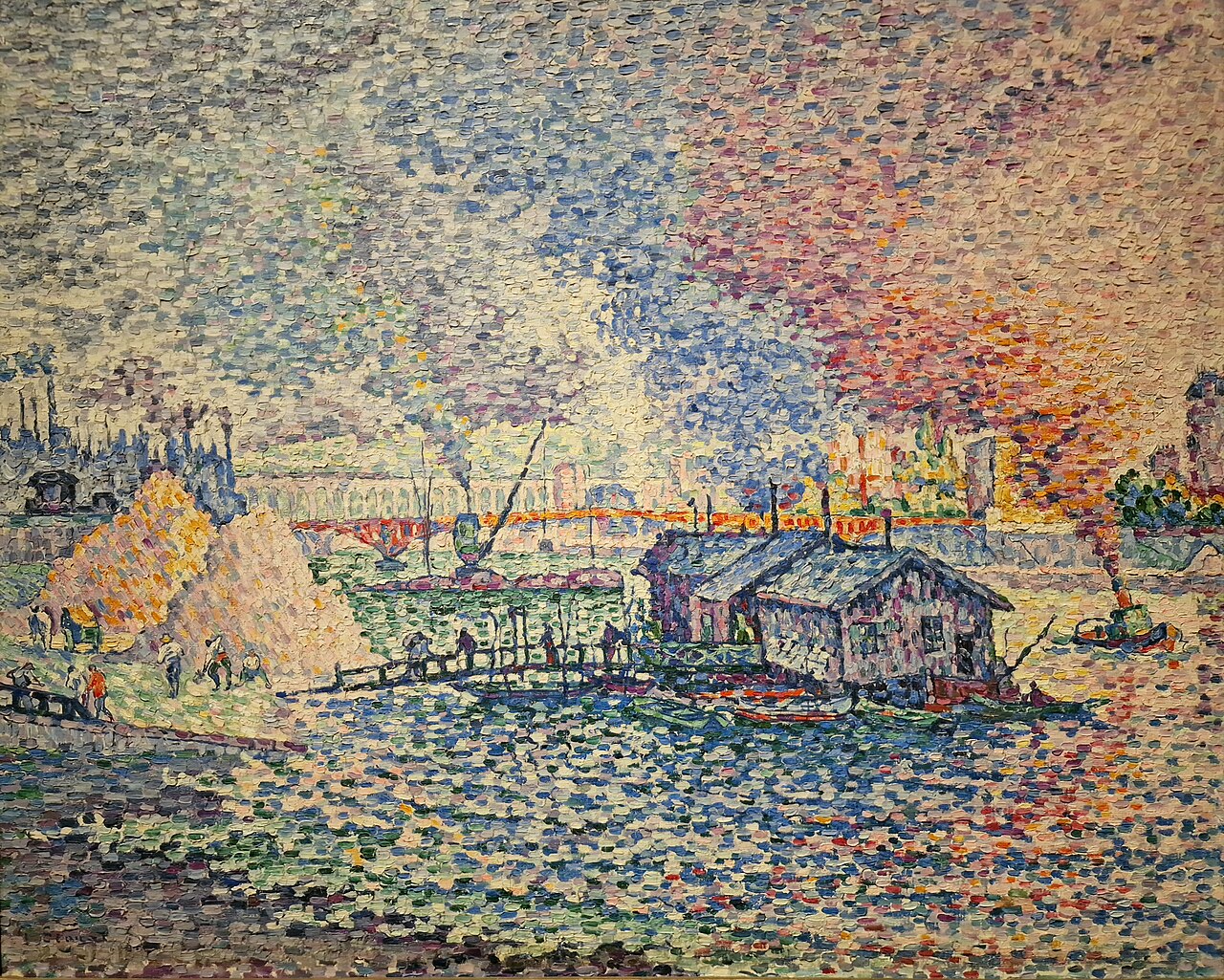
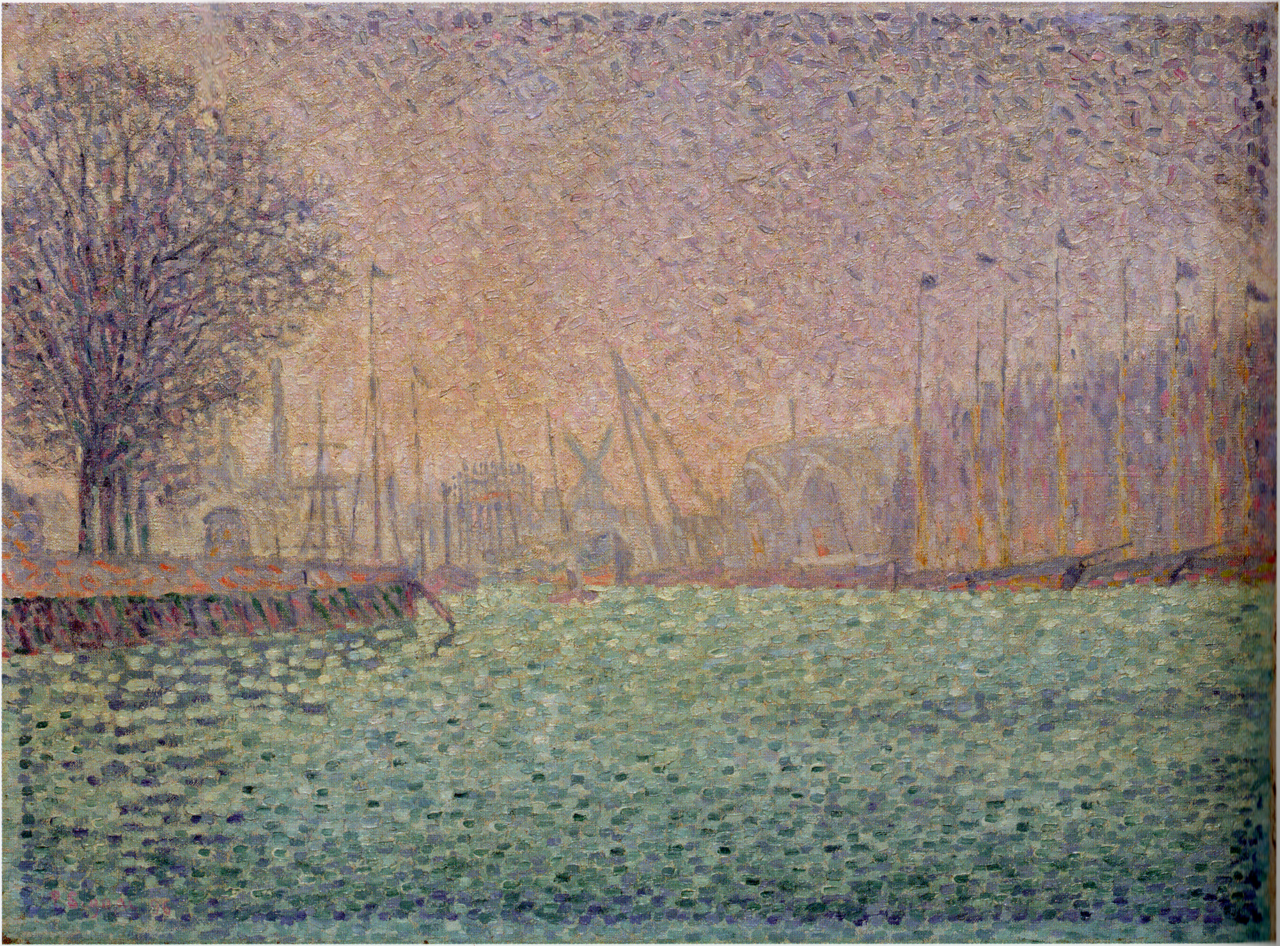
In his earliest phase, working alongside Seurat in the mid-1880s, Signac applied this principle through the now-famous dot — a small, regularised point of pure pigment, laid with near-mechanical consistency across the entire canvas surface. The result, at close range, is an almost abstract mosaic; at the correct viewing distance, it resolves into shimmering, high-keyed fields of light that bear no resemblance to what academic painters understood as colour. But Signac was never content to be a system's prisoner. From the 1890s onward, as he absorbed new influence and worked away from Paris — first in Brittany, then in the Mediterranean — the small dot gradually widened into something closer to a mosaic tesserae: a larger, more rectangular stroke that sacrifices mathematical precision for expressive energy and decorative grandeur.
Four qualities define a Signac canvas.
Complementary contrast as structure. He pairs colours according to their position on the chromatic wheel — orange against blue, yellow against violet, red against green — so that the contrasts themselves become the architecture of the image, vibrating at their boundaries and intensifying each other.
High-key luminosity. His canvases are rarely dark. The divisionist method naturally lifts the palette toward yellow, orange, and the lighter end of blue and green, producing an overall brightness that reads as Mediterranean light even when the subject is a northern harbour in winter.
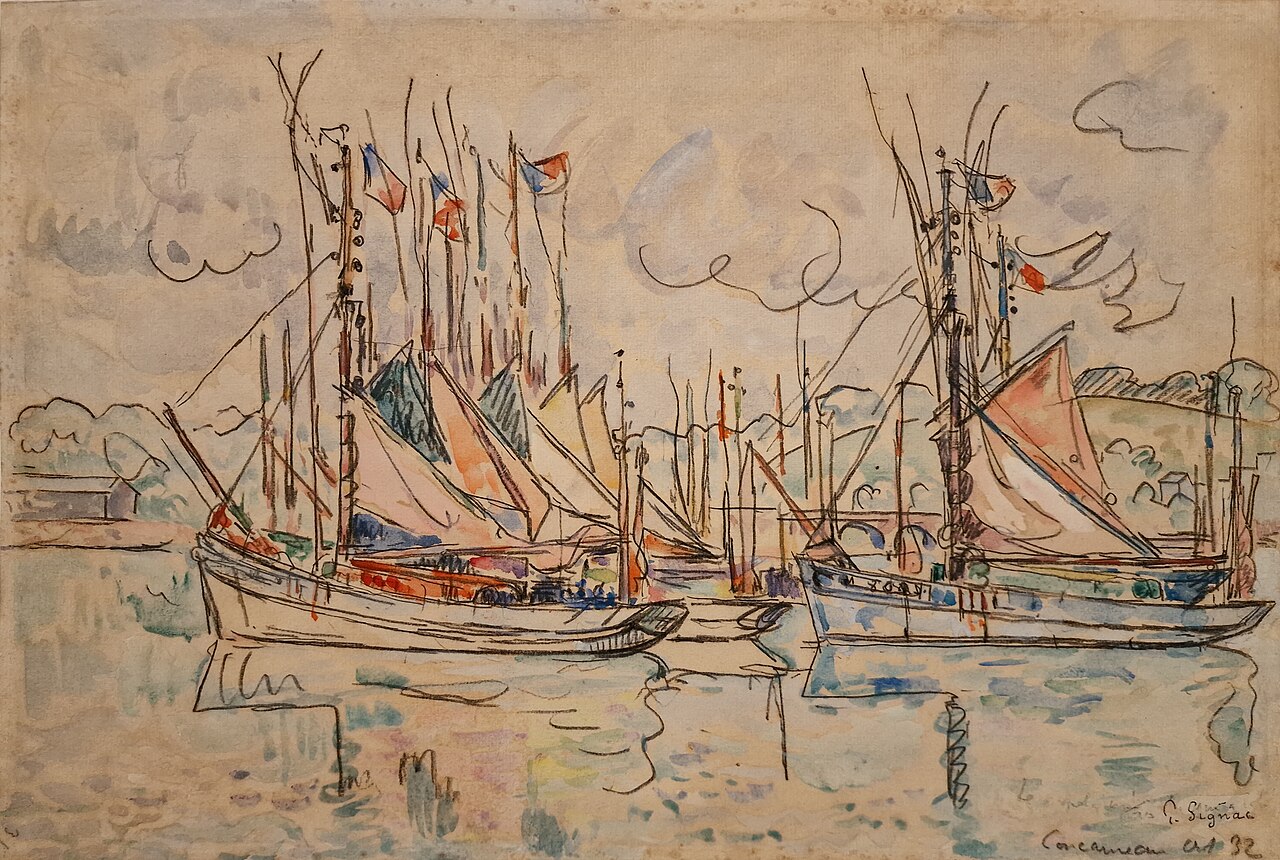
Water and harbour subjects. Signac spent much of his life on boats — he owned more than thirty over his lifetime — and the reflections of coloured hulls, the sparkling chop of harbour water, and the geometry of masts and rigging gave him subjects ideally suited to the prismatic analysis of light. The sea, constantly in motion and constantly refracting, was the perfect subject for a painter who believed light itself was motion.
Decorative flatness. Especially in his later work, the insistence on the optical mixture of flat, equal touches creates compositions of an almost tapestry-like quality. The horizon lines are clear and calm, the silhouettes of towers or sails are decisive, and the entire surface hums with a steady, resolved colour energy that has none of the Impressionists' atmospheric blur.
His theoretical ambition was matched by a genuine gift for colour orchestration. Where a less gifted painter might reduce divisionism to a mechanical exercise, Signac consistently found in the method a vehicle for emotional and poetic expression — something his great 1899 treatise 'D'Eugène Delacroix au Néo-Impressionnisme' argued was the whole point: that scientific colour theory did not constrain the artist but liberated him, returning to painting the expressive power of pure hue that the academy had buried under brown shadows and conventional finish.
Life and legacy
Paul Signac was born on 11 November 1863 in Paris, the only child of a prosperous saddlery merchant on the rue de Rivoli. His father died when Paul was barely an adolescent, leaving the family in comfortable but not extravagant circumstances. His mother, who would remain close to him throughout his life, encouraged his early interest in art and literature. As a teenager he was a passionate reader — Zola, Flaubert, the anarchist philosopher Kropotkin — and a devoted sailor who spent summers on the Seine and began to dream of longer voyages.
His path into painting was direct and self-willed. He attended no official school, submitted to no master. At eighteen he visited the fourth Impressionist exhibition of 1882 and stood for a long time in front of Monet's seascapes. He was, he later wrote, converted on the spot. He set up a studio in Montmartre and began painting in the open air in the manner of Monet and Pissarro, working fast, with loaded brushes, trying to catch the quality of Parisian light on the Seine and in the parks.
The decisive encounter came in 1884, when both Signac and a thirty-five-year-old painter named Georges Seurat helped found the Société des Artistes Indépendants — the exhibition society that dispensed with juries and prizes and allowed any painter to show. Seurat showed his monumental 'Bathers at Asnières' at the first exhibition. Signac saw it and introduced himself. The friendship that followed would reshape both painters' lives. Seurat explained his theory of chromatic divisionism; Signac absorbed it with the enthusiasm of a convert and immediately began experimenting. By 1886 both were exhibiting Pointillist canvases at the eighth and final Impressionist exhibition, which effectively announced the arrival of Neo-Impressionism as a coherent movement.
Signac's politics ran as deeply as his aesthetics. A committed anarchist, he contributed to anarchist publications throughout the 1880s and 1890s and believed sincerely that the liberation of colour in painting was connected to the liberation of the individual from social constraint. His large 1896 canvas 'In the Time of Harmony' — a utopian vision of a Mediterranean coast populated by free, leisured men and women — was intended as an anarchist manifesto in paint, originally titled 'In the Time of Anarchy' until a more prudent title was adopted.
The death of Seurat in 1891, from a sudden throat infection at the age of thirty-one, was a blow from which the movement never fully recovered. It fell to Signac to keep Neo-Impressionism alive, and he did so with remarkable energy — through his painting, his writing, his presidency of the Indépendants (a role he held from 1908 to 1934), and his unfailingly generous reception of younger painters.
The year 1892 brought one of the great accidents of French art history. Sailing along the Mediterranean coast, Signac put in at a small fishing village on the Var coast that he had never visited before: Saint-Tropez. He was so struck by the quality of the light — warm, crystalline, almost brutal in its clarity — that he bought a house there and returned every year for more than a decade. The village became the laboratory where his style opened up, the dots grew larger, the colours more saturated, the compositions more monumental. Painters who came to visit — among them Henri Matisse in 1904 — left transformed.
The Matisse episode is one of the pivotal moments in modern art. Matisse came to Saint-Tropez uncertain, his palette still relatively dark. Signac put brushes in his hand and walked him through the logic of complementary contrast and optical mixture. The summer's work produced Matisse's 'Luxe, Calme et Volupté' (1904–05), pointillist in technique and dedicated to Signac — after which Matisse, true to his own nature, discarded the method and invented Fauvism. Signac was characteristically gracious about it.
In 1899 Signac published 'D'Eugène Delacroix au Néo-Impressionnisme', the movement's theoretical monument. It traced a direct line from Delacroix's use of divided colour and complementary contrast, through the Impressionists, to the systematic divisionism of Seurat and himself. The book was translated and read across Europe, influencing a generation of painters from the German Expressionists to the Italian Divisionists.
His later decades were defined by an extraordinary restlessness. He sailed ceaselessly — along the French coast, through the Netherlands, into the Mediterranean, around Corsica and the Italian Riviera, up the Rhine — and each voyage produced watercolours and oil sketches of harbours, ports, and coastal towns rendered with increasing freedom and confidence. He documented ports across Europe with the eye of a sailor who understood water and a theorist who understood colour.
Signac remained president of the Société des Artistes Indépendants until 1934, a year before his death, shepherding every generation of the avant-garde through the organisation he had helped to found fifty years earlier. He died in Paris on 15 August 1935, aged seventy-one, still actively painting, still sailing, still arguing about colour.
Five famous paintings
Femmes au puits (Women at the Well) 1892
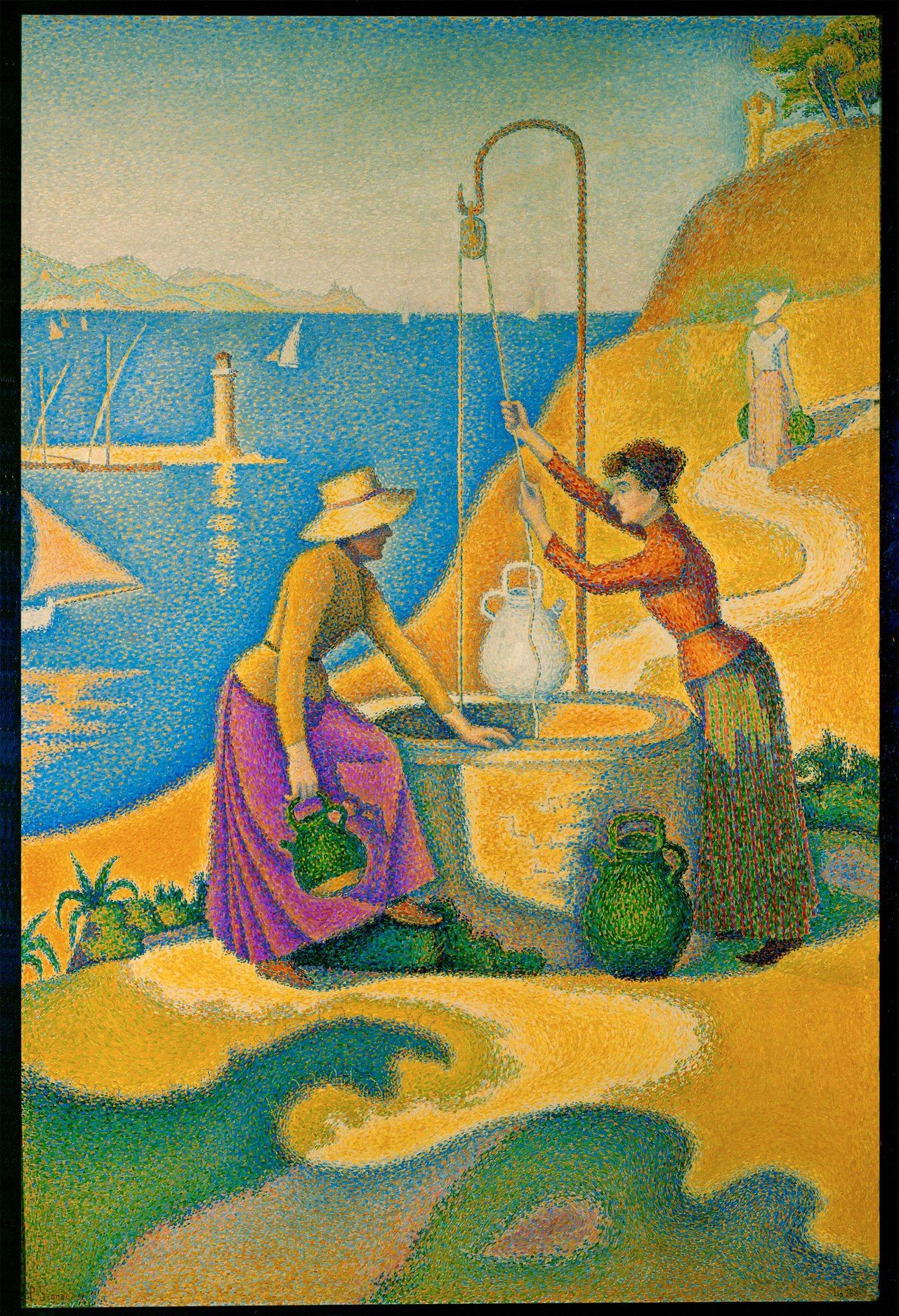
Painted in 1892 and exhibited at the Salon des Indépendants, this large canvas (195 × 131 cm, Musée d'Orsay) is among the most ambitious figure paintings that Neo-Impressionism ever produced. Three women gather at a stone well on a hillside above a Mediterranean bay — the coast near Saint-Tropez, which Signac had just discovered that same year. The figures are monumental and frontal, recalling Puvis de Chavannes in their calm frieze-like arrangement, but the entire surface is alive with the divisionist method: thousands of mosaic-like touches of pure colour — cobalt blue, cadmium orange, emerald green, pale rose — building the bodies, the stone, the foliage and the distant water out of pure optical mixture. The shadows are not grey or brown but violet and deep green, vibrating against the sunlit passages of cream and gold. The composition has an almost architectural stillness, a quality of timelessness at odds with the restless energy of the technique. Signac intended it as a demonstration piece — proof that the divisionist method was capable of large-scale figure painting, not only landscape — and it succeeds on those terms absolutely. The women seem to belong to a Mediterranean antiquity reconstructed entirely in light.
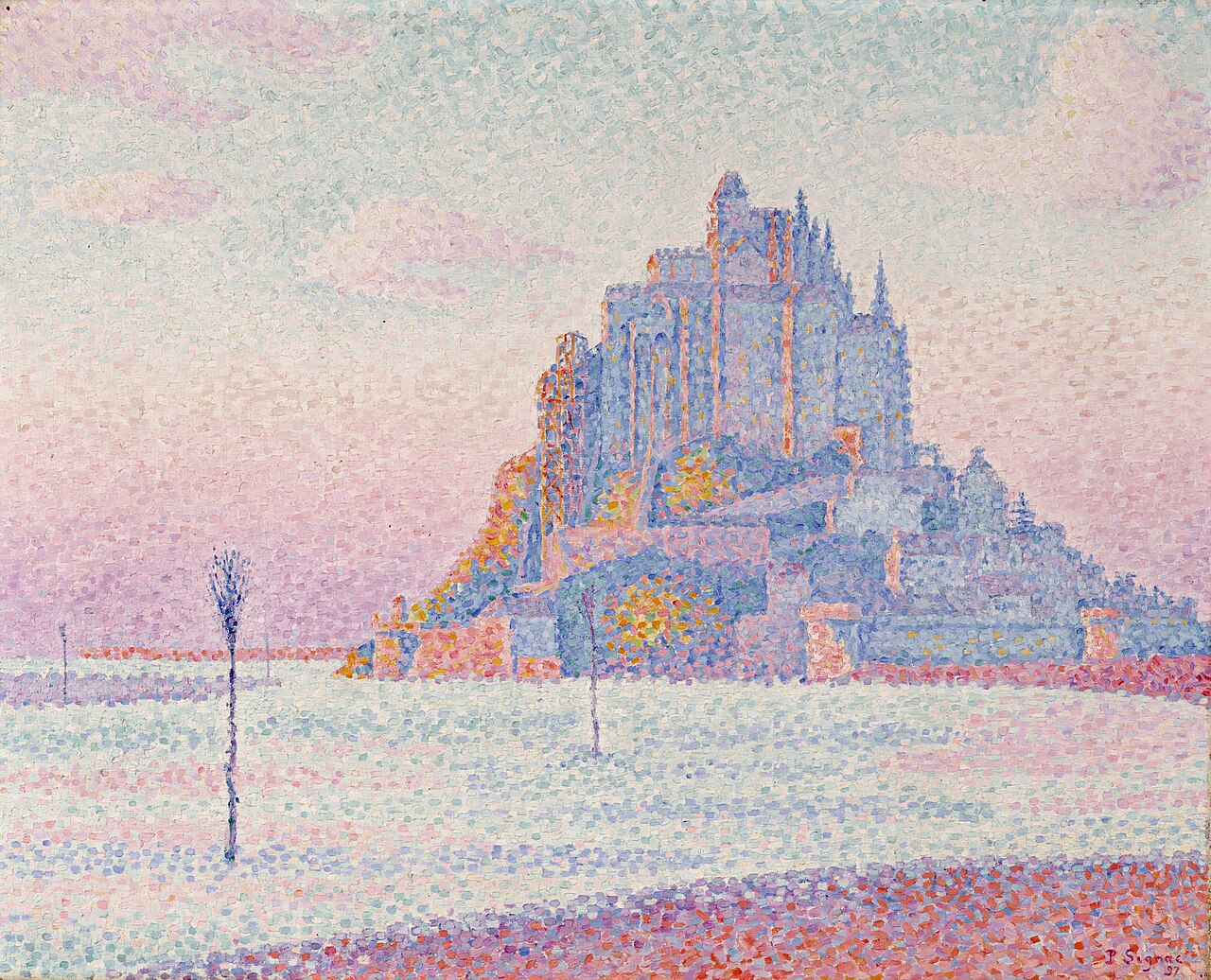
Mont Saint-Michel, Setting Sun 1897
Signac made several visits to the Norman coast in the mid-1890s, and this 1897 canvas captures the most iconic of all French coastal subjects — the abbey of Mont Saint-Michel rising from the tidal flats — at the moment of maximum chromatic drama: the last minutes of a clear-weather sunset. The sky moves through a sequence of pure complementary contrasts: deep orange at the horizon, shifting upward through gold and pale yellow into a violet-tinged zenith, while the wet sand below mirrors the sky in cooler, greener reflections. The silhouette of the mount itself — dark, precise, vertical against the horizontal blaze of sky and water — is rendered with a simplicity that gives the entire composition a heraldic clarity. At this period in his career Signac was transitioning from the small, regularised dot of his early Pointillist work toward a larger, more elongated stroke that reads more clearly as a structural unit, and the sky in this painting shows that transition perfectly: the touches are distinct, directional, building the atmosphere through accumulation rather than uniform mechanical repetition. The result is a painting of extraordinary light and stillness, the northern coast answering the Mediterranean sun.
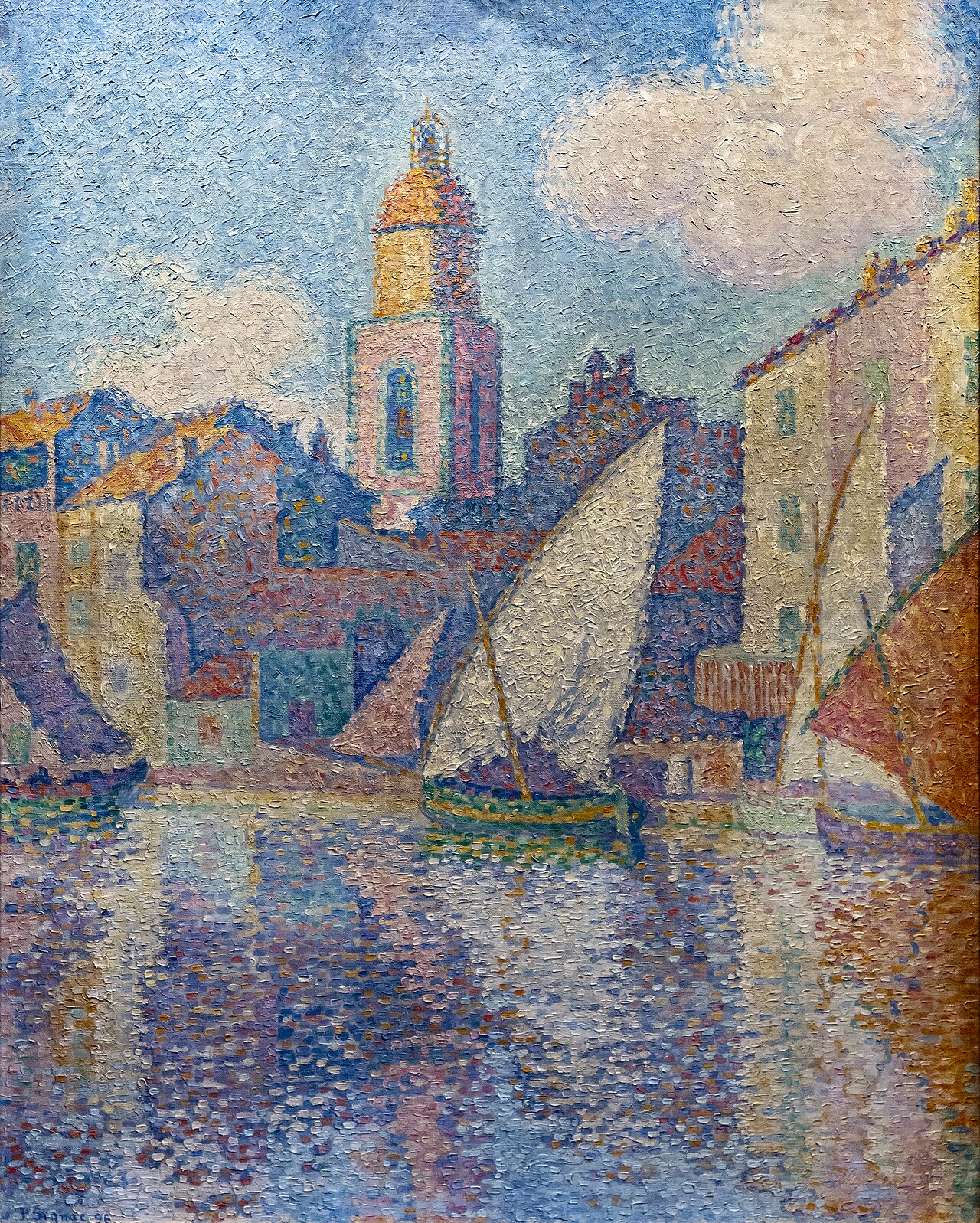
Le clocher de Saint-Tropez 1896
By 1896, Signac had been coming to Saint-Tropez for four years and knew the village in every season and at every hour. This view of the church tower — the clocher of the old town rising above the pink and ochre facades of the surrounding buildings — is among the most intimate of his Saint-Tropez paintings, trading the panoramic harbour views he returned to repeatedly for a close-up geometry of rooftops, walls, and the pink campanile against a clear Provençal sky. The palette is organised around the interplay of warm pinks and ochres in the architecture and the clear cobalt and cerulean of the sky, with the deep green of the trees below providing the complementary accent that makes the overall colour key sing. The technique here is already moving away from the uniform Pointillist dot toward the mosaic stroke that will characterise his mature style — the touches are more rectangular, more consciously tessellated, building the forms of the tower and the rooftiles with a clarity that almost resembles graphic design. There is a quality of blazing stillness in this image that captures the atmosphere of the Midi better than any atmospheric blur could manage — hard-edged, sun-dried, luminous.
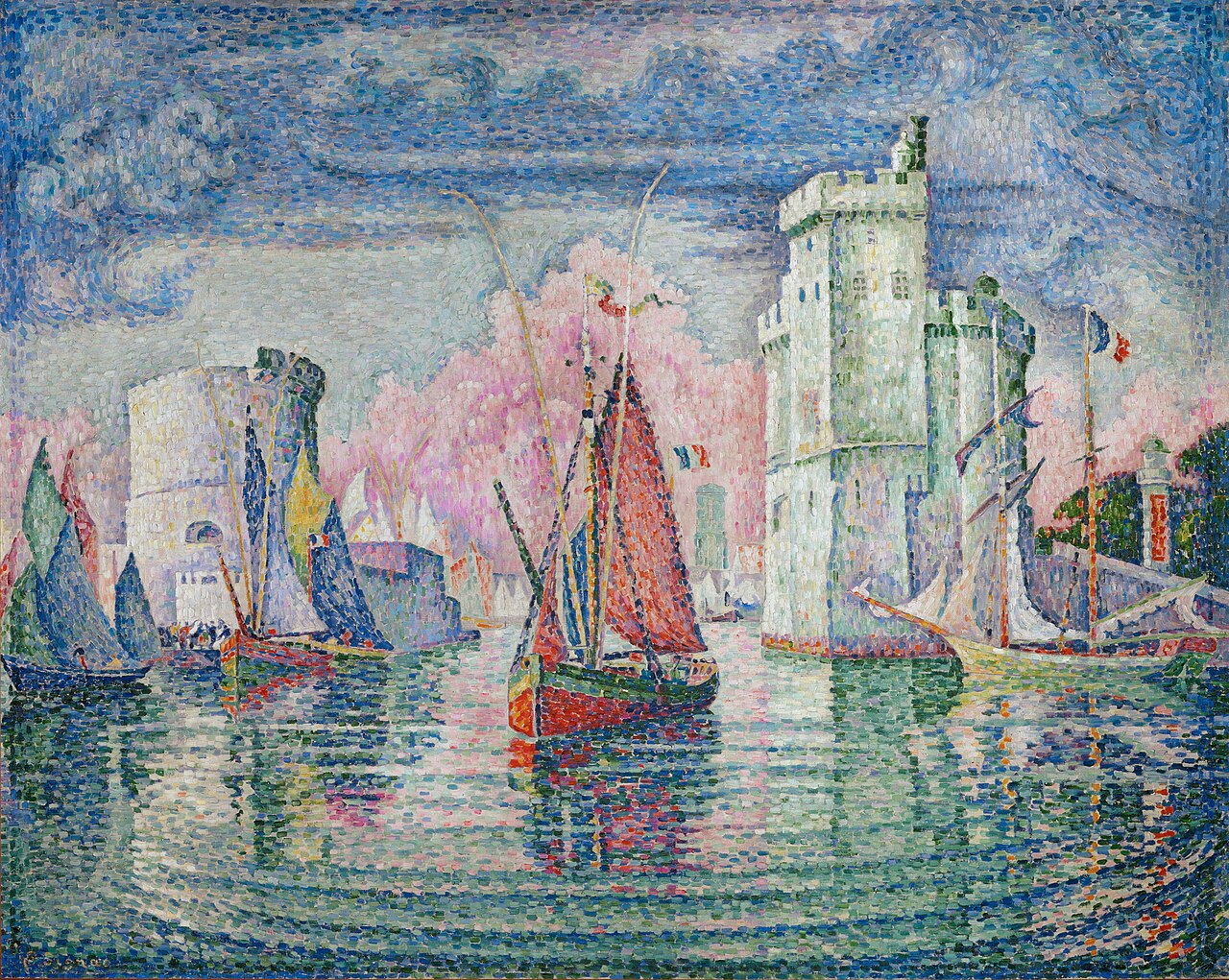
Entrée du port de la Rochelle 1921
Painted in 1921, when Signac was fifty-seven and at the height of his mature facility, this large canvas (130 × 162 cm, Musée d'Orsay) shows the entrance to the harbour of La Rochelle on the Atlantic coast — one of the great medieval port cities of France, with its twin towers guarding the harbour mouth. By this stage of his career, Signac had long abandoned the small regularised dot for a broad, confident, almost square stroke that builds form and atmosphere through the accumulated weight of individual touches, each one a distinct note in a chromatic chord. The towers are rendered in warm ochres and pinks, their reflections in the still harbour water in cooler violets and greens — the complementary contrast that organises the entire canvas. Fishing boats and their rigging occupy the middle ground, their hulls in deep cobalt and crimson providing the strongest colour accents in the composition. The sky above is a sequence of clear blue and white, luminous and open. The result is both a documentary record of a historic French port and a demonstration of what divisionist colour theory can achieve at its most relaxed and confident — painting as pure joy in light.