John Singer Sargent
The bravura brush who scandalized Paris with one gown strap, then became the Gilded Age's favorite portraitist.
Style and technique
Sargent painted with a virtuoso's confidence critics called bravura — thick, wet strokes dragged and redragged across the canvas until a lace collar or a satin sleeve seemed to shimmer without a single hard edge. He trained in Paris under Carolus-Duran, who taught his students to build a picture directly in broad tonal masses rather than through careful preliminary drawing, a method itself borrowed from Diego Velázquez. Sargent studied Velázquez obsessively on a trip to Madrid in 1879, copying paintings at the Prado, and the Spanish master's economy of brushwork — a few loaded strokes standing in for a whole passage of lace or metal — became the foundation of his technique for the rest of his career.
That technique made him the era's most in-demand portraitist. Sargent could suggest silk, velvet and skin with astonishing speed and specificity, flattering his sitters' status and beauty while still catching a flash of real personality — a raised eyebrow, a loose hand, a sideways glance — that gave his society portraits a psychological life beyond mere likeness. He worked largely alla prima, wet paint into wet paint, often finishing a head or a passage of fabric in a single sitting, and he remained notoriously exacting about pose even as the paint itself looked effortless.
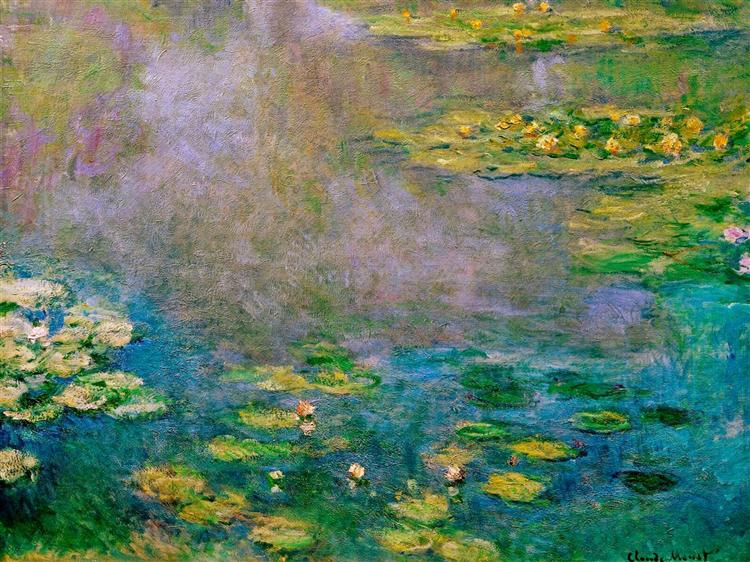
Away from the studio, Sargent was an obsessive plein-air watercolorist, and in later life he increasingly preferred watercolor's immediacy to the formal grind of oil portraiture. His views of Venice, the Alps and eventually Florida show an even looser, more Impressionist hand, closer to his friend Claude Monet than to his own society work — dashed washes of color, bare white paper standing in for sunlit highlights, compositions cropped as boldly as photographs. Late in his career he also turned to large-scale mural decoration for Boston's public buildings, applying his tonal control to allegorical schemes on a scale utterly unlike his intimate portrait work. Across portraits, watercolors, murals and finally one monumental war painting, the same instinct guided his hand: paint what the eye actually registers, fast, before the moment or the light can change.
Life and legacy
John Singer Sargent was born on 12 January 1856 in Florence, Italy, to American expatriate parents who never settled anywhere for long — his father FitzWilliam, a former Philadelphia surgeon, and his mother Mary shuttled the family between France, Italy, Germany and Switzerland throughout his childhood. Sargent grew up fluent in French, Italian and German, absorbed museums and old masters on the family's endless travels, and showed early, prodigious talent for drawing.
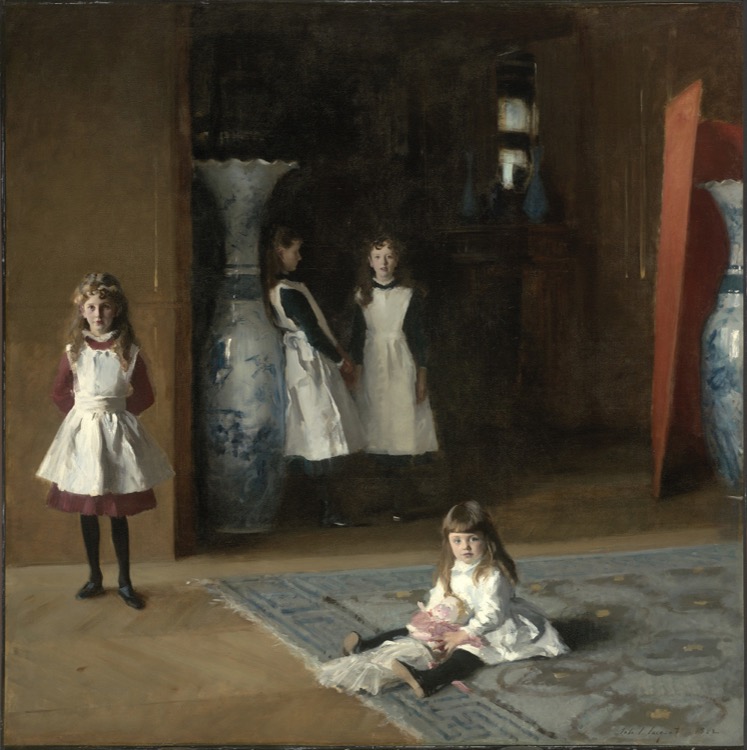
In 1874 he entered the Paris atelier of Carolus-Duran, a fashionable portraitist who taught his students to paint directly in broad tonal strokes rather than labor through academic drawing first, a method he traced to Velázquez. Sargent also studied at the École des Beaux-Arts and quickly became his teacher's star pupil. A formative 1879 trip to Spain, where he copied Velázquez at the Prado and absorbed Spanish dance and music, fed directly into El Jaleo (1882), a sensation at the Paris Salon, followed the same year by the quietly radical group portrait The Daughters of Edward Darley Boit.
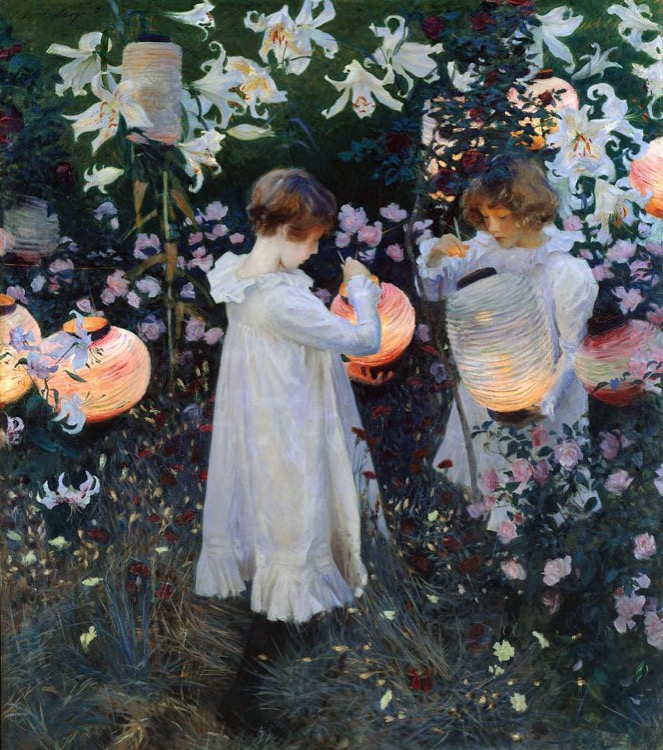
Then came catastrophe. His 1884 Salon portrait of Virginie Gautreau, later known as Madame X, showed the society beauty in a daringly cut gown with one strap slipping from her shoulder. The painting was denounced as scandalous, humiliating the Gautreau family and souring Sargent's Parisian prospects almost overnight. In 1886 he relocated permanently to London, where — helped by the radiant, twilight-lit Carnation, Lily, Lily, Rose (1885–86), painted over two summers at Broadway — he rebuilt his reputation from scratch.
Rebuild he did. Through the 1890s and 1900s Sargent became the preeminent portrait painter of Anglo-American high society, turning out dazzling likenesses of aristocrats, financiers and their families — Lady Agnew of Lochnaw (1892), The Wyndham Sisters (1899) and dozens more — for enormous fees, all while privately growing to resent the treadmill of sittings and demanding clients. Around 1907 he effectively retired from formal portrait commissions, redirecting his energy toward large mural cycles for the Boston Public Library and the Museum of Fine Arts, Boston, and toward the loose, sunlit watercolors of Venice, the Alps and later Florida that he increasingly preferred to studio work.
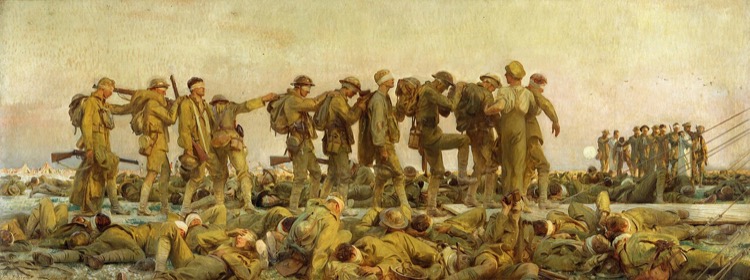
The First World War pulled him back into public painting one final time. Commissioned by the British War Memorials Committee, Sargent traveled to the Western Front in 1918 and witnessed the aftermath of a mustard-gas attack near Arras — soldiers blinded and stumbling in a human chain toward a dressing station. The scene became Gassed (1919), his last major canvas and a stark departure from decades of society glamour. He died suddenly of heart disease in London on 14 April 1925, the night before he was due to sail for Boston to see his murals unveiled at last.
Five famous paintings
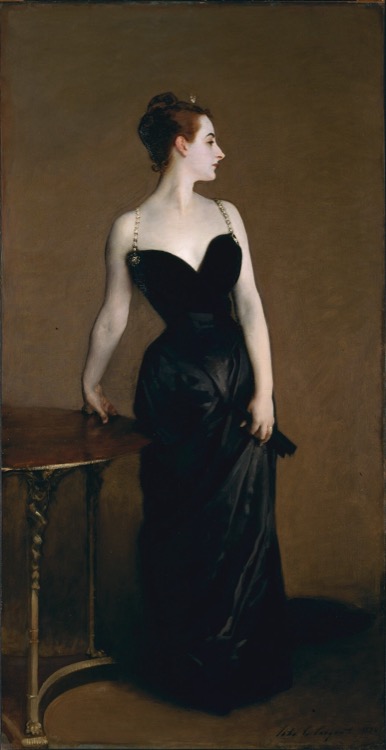
Madame X (Madame Pierre Gautreau) 1884
Virginie Gautreau, a Louisiana-born Parisian society beauty, stands in chalk-white profile against a plain brown ground, her black satin gown cut low, one bejeweled strap slipping off her shoulder. When Sargent exhibited it at the 1884 Paris Salon, the perceived indecency of the fallen strap and her powdered pallor caused a public uproar that humiliated the Gautreau family and effectively ended Sargent's Parisian career. He later repainted the strap upright on the canvas itself and, still sensitive to the scandal decades on, asked New York's Metropolitan Museum to withhold the sitter's name when it acquired the work in 1916 — hence Madame X.
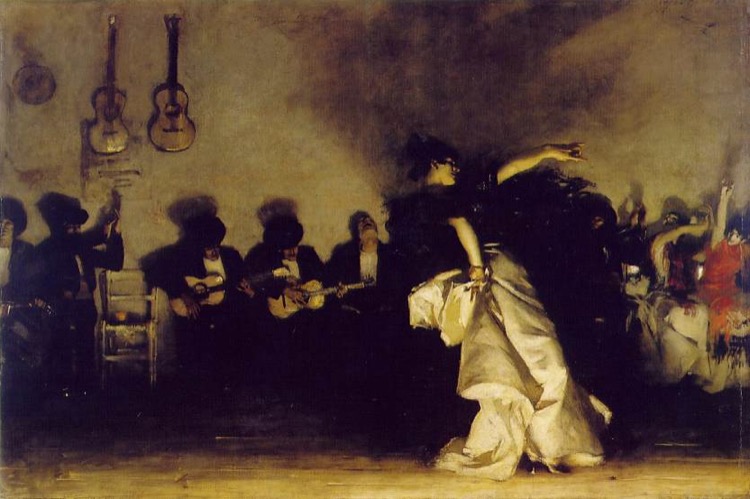
El Jaleo 1882
A flamenco dancer arches backward under a single raking light, skirts whirling, as guitarists and clapping singers crowd a shadowy tavern wall behind her — a nearly seven-foot-wide canvas inspired by Sargent's travels through Spain and his fascination with Spanish dance and Velázquez's tenebrism. Painted in 1882 for the Paris Salon, it later entered the collection of his friend and patron Isabella Stewart Gardner, who built a specially lit, arched Spanish-cloister alcove for it in her Boston museum. It still hangs in that purpose-built niche today, exactly as Sargent and Gardner intended.
Carnation, Lily, Lily, Rose 1886
Two young girls in white dresses light Chinese paper lanterns among tall lilies and carnations at the exact moment of dusk, their faces glowing warm against deepening blue twilight. Sargent painted the scene outdoors over two summers at Broadway, Worcestershire, working only during the few fleeting minutes each evening when the light matched his vision, stopping abruptly when it faded and resorting to artificial flowers once the real lilies withered before autumn. The title borrows a line from a popular song. Purchased through the Chantrey Bequest in 1887, it remains one of Tate Britain's most beloved paintings.
Gassed 1919
A line of soldiers blinded by mustard gas shuffles forward in single file, each man's hand on the shoulder of the one ahead, while more wounded men lie sprawled across the foreground and, almost unnoticed in the distance, an unharmed group plays football. Commissioned by the British War Memorials Committee, Sargent based the nearly 20-foot-wide canvas on a scene he witnessed firsthand at a dressing station near Arras in 1918, following a German gas attack. Voted Picture of the Year at the 1919 Royal Academy exhibition, it marked Sargent's final major work before he largely withdrew into mural commissions and watercolor sketching.
Lady Agnew of Lochnaw 1892
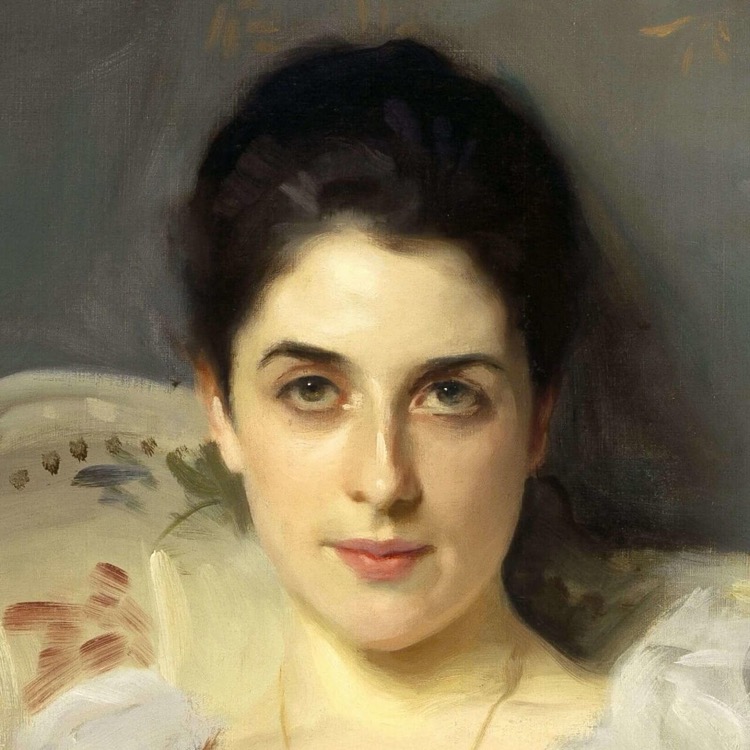
Gertrude Agnew, the young wife of a Scottish baronet, reclines sideways in a striped silk armchair, her violet sash loosely tied, meeting the viewer's eye with an unguarded, faintly amused directness rare in formal portraiture. Painted in 1892 during a lull in Sargent's career after the Madame X scandal had cooled his Parisian prospects, the loose, confident brushwork and relaxed pose caused a sensation when shown at the Royal Academy in 1893, instantly reviving his reputation and launching a decade as the most sought-after portrait painter of Britain's aristocracy and American expatriates alike.