
Baroque
Caravaggio's spotlight, Rubens's flesh, Rembrandt's shadow — the most theatrical century in Western painting.
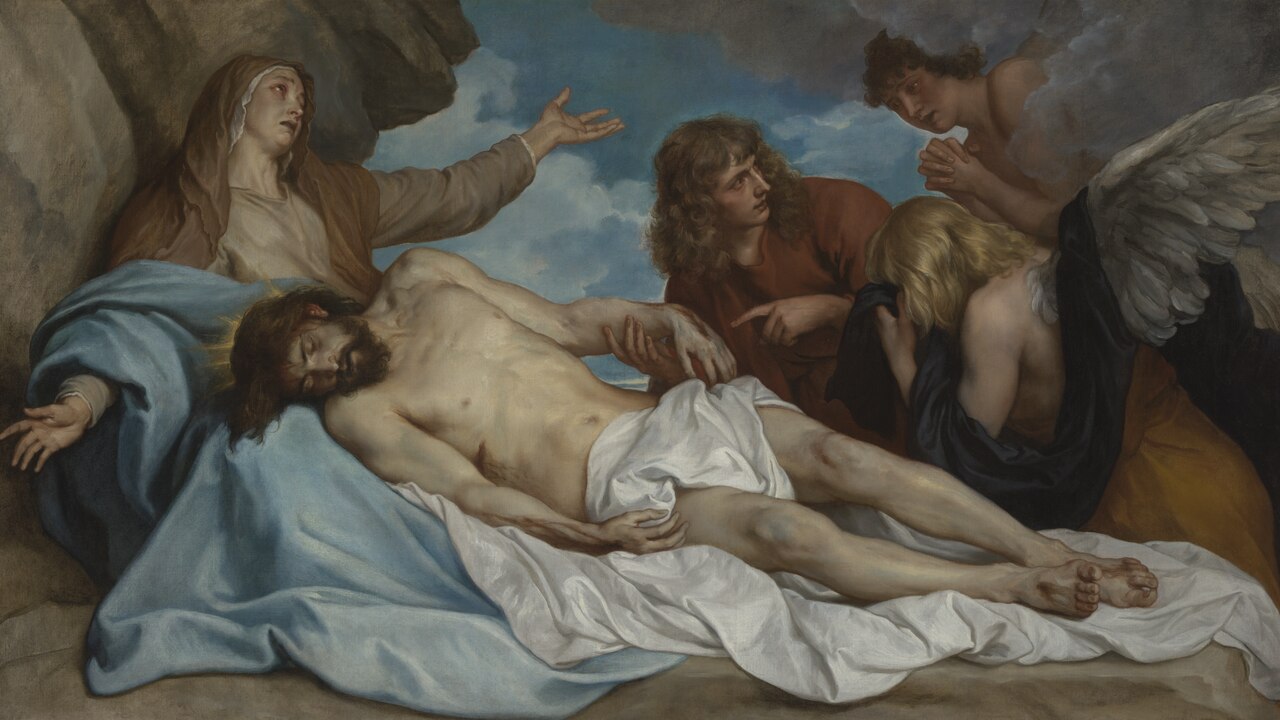
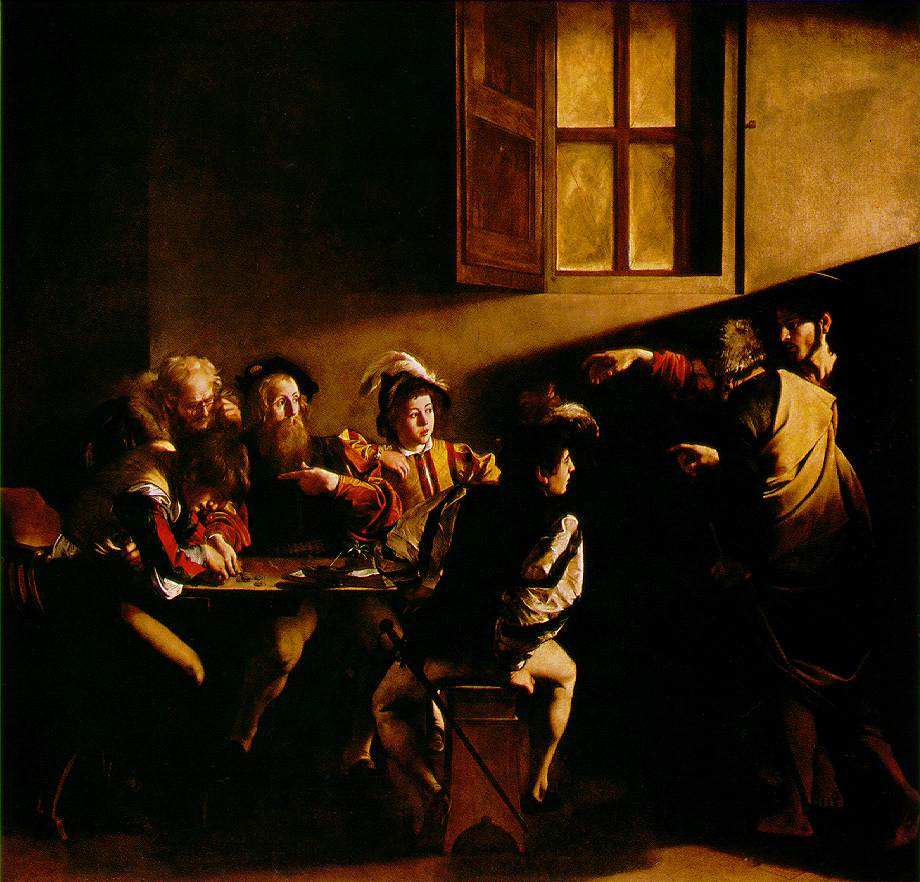
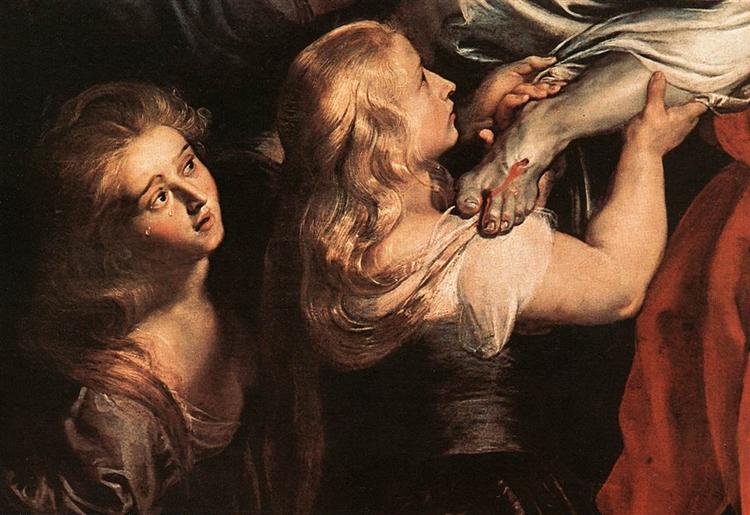
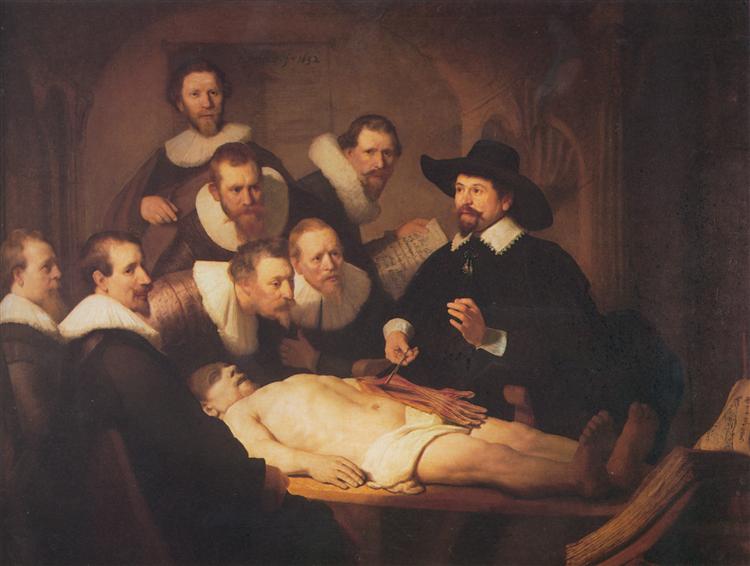
Caravaggio arrived in Rome around 1592 and turned painting upside down with a simple but revolutionary idea: put real people — street models, not classical ideals — into biblical scenes, and flood them with a single raking spotlight against near-total darkness. The Baroque was born in that shock. Spreading from Rome across Catholic Europe throughout the seventeenth century, the movement was in part a weapon of the Counter-Reformation: images had to move viewers, stir devotion, overwhelm the senses. Rubens achieved this through swirling flesh and theatrical colour; Rembrandt through psychological depth and molten shadow; Velázquez through a painterly matter-of-factness that still astonishes; Artemisia Gentileschi through unflinching dramatic force. The Baroque was never a single style — it was a temperature, a commitment to intensity — and it produced some of the largest, most ambitious, most emotionally violent paintings ever made.
Origin and history
The Baroque was born in Rome around 1600, in the slipstream of the Council of Trent. The Catholic Church, badly bruised by the Protestant Reformation and the loss of half of Northern Europe to Lutheranism and Calvinism, had decided that the answer was not less imagery but more — and more emotionally direct. The Council had spelled it out in 1563: religious art should instruct the illiterate, move them to piety, and stir them to imitate the saints. Painters were hired to make believers feel rather than think.
Caravaggio, working for cardinals in the Contarelli Chapel (1599–1600) and the Cerasi Chapel (1601), gave the movement its founding shock — saints with dirty feet, apostles with leathery skin, the divine breaking into a darkened tavern. Annibale Carracci, frescoing the Galleria Farnese (1597–1600), gave it its grand classical counterpart, full of sumptuous bodies and trompe-l'œil architecture. The two men disliked each other intensely, but the Baroque needed them both: Caravaggio's truth-from-the-street and Carracci's Olympian grandeur are the movement's two poles.
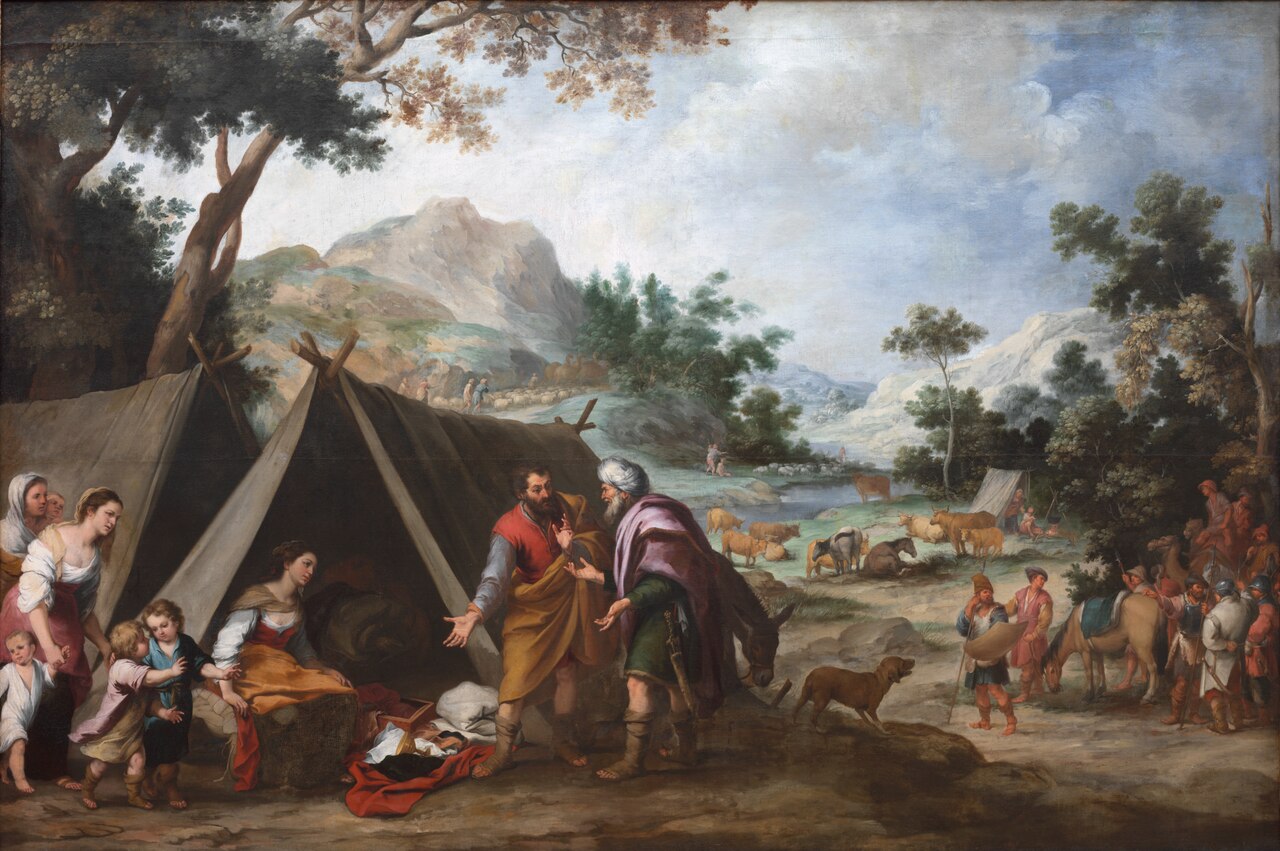
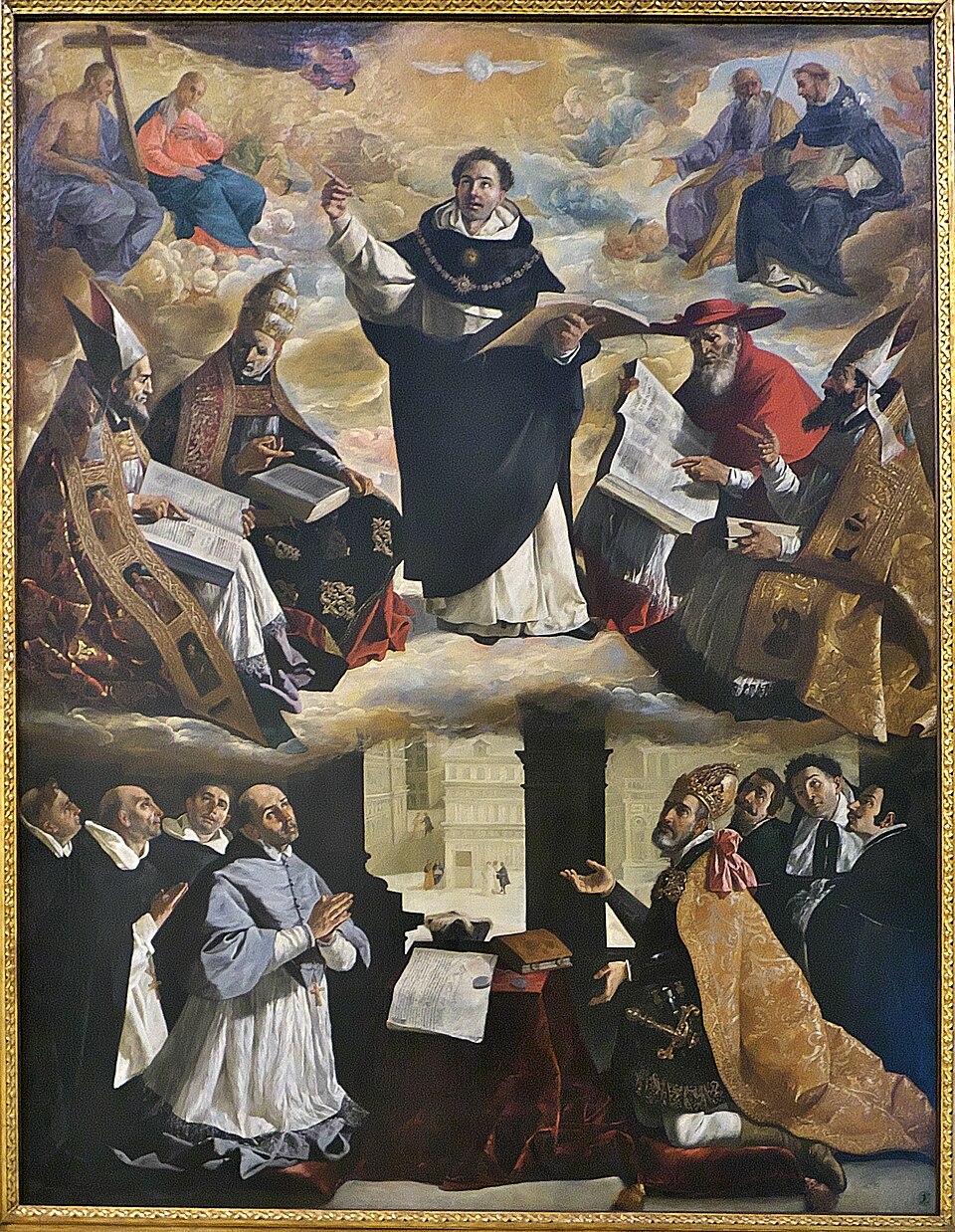
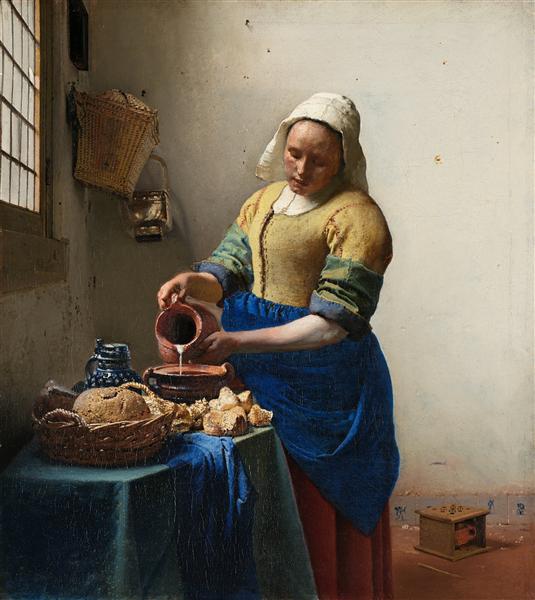
Within a generation the style had spread well beyond Italy. Spain absorbed it through Velázquez at the court of Philip IV in Madrid and Zurbarán painting saints in Seville's monasteries. Catholic Flanders had Peter Paul Rubens running an industrial-scale workshop in Antwerp — at one point employing fifty assistants and selling canvases to half the courts of Europe. The Dutch Republic is the strangest case: a Protestant, mercantile country that had no use for altarpieces but adopted the Baroque's spotlight logic for portraits, still life and domestic interiors. Rembrandt and Vermeer are the result. By the 1660s, Louis XIV's Versailles had absorbed the style into its own theatrical machinery, and Rome had passed the baton to Bernini's swirling sculpture. The movement faded into the lighter Rococo around 1715, but its core idea — that painting is a stage and the viewer is the audience — would prove almost impossible to forget.
Concept and philosophy
What unites the Baroque across countries and patrons is a commitment to intensity — to making the painted image strike the viewer like a thunderclap. The painters of the seventeenth century worked from a few shared convictions, all of them in deliberate opposition to the Renaissance generation that came before.
First, that realism in the service of emotion beats classical idealism. Bodies should sweat and bleed; faces should age; feet should be dirty; light should fall on flesh the way it really does. The High Renaissance had given Europe perfection — Raphael's Madonnas, Michelangelo's superhuman bodies — and by 1600 that perfection felt cold. Caravaggio's revolution was to use the language of religious painting to depict the people he actually saw in the streets of Rome.
Second, that a painting is fundamentally a moment — the freeze-frame of an action at its psychological peak. The instant before the sword falls. The instant after the visitation begins. The heartbeat of recognition when Christ reveals himself at Emmaus. Where Renaissance art prefers timeless balance, Baroque art prefers a tipping point — a body off-balance, a glance just-arrived, a candle just-blown-out.
Third, that the viewer is implicated. Figures look out at us, gesture toward us, occupy our space. Where a Renaissance Madonna sits enthroned in eternity, a Baroque Magdalene leans out of the canvas and addresses us directly. This is why the Baroque produced so many ceilings that seem to dissolve overhead, so many altarpieces that pull worshippers physically into the scene. The painting wants something from you.
Finally, that scale and contrast are tools of conviction. Catholic Counter-Reformation patrons needed their images to overwhelm — to make a doubting parishioner kneel. Protestant Dutch patrons wanted the same psychological grip applied to a still life of lemons or a quiet woman pouring milk. Different subjects, same nervous system.
How to recognise it
Six visual fingerprints that recur across Italian, Spanish, Flemish and Dutch Baroque painting — recognise any two of them and you are almost certainly looking at a seventeenth-century work.
- Dramatic chiaroscuro — A strong, single-source light picks figures out of deep shadow. Caravaggio pushed it to the extreme — his disciples were nicknamed the *tenebristi*, the shadow people — but every Baroque master used it. If a figure seems lit from nowhere in particular, with the surrounding space swallowed in darkness, you are in Baroque territory.
- Diagonal, unstable composition — Where the Renaissance prefers stable triangles and centralised symmetry, the Baroque prefers the sweeping diagonal. Bodies twist, drapery billows off the edges, eyes roll upward in ecstasy or terror. The whole composition feels caught in motion, as if the canvas were a freeze-frame.
- Real bodies, real faces — Models look like specific people, often working-class. Feet are dirty, knuckles are calloused, faces are aged or pockmarked. This realism is one of the Baroque's most consequential decisions — it democratised who deserved to be painted with seriousness.
- Monumental scale — Altarpieces six metres high, ceiling frescoes that swallow entire church vaults, equestrian portraits the size of doorways. Even when the subject is intimate (a Vermeer interior, say), the psychological scale is operatic.
- Warm, deep colour against black — Italian and Flemish Baroque favour rich warm tones — deep reds, warm browns, golden ochres, honeyed flesh — against backgrounds of pure shadow. Dutch Baroque uses a cooler, more silvery palette but follows the same logic of selective illumination.
- Caught-in-the-act gesture — Hands reach, mouths open mid-speech, eyes have just locked onto something off-canvas. The Baroque painter is a stage director: every figure is mid-action, and the viewer arrives at exactly the most charged second.
Anecdotes and curiosities
Caravaggio painted murderers from the street. When the Cerasi Chapel commissioned him to depict the conversion of Saint Paul, he hired a working-class Roman as the model and painted Paul flat on his back beneath a startled horse — the saint's massive, hairy buttocks practically in the foreground. The patrons rejected the first version. Caravaggio repainted it, kept the realism, and changed Western painting forever. He would die a few years later, on a beach in Tuscany, on the run for killing a man over a bet on a tennis match.
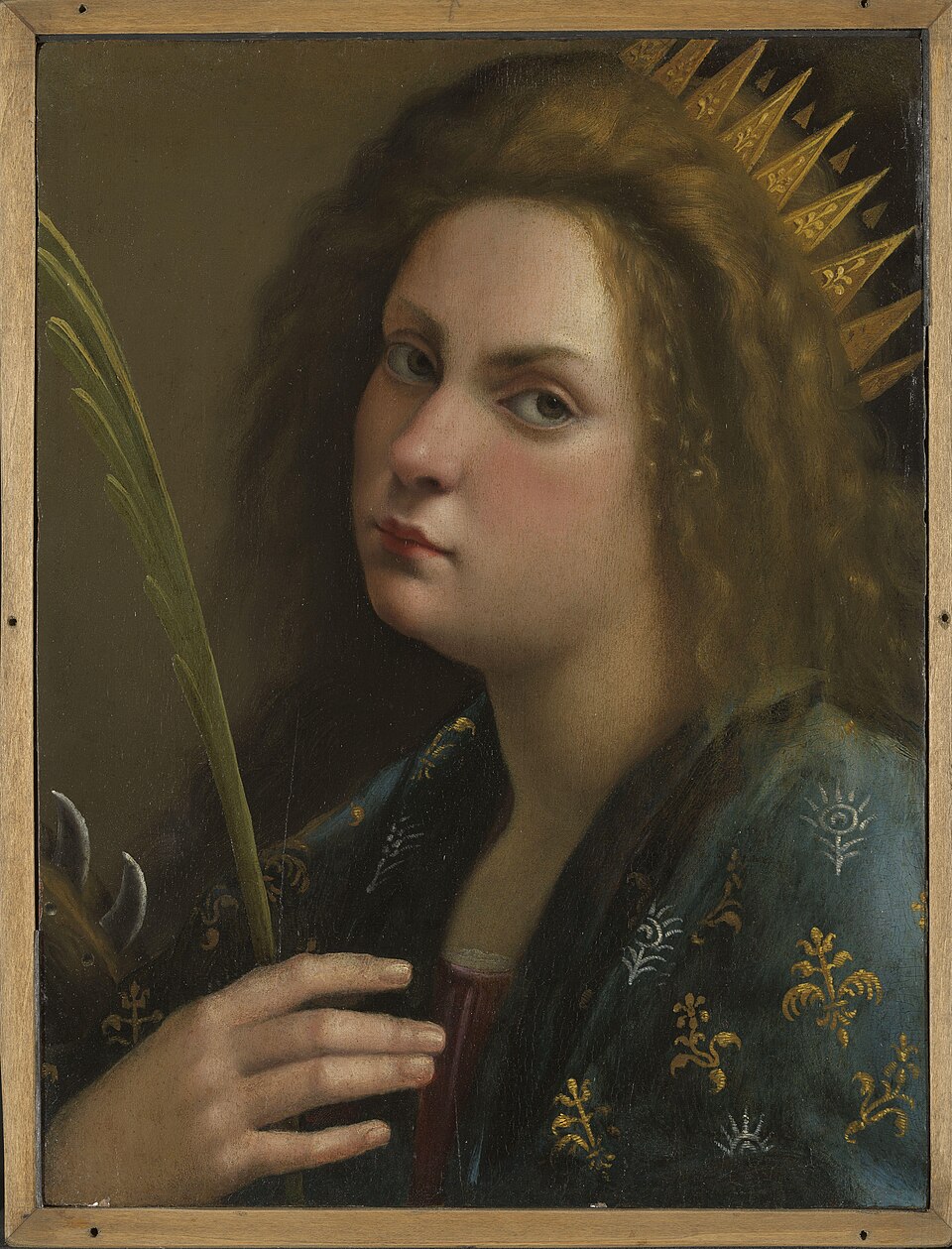
Artemisia Gentileschi painted Judith Beheading Holofernes (1620) twice — once before her rape trial, once after. The post-trial version, now in the Uffizi, shows two strong women pinning the Assyrian general down and sawing through his neck with the muscular concentration of butchers. It is widely read as autobiographical. Gentileschi was the first woman admitted to Florence's Accademia di Disegno and ran a successful studio in Naples; for three centuries afterwards her canvases were routinely re-attributed to male contemporaries.
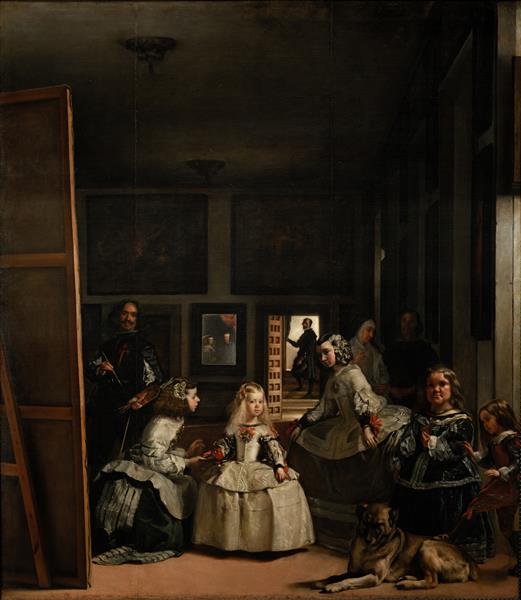
Velázquez hid himself inside a royal portrait. *Las Meninas* (1656) shows the Infanta Margarita and her ladies in a room in the Alcázar — but on the left, at his enormous canvas, stands the painter himself, brush in hand, returning the viewer's gaze. The mirror in the back reflects the king and queen, who are presumably standing where we are. Foucault devoted the opening chapter of *The Order of Things* to this picture; for art historians, it is still the most discussed painting in Western art.
Rembrandt's workshop ran like a factory. At its peak in the 1640s, his Amsterdam studio had dozens of pupils paying tuition, copying his manner, and producing paintings he would then sign and sell. This is why so many "Rembrandts" have been quietly demoted in the past fifty years — the Rembrandt Research Project, founded in 1968, spent four decades attributing or de-attributing every canvas with his name. The genuine ones, by consensus around 300, remain among the most psychologically penetrating paintings ever made.
Legacy and influence
The Baroque essentially invented the theatrical relationship between picture and viewer that Western art would not let go of for three centuries. Without Caravaggio's spotlight, no Rembrandt; without Rembrandt, no Goya — and without Goya's late Black Paintings, no Manet, no Picasso's *Guernica*, no twentieth-century history painting. The Dutch Baroque genre tradition (Vermeer's interiors, de Hooch's courtyards) became the template for nineteenth-century realism and ultimately for Impressionism's interest in everyday modern life. Even the cinema of Caravaggio's spiritual heir Martin Scorsese — high-contrast, diagonal, faces emerging from black backgrounds — is recognisably Baroque. The movement's anti-classical insistence that ordinary people deserved to be painted with seriousness was one of the most consequential decisions in Western culture.
11 artists in this movement
From the blog
Frequently asked questions
When did the Baroque period begin and end?
Conventionally, the Baroque runs from about 1600 to 1715 — from Caravaggio's first major Roman commissions to the death of Louis XIV. Some art historians push the start back to the 1580s (the late Counter-Reformation Italian masters) or extend the end to around 1750 in the German lands and Iberian colonies. By the 1720s in Paris, the lighter Rococo style had already replaced it among fashionable patrons.
What is the difference between Baroque and Renaissance painting?
The Renaissance aimed at balance, harmony and idealised form — bodies in geometric proportion, calm centralised compositions, even light. The Baroque deliberately broke that balance: diagonal compositions, dramatic spotlighting, real-looking models, and figures caught in mid-action. A Renaissance Madonna sits enthroned in eternal stillness; a Baroque Magdalene weeps in the dark. Both styles are masterful — they simply have opposite emotional ambitions.
Who are the most important Baroque painters?
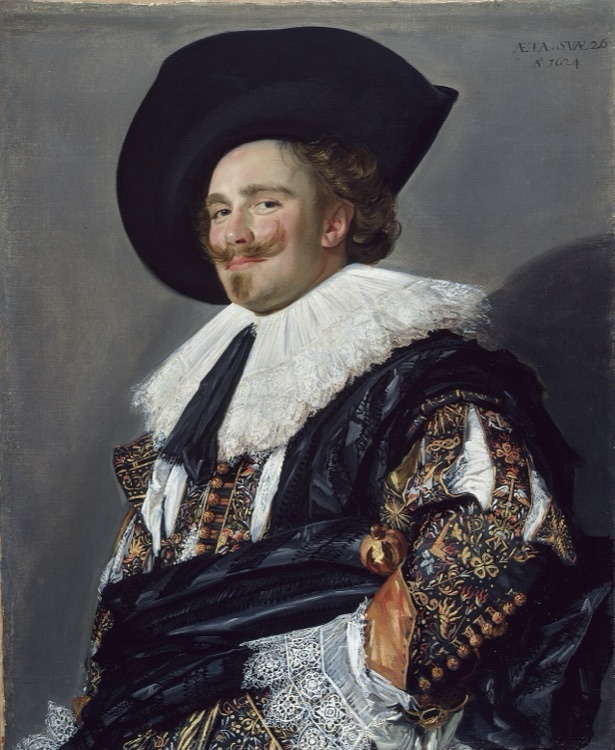
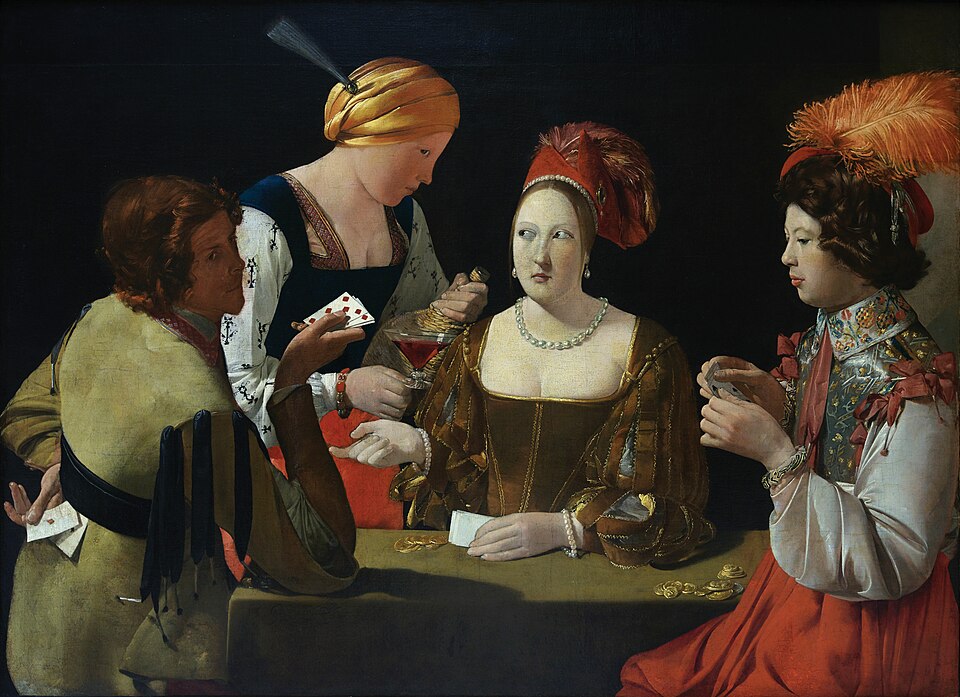
Caravaggio (1571–1610) invented the style. Peter Paul Rubens (1577–1640) made it European. Diego Velázquez (1599–1660) gave it psychological depth at the Spanish court. Artemisia Gentileschi (1593–c.1656) gave it dramatic force. Rembrandt van Rijn (1606–69) and Johannes Vermeer (1632–75) translated it into a Dutch domestic key. After them come Annibale Carracci, Zurbarán, Georges de La Tour, Frans Hals — every one worth knowing.
Why is it called 'Baroque'?
The word probably derives from the Portuguese *barroco*, meaning an irregularly shaped pearl. It was originally a term of insult, applied by eighteenth-century neoclassical critics who found seventeenth-century painting overwrought, gaudy and badly proportioned. The label stuck, but the negative meaning has long since faded — by the late nineteenth century 'Baroque' was a neutral period descriptor, and today the word evokes grandeur rather than excess.
What is chiaroscuro?
Italian for 'light–dark', chiaroscuro is the Baroque's defining technique: a strong, single-source light that picks figures out of deep shadow. Caravaggio pushed it to such an extreme that his disciples were nicknamed the *tenebristi* (the shadow people). The technique gives paintings a stage-spotlight quality and forces the viewer's eye exactly where the painter wants it. It survives today in cinema lighting, theatrical photography and, of course, every painting that descends from this tradition.