Marcel Duchamp
The chess-playing Frenchman who signed a urinal, dressed as a woman, and rewired what art could be in the twentieth century.
Style and technique
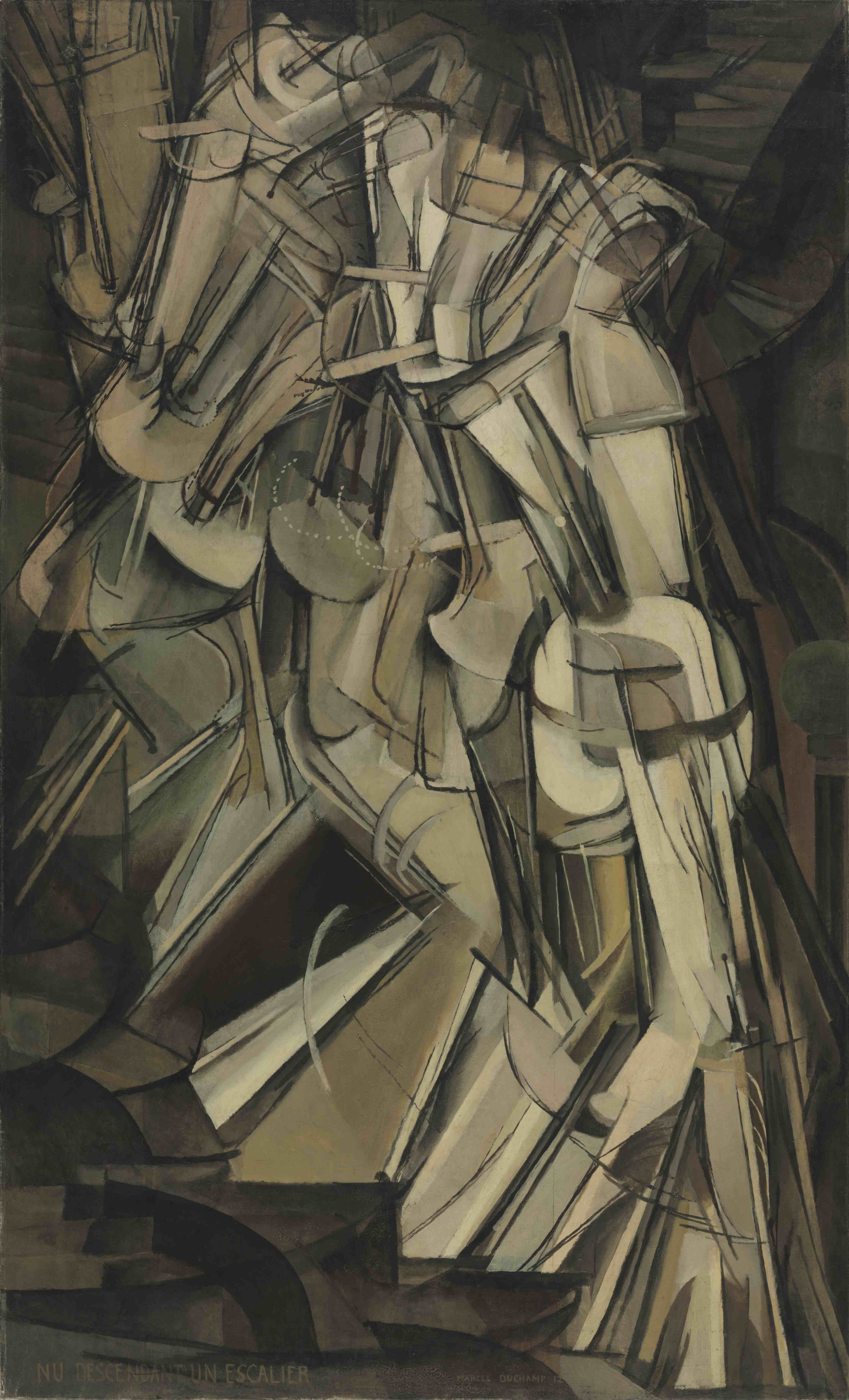
Duchamp's work does not really look like anything. That is the point. He spent his early twenties learning to paint in the manner of his Cubist friends, produced one of the most famous canvases of the twentieth century — 'Nude Descending a Staircase, No. 2' — and then, before he had turned thirty, he walked away from the brush almost entirely. What replaces painting in his mature work is the idea, presented as an object, signed and exhibited. The hand barely moves. The decision is everything.
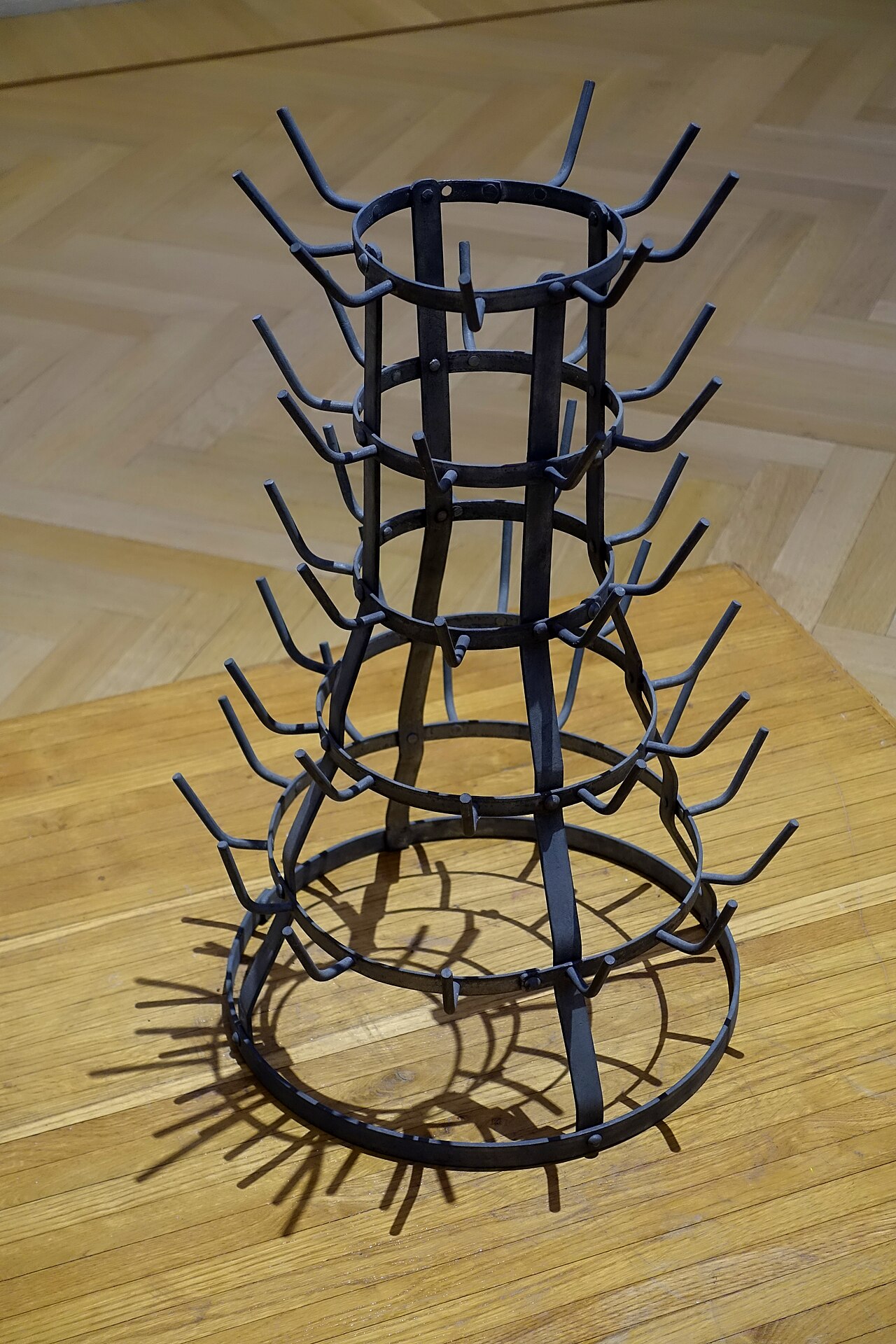
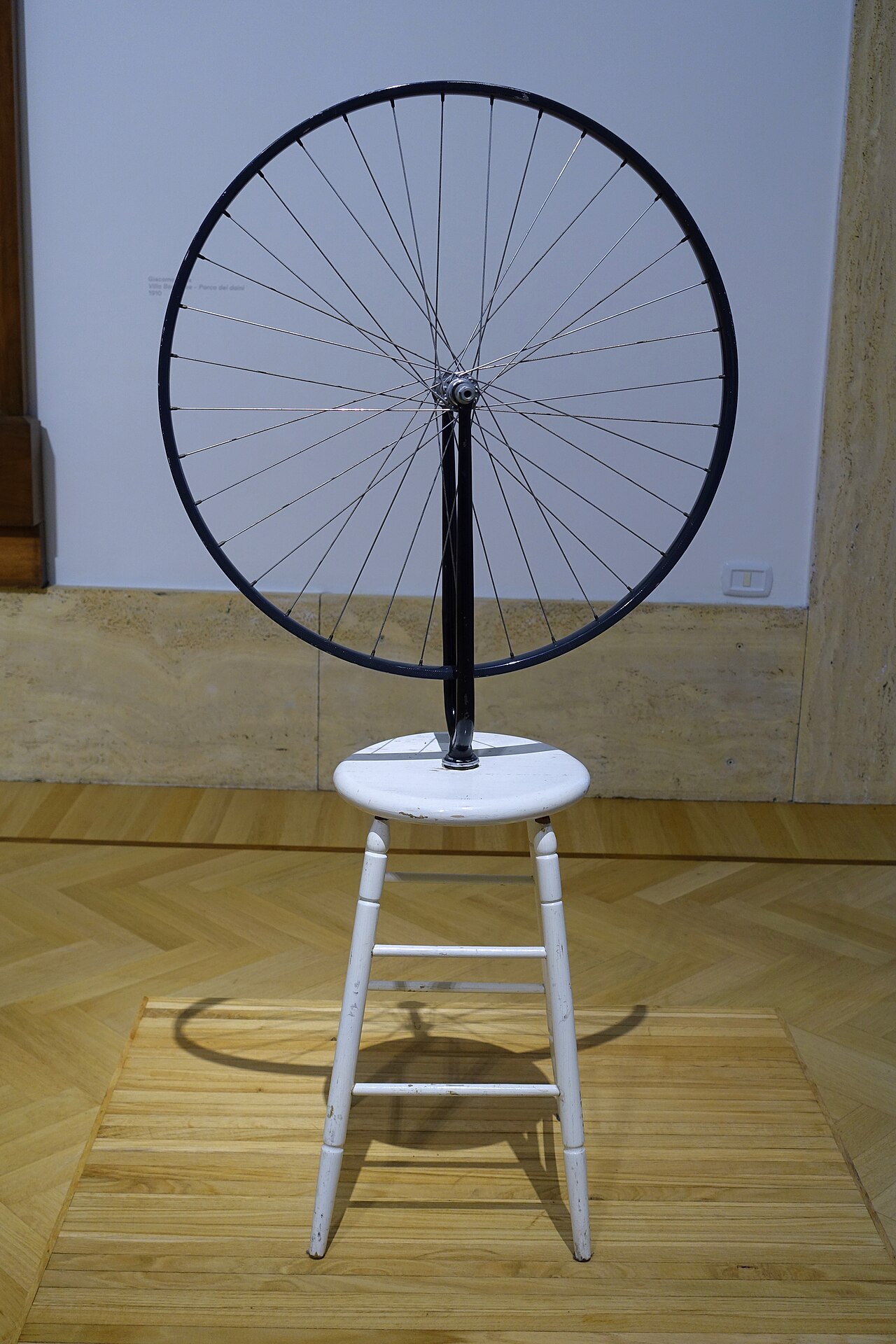
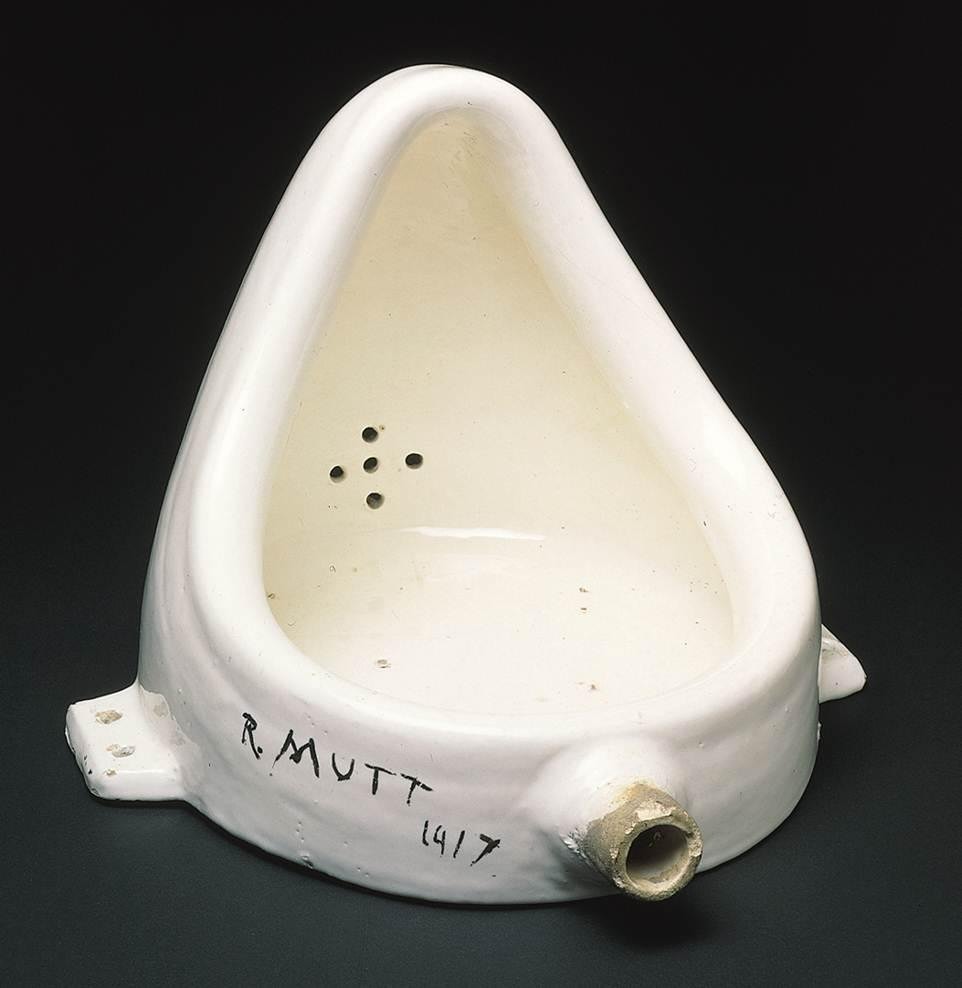
The central invention is the readymade: a manufactured object — a bottle rack, a snow shovel, a urinal, a bicycle wheel mounted upside-down on a stool — chosen by the artist and declared, by the act of choosing, to be a work of art. The shock is not aesthetic. The objects are deliberately neutral, often industrial, chosen with what Duchamp called "visual indifference", the absence of any taste, good or bad. The shock is conceptual. It transfers the location of art from the studio to the head, from craft to nomination.
Four habits make a Duchamp recognisable.
Visual indifference. He chose objects he found neither beautiful nor ugly. The eye is not meant to enjoy them; the mind is meant to register that a decision has been made.
The pun and the title. Almost every work carries a wordplay — *L.H.O.O.Q.* read aloud in French, *Fresh Widow*, *Tu m'*, *Why Not Sneeze Rrose Sélavy?* The title is half the work; language is part of the medium.
Mechanical drawing and glass. When he did still make images, he abandoned painterly touch for the dry precision of an engineer's diagram, often executed on glass rather than canvas, so the picture is transparent and the wall behind becomes part of it.
The alter ego. From 1920 he signs many works as Rrose Sélavy — a woman, a Jewish woman, a pun (*Eros, c'est la vie*). The artist is not a fixed identity but another readymade, to be selected and worn.
Underneath all of it is a temperament that distrusts seriousness and adores precision. He is a chess player by vocation: patient, ironic, more interested in the structure of a problem than in winning the argument. He treats the museum, the signature and the artist himself as conventions to be examined, displaced and very politely dismantled.
Life and legacy
He was born Henri-Robert-Marcel Duchamp on 28 July 1887 in Blainville-Crevon, a village in Normandy, the third of seven children of a notary. The Duchamp household was unusually artistic: his older brothers Jacques Villon (the painter Gaston) and Raymond Duchamp-Villon (the sculptor) were already established in Paris, and his younger sister Suzanne Duchamp would also become a painter. Marcel followed them to Paris at seventeen, enrolling briefly at the Académie Julian in 1904 and earning a living as a cartoonist for satirical magazines.
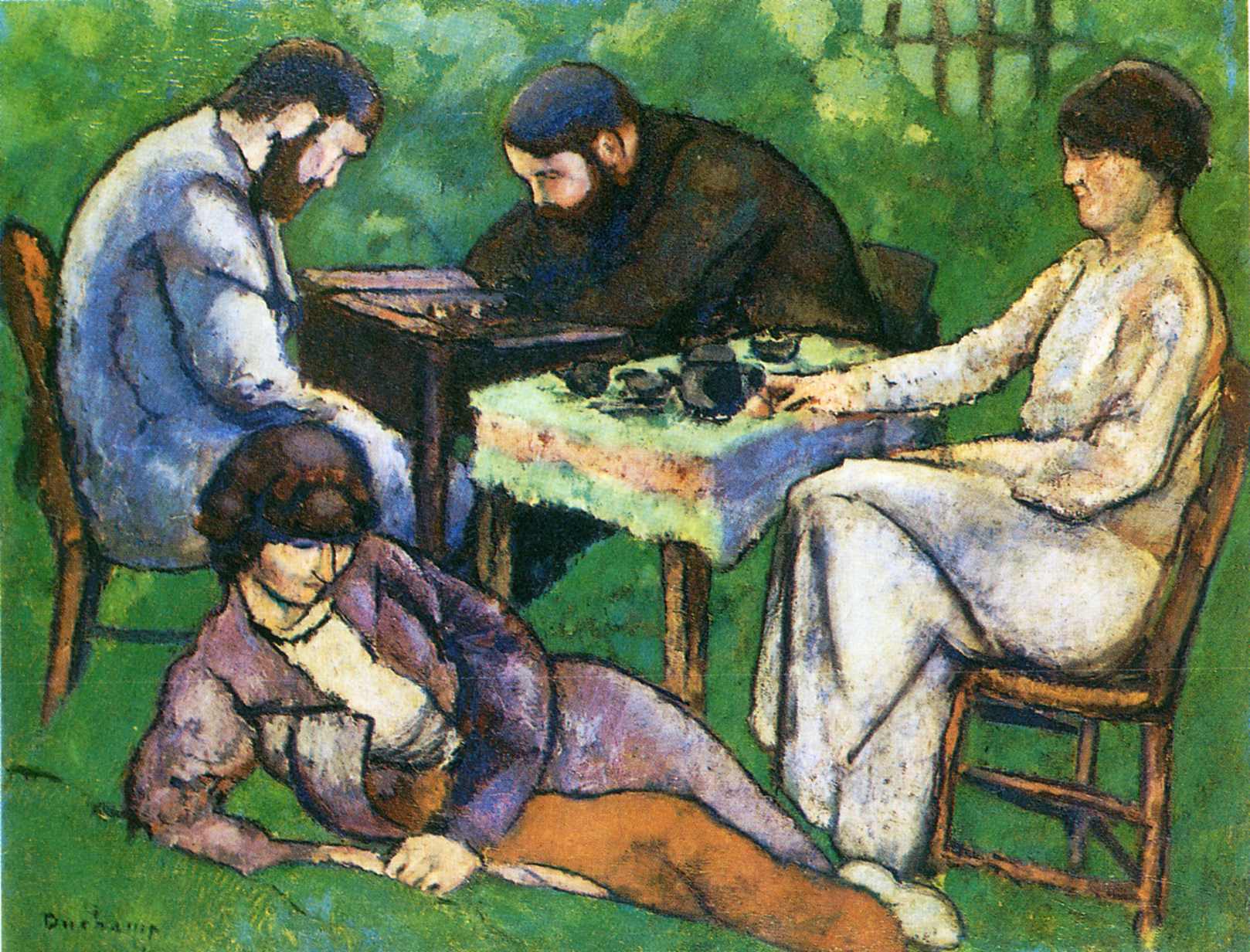
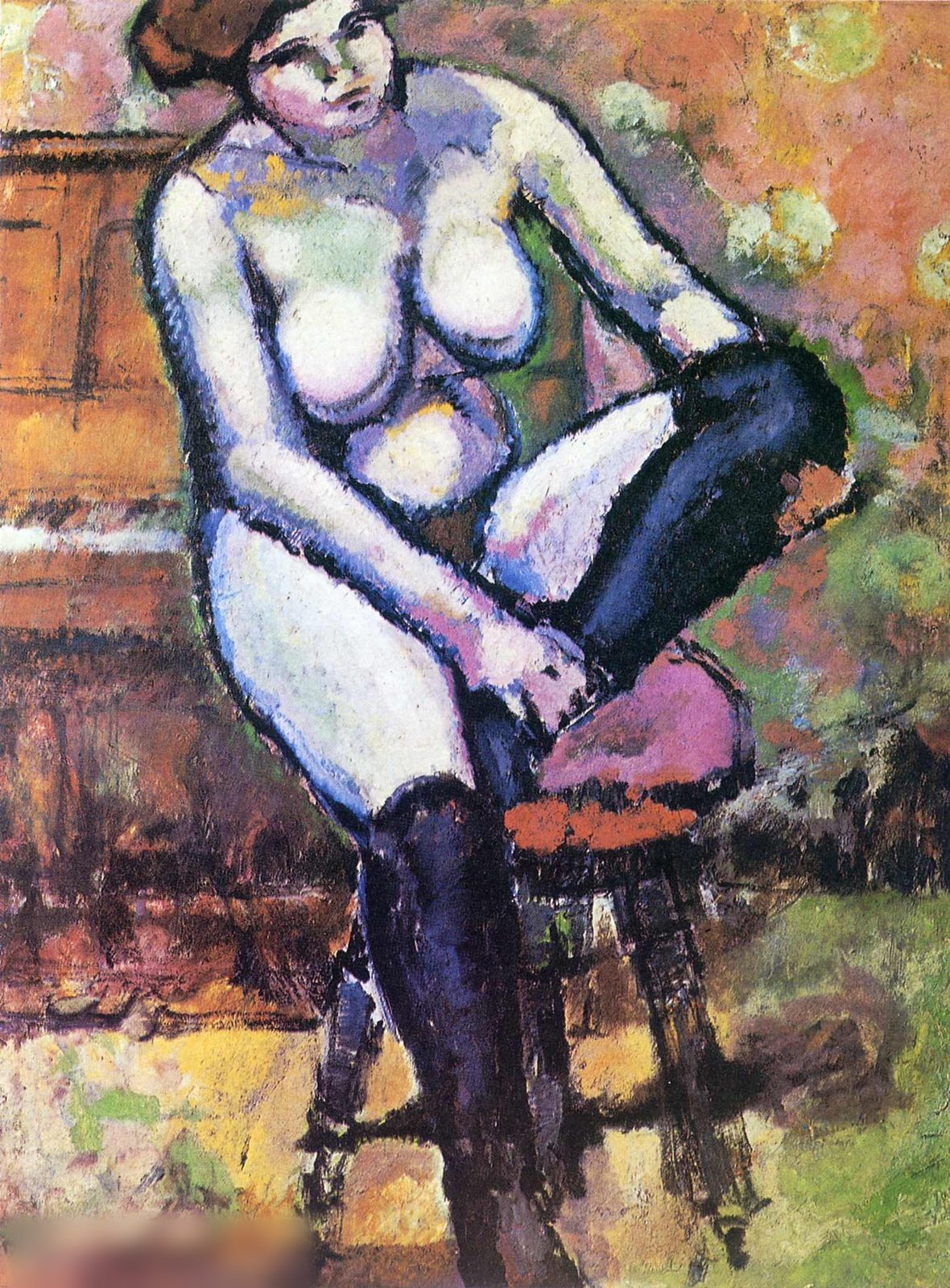
His early painting moves quickly through the styles of the moment — Post-Impressionism, Fauvism, then Cubism. By 1911 he was working in a recognisable Cubist-Futurist idiom, fascinated by chronophotography and the breaking up of motion into successive frames. The result, in January 1912, was 'Nude Descending a Staircase, No. 2', a tawny, mechanical figure of overlapping planes seen as if photographed at high speed. He submitted it to the Salon des Indépendants in Paris that spring; the Cubist hanging committee, which included his own brothers, asked him to withdraw it or change the title. He withdrew it instead — a quiet, decisive break. *'It helped liberate me,'* he said later. From then on he stopped trying to belong to a movement.
The canvas travelled to New York in February 1913 for the Armory Show, the first great exhibition of European modernism in the United States, and there it became an instant scandal — a critic called it *"an explosion in a shingle factory"* — and a celebrity. Duchamp, still in Paris, suddenly had a name in America before he had ever set foot there. Around the same time, in his Paris studio, he was already moving past painting altogether: in 1913 he mounted a bicycle wheel upside-down on a kitchen stool simply to enjoy watching it spin, and in 1914 he bought a galvanised iron bottle-drying rack at the BHV department store and signed it. The word readymade would only arrive a couple of years later.
In June 1915, with Europe at war and Duchamp exempted from military service for a heart condition, he sailed for New York. He spoke barely any English on arrival but was met as a hero of the Armory Show. He settled into the Upper West Side circle of the patrons Walter and Louise Arensberg, met Man Ray (a friendship that would last fifty years), and joined Francis Picabia and the salon of Florine Stettheimer to form the loose group later called New York Dada. He earned his living teaching French and working as a librarian at the Institut Français.
In April 1917 the newly founded Society of Independent Artists announced an unjuried exhibition — any artist who paid the six-dollar fee could show. Duchamp was on the board. He bought a porcelain urinal from the J. L. Mott Iron Works on Fifth Avenue, laid it on its back, signed it 'R. Mutt 1917', titled it 'Fountain', and submitted it under that pseudonym. The board, not knowing it was his, voted to suppress the work. Duchamp resigned in protest. The original urinal vanished — probably thrown out — and survives today only through a single photograph by Alfred Stieglitz, taken at Stieglitz's gallery 291 a few weeks later.
From 1915 to 1923 he worked, on and off, on his most ambitious object: 'The Bride Stripped Bare by Her Bachelors, Even', known as the Large Glass — a nine-foot-tall construction of oil, lead foil, fuse wire and dust sealed between two panes of glass. He declared it "definitively unfinished" in 1923 and turned to chess. For the next two decades he played at near-professional level, represented France in four Chess Olympiads between 1928 and 1933, captained the French team, co-authored a treatise on rare endgames, and let almost everyone believe he had abandoned art for the board.
In 1920 he had begun signing works as his feminine alter ego Rrose Sélavy — Man Ray's photographs of Duchamp in cloche hat and fur collar are among the earliest serious explorations of gender as masquerade in modern art. He moved between Paris and New York through the 1920s and 30s, became a dealer of Brancusi's sculptures in America, married briefly in 1927 (the marriage lasted six months), and in 1954 married Alexina 'Teeny' Sattler, the former wife of the art dealer Pierre Matisse. He took American citizenship the following year.
What almost nobody knew was that from 1946 to 1966, in a back room of his Greenwich Village studio, he had been secretly assembling a final work. 'Étant donnés: 1° la chute d'eau, 2° le gaz d'éclairage' — a tableau visible only through two peepholes drilled into a Spanish wooden door, showing a naked female figure lying on twigs, holding a gas lamp, with an electric waterfall trickling in the distance. He left detailed assembly instructions; the piece was installed posthumously at the Philadelphia Museum of Art in 1969.
He died in his sleep at his home in Neuilly-sur-Seine on the night of 2 October 1968, after dining with Man Ray and the writer Robert Lebel. He was 81. His grave at Rouen carries an epitaph he chose himself: *'Besides, it is always the others who die.'*