
Contemporary Art
No single style — a thousand living conversations about what painting can still do.
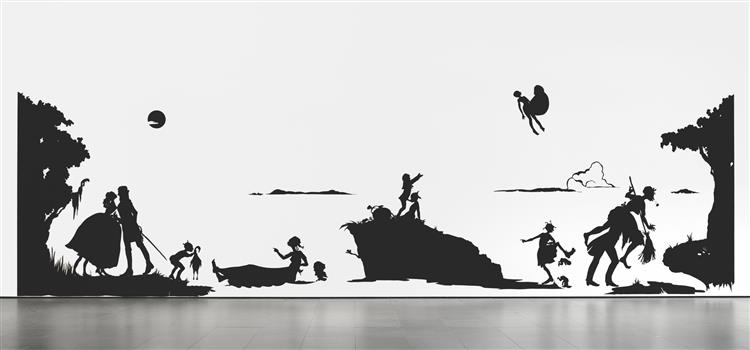
In 2015 Kara Walker installed a room-sized sculpture made from refined white sugar in a former factory in Brooklyn — a giant sphinx-like figure dripping with molasses, surrounded by sugar-boy figurines, confronting American history through a form simultaneously beautiful and sickening. It was not quite painting. But Walker is equally famous for her large-scale black-paper silhouettes mounted directly on gallery walls, their imagery drawn from the antebellum South, and those silhouettes exist in the same conceptual space as her paintings: image, surface, looking, history, the body. Contemporary Art on this site gathers the painters working now — from Gerhard Richter's photo-based abstractions to Banksy's stencilled street interventions, from Bridget Riley's optical fields to Ana Mendieta's earth-body works documented in photographs — and the challenge is not to define a style but to identify what this extraordinarily diverse moment shares. The answer, perhaps, is a heightened self-awareness about what it means to make a picture at all.
Origin and history
If Contemporary Art has a founding moment, it might be placed in the mid-1960s, when the inherited modernist narrative — the forward march from Impressionism through Cubism to abstraction — visibly broke down. Pop Art had exposed the arbitrariness of the boundary between high and commercial culture. Minimalism had declared that painting could be a physical object without being a representation. Conceptual Art argued that the idea alone, without any material object, was sufficient for art. From that dissolution of consensus, the contemporary situation emerged.
The 1970s and 1980s intensified the fragmentation. Feminist art (Judy Chicago, Miriam Schapiro, Ana Mendieta) challenged the gender politics of art history and the definition of valid media. Identity politics entered painting as explicit subject matter — Kerry James Marshall began his lifelong project of inserting Black figuration into the canon of Western painting history with full technical authority. Post-colonial critique arrived with Yinka Shonibare, Kara Walker and others who interrogated Western artistic tradition from positions it had historically ignored.
By the 1990s, the global art-fair and biennial system — Art Basel, Venice, Frieze — had created an international market and exhibition circuit that accelerated stylistic plurality rather than resolving it. Painters from Lagos, Shanghai, São Paulo and Seoul entered a conversation that had previously been conducted almost entirely in New York, Paris and London. The result is the genuinely polyphonic moment we inhabit now: no dominant movement, no agreed-upon direction, and an unprecedented range of voices making work of serious ambition.
What does unite contemporary painting, to the extent that anything does, is a shared awareness that painting carries history on its back. Every mark on canvas now happens in the shadow of everything that has been done before — and contemporary painters know it. That knowledge can produce anxiety, irony, aggression, or a deliberate return to apparently naive pleasures. All of these are strategies for living inside an art form that has been declared dead several times and keeps refusing to lie down.
Concept and philosophy
Contemporary Art is not a style. It is a condition: the condition of making art now, with full knowledge of what art has been. This creates a set of shared concerns that cut across wildly different visual approaches.
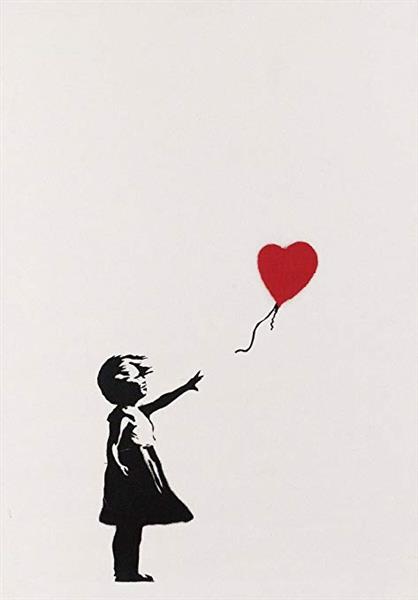
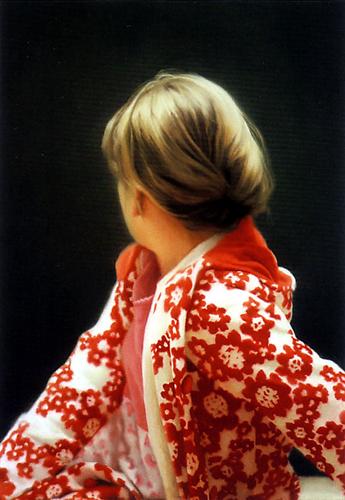
The first is self-awareness about the picture's own status. A Gerhard Richter photo-painting does not simply depict a photograph; it thinks about what painting does to photography and what photography does to painting. A Banksy stencil is not simply a political image; it is a meditation on where art belongs, who owns public space, and what happens when the art market captures a gesture that was designed to escape it. Contemporary art has made this meta-level awareness nearly unavoidable.
The second is an expanded understanding of whose stories painting can tell. The canon of Western art history — from Giotto to de Kooning — systematically excluded most of the world's people as subjects and as makers. Contemporary painting has been renegotiating that exclusion for half a century: Marshall's *Mastry* series places Black figures in the compositional language of Old Master painting; Kara Walker's silhouettes force the imagery of enslavement into the aestheticised language of Victorian parlour decoration. This is not simply diversity as policy but pictorial argument as historical critique.
The third is an embrace of technical plurality. Contemporary painters routinely work with photography, video, digital tools, found objects and industrial fabrication alongside traditional media. Richter's squeegee technique produces surfaces that read like printed images; Cecily Brown's oil-on-canvas surfaces carry the full tradition of gestural painting while engaging explicitly with erotic imagery from Old Masters. The question is not what materials you use but what the work knows about itself.
How to recognise it
Contemporary Art deliberately resists a single visual fingerprint. These six tendencies recur across a wide range of current painting — treat them as prompts for looking rather than definitive diagnostic criteria.
- Plurality of approaches — No single style dominates: photo-realism, abstraction, figuration, street-art derivation and digital-process painting coexist in the same biennials and auction rooms. If a work stubbornly refuses to fit any earlier category and was made after roughly 1975, it almost certainly belongs here.
- Trans-media surface — Photography and digital processes leave visible marks — hyper-resolved colour, a flatness that reads differently from painted flatness, blurs that reference the camera rather than the paintbrush. Richter's *Photo Paintings* and his squeegeed abstractions both carry the trace of the photographic image even when no photograph is literally used.
- Conceptual or political foreground — The "what is this about" question is invited immediately rather than deferred. Text, institutional critique, identity and historical argument function as pictorial elements rather than captions. You are not meant to look before you read; looking and reading happen simultaneously.
- Scale as institutional statement — Very large works — filling gallery walls, transforming entire spaces — make an argument about presence and authority. Contemporary painters learned from Abstract Expressionism and Minimalism that scale is not simply size but a claim on the viewer's body. A Marshall at four metres wide is asserting a right to the museum wall that its subject has historically been denied.
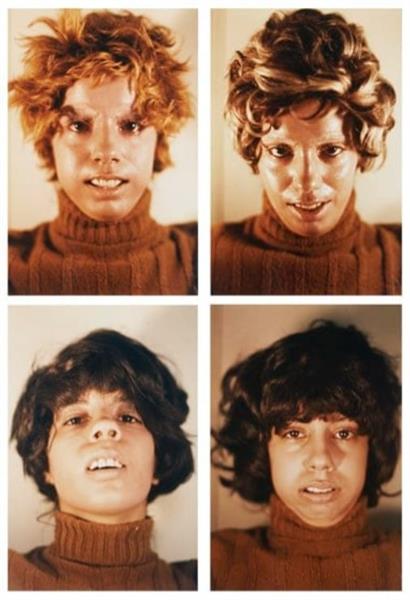
- Deliberate quotation of art history — Contemporary painting is full of borrowed compositions, cited styles, parodied genres. Appropriation is not theft but argument: Cindy Sherman photographs herself in the poses of Old Master portraits; Neo Rauch paints in the style of Socialist Realism with surrealist imagery inserted. The quotation marks are visible and intentional.
- Street-art clarity and graphic boldness — Work derived from graffiti, stencil and mural traditions — Banksy, Kaws, Shepard Fairey — retains the visual logic of its origins: clean edges, flat colour, instant legibility at distance. In a gallery context this legibility reads as a provocation: art that does not ask you to work to see it.
Anecdotes and curiosities
Gerhard Richter destroyed several months of work in 1976 when he scraped and smeared a nearly-complete group of large abstract paintings. He had been developing the squeegee technique since the early 1970s — pulling a house painter's squeegee across wet paint to produce veils and smears that hovered between image and abstraction — and the destruction was part of his working process rather than an accident. Richter documents his destroyed work in his *Atlas*, the enormous collection of photographs, sketches and newspaper clippings he has maintained since 1962, which is itself now considered a major work.
**Banksy's *Girl with Balloon* self-destructed moments after selling for £1.04 million at Sotheby's London in October 2018.** A shredder built into the base of the frame activated as the hammer fell, partially destroying the canvas. Sotheby's confirmed they had no prior knowledge. The destroyed — and now renamed *Love Is in the Bin* — work subsequently sold in 2021 for £18.6 million, making the self-destruction an artwork in itself and its own market record. Banksy posted a photograph of the event with the caption: "Going, going, gone."
Kerry James Marshall spent years being told his paintings of Black figures were too dark — literally. Early in his career, museum curators and collectors struggled to read the figures in his paintings because he renders Black skin at its full tonal depth, refusing the lightening that traditional figurative painting applied to non-white subjects to make them legible on canvas. Marshall refused to adjust his palette. His 2016–17 retrospective *Mastry*, at the Museum of Contemporary Art Chicago, the Met Breuer and the Museum of Contemporary Art Los Angeles, settled the argument: the paintings are among the most technically accomplished and historically important figurative works of the last fifty years.
**Ana Mendieta made her *Silueta* series between 1973 and 1980 by pressing her body into the earth and photographing the traces.** Working in Iowa and then in Mexico and Cuba, she cut her silhouette into mud, grass, sand and stone; lit her outline with gunpowder and fire; filled the depression with flowers and water. The resulting photographs — never paintings in the traditional sense, but the same ontological territory as painting — document the body's relationship to landscape with an urgency that no studio practice could have produced. She died in 1985 in circumstances that remain legally unresolved.
Legacy and influence
Contemporary Art's legacy is, by definition, still being written — many of its most important practitioners are alive and working. But several lines of influence are already clear enough to name.
The most consequential is the globalisation of the art world itself. The biennial and art-fair circuit has redistributed the geography of art: Lagos-based painting, Beijing abstraction, Brazilian Neo-Concretism and Indian contemporary art now circulate through the same international market that once existed almost exclusively for Western European and North American work. El Anatsui's bottle-cap installations, Njideka Akunyili Crosby's photo-collage paintings, Liu Xiaodong's social realist canvases — these are not footnotes to a Western canon but full participants in a genuinely global conversation.
A second legacy is the restoration of painting's complexity. The 1970s declared painting dead — too burdened by its history, too complicit in its market, too medium-specific in an era that demanded dematerialisation. Contemporary painting answered by becoming more self-aware rather than less material. Richter, Marshall, Cecily Brown, Neo Rauch, Jenny Saville — none of them pretend that painting is innocent, but all of them insist that it remains irreplaceable.
Finally, Contemporary Art has permanently changed the question of who art is for. Street art, public installation, social media dissemination of image-based work — the assumption that serious art lives in white-cube galleries for trained viewers has been comprehensively challenged. Whether that challenge has been successfully met is still an open question, which is precisely where the most interesting work of the next generation will be made.
6 artists in this movement
Frequently asked questions
What counts as 'Contemporary Art'?
Contemporary Art generally refers to art made from roughly 1970 to the present, though the exact boundary shifts with context. It differs from 'modern art' (typically 1860s–1970s) in that it makes no claim to a coherent style or movement — it is defined by its moment rather than its visual approach. On this site, it gathers the painters currently active or recently working who do not fit neatly into earlier movements.
Is there any unifying idea behind Contemporary Art?
Rather than a unified style, Contemporary Art shares a set of shared conditions: full knowledge of art history and a self-conscious relationship to it; openness to any medium or material; engagement with identity, politics and cultural history as subject matter; and circulation through a global market and exhibition system that did not exist before the 1980s. If there is a single common factor, it is self-awareness — most contemporary work knows it is art and reflects on what that means.
Why is Banksy considered a serious artist?
Banksy's work raises genuine questions about public space, the art market, political image-making and institutional authority that place it squarely within the tradition of conceptual and political art — Situationism, institutional critique, Pop Art. Whether his answers are original enough to justify his market position is debated, but the questions are real. His *Girl with Balloon* self-destruction (2018) was among the most conceptually precise art actions of the decade. That it made the work more valuable rather than less is its own argument about the system he claims to critique.
Who is Kerry James Marshall and why does his work matter?
Kerry James Marshall (born 1955, Birmingham, Alabama) is among the most significant figurative painters working in English. Since the 1980s he has painted monumental scenes of Black American life — leisure, domesticity, community — in the compositional language of Western painting from Vermeer to Manet, with figures rendered at their full tonal depth. The work reclaims art history's visual language for subjects it systematically excluded. His 2016–17 retrospective *Mastry* made his centrality undeniable. Technique and argument are equally matched, which is rare.
What is Gerhard Richter's squeegee technique?
Richter developed the technique from the early 1970s onward: he applies large quantities of paint to the canvas and then pulls a wide squeegee (a rubber blade like a giant windshield wiper) across the wet surface, smearing and layering colours to produce veils, dragged passages and accidental combinations that no brush could achieve. The results are simultaneously abstract and photographic in feel — they read like blurred or overexposed images. The technique is now one of the most recognisable surface qualities in contemporary painting.