John Everett Millais
The Pre-Raphaelite prodigy whose obsessive naturalism gave way to loose, lucrative society portraiture.
Style and technique
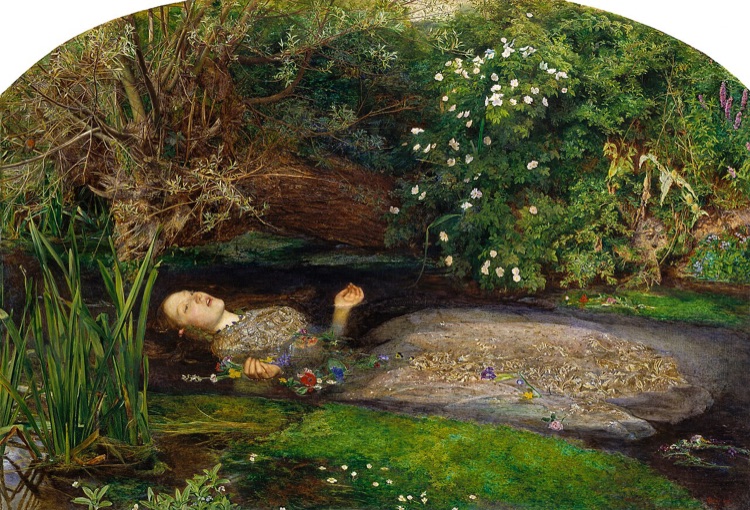
As a founding member of the Pre-Raphaelite Brotherhood in 1848, he practiced a near-obsessive naturalism, rejecting the loose brushwork and generalized forms taught at the Royal Academy in favor of jewel-like clarity, saturated color, and forensic attention to botanical and material detail. For Ophelia, he spent nearly five months painting directly beside the Hogsmill River in Surrey, recording every reed, willow leaf, and drifting blossom with such precision that naturalists have used the canvas to identify individual plant species. This early method demanded punishing patience: models held difficult poses for months, backgrounds were built stroke by stroke from direct observation rather than convention, and finished surfaces achieved an almost hallucinatory sharpness meant to make viewers see the natural world, and the sacred or literary subjects placed within it, as though for the first time.
By the 1860s, however, Millais had begun shifting toward a broader, faster, far more fluid technique, and the change accelerated after his marriage in 1855. Portraits and sentimental genre scenes replaced the slow-built Pre-Raphaelite compositions; brushwork loosened into confident, painterly passages closer to Reynolds or the old masters he had once rejected. This later manner suited both his prodigious output and his enormous popularity: he could now produce elegant, emotionally direct society portraits and crowd-pleasing narrative pictures at a pace the earlier method never allowed.
Across six decades Millais moved fluently between history painting, literary subjects, portraiture, landscape, and sentimental genre, proving himself equally capable of the era's most minutely observed canvas and its most reproduced, best-loved image.
Life and legacy
John Everett Millais was a prodigy almost without precedent in British art. Born in Southampton in 1829 to a well-off Jersey family, he showed such precocious talent that in 1840, at just eleven years old, he was admitted to the Royal Academy Schools as its youngest-ever student, where fellow pupils nicknamed him "The Child." Within the decade he had won nearly every medal the schools offered.
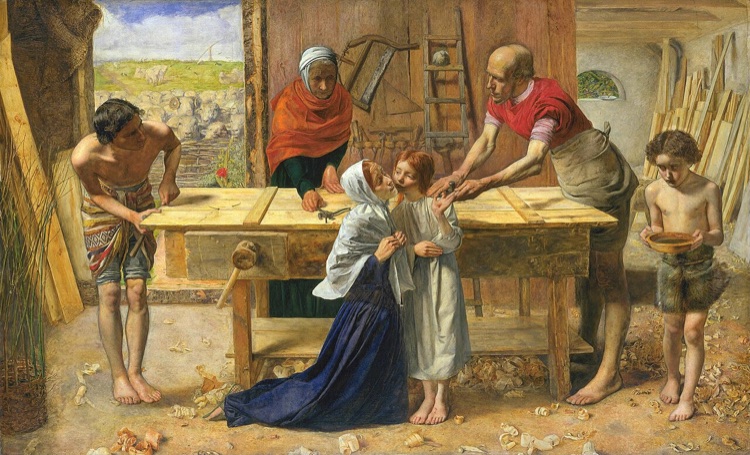
In 1848, at nineteen, Millais co-founded the Pre-Raphaelite Brotherhood with William Holman Hunt and Dante Gabriel Rossetti, a secret society of young artists determined to overthrow what they saw as the formulaic, brown-toned conventions descending from Raphael and to reclaim the vivid color and sincerity of art before him. Their manifesto collided head-on with public taste in 1850, when Millais exhibited Christ in the House of His Parents, showing the young Jesus in Joseph's carpentry workshop just after cutting his hand. Charles Dickens, writing in Household Words, savaged the picture's unidealized realism, calling the Holy Family a collection of hideous, diseased-looking figures fit for "the lowest gin-shop in England."
His most celebrated work followed in 1851-52. For Ophelia, Millais painted the drowning heroine's riverbank setting on location, then had the model Elizabeth Siddal pose for months in a bathtub of water kept warm by oil lamps in his London studio. The lamps guttered out unnoticed during one long sitting; Siddal, too uncomplaining to break the pose, emerged badly chilled and fell seriously ill, and her father reportedly threatened Millais with legal action to cover the resulting doctor's bills.
Millais's life took an even more scandalous turn after he met Effie Gray, wife of the critic John Ruskin, the Pre-Raphaelites' most powerful champion. Invited to Scotland in 1853 to paint Ruskin's portrait, Millais and Effie fell in love; her marriage, never consummated, was annulled in 1854, and she married Millais the following year amid a very public scandal. The union, and Millais's rapidly growing family of eight children, coincided with his move away from Pre-Raphaelite rigor toward faster, more lucrative society portraits and sentimental genre scenes, a shift some former allies condemned as a betrayal of the Brotherhood's ideals.
Millais became one of the wealthiest and most sought-after painters in the country, was created a baronet in 1885, and in 1896 was elected President of the Royal Academy. He died of throat cancer only months into that presidency, on 13 August 1896, and was buried in St Paul's Cathedral.
Five famous paintings
Christ in the House of His Parents 1849-50
Set inside a cramped carpenter's workshop, this early masterpiece shows the boy Christ displaying a wounded palm, a splinter foreshadowing the stigmata, while the Virgin Mary comforts him and Saint Anne draws out the offending nail with pincers. Millais studied a real carpenter's shop from life, even buying sheep's heads from a butcher to paint the background flock accurately. The picture's harsh realism scandalized Victorian audiences: Charles Dickens branded it blasphemous, ridiculing the Holy Family as hideous and diseased. The uproar made the twenty-year-old Millais one of the most talked-about painters in England.
Ophelia 1851-52
Millais's best-known painting shows Shakespeare's Ophelia drowning amid the flowers she gathered, drifting downstream while singing before she sinks. He painted the Hogsmill River setting near Ewell over almost five months, recording willows and wildflowers with such fidelity that botanists still identify individual species in the canvas. Model Elizabeth Siddal lay for weeks in a water-filled bathtub warmed by lamps beneath it; when the lamps went out unnoticed, she caught a severe chill, and her father threatened legal action over the resulting medical bills. The result remains one of art's most hypnotic images of beauty entwined with death.
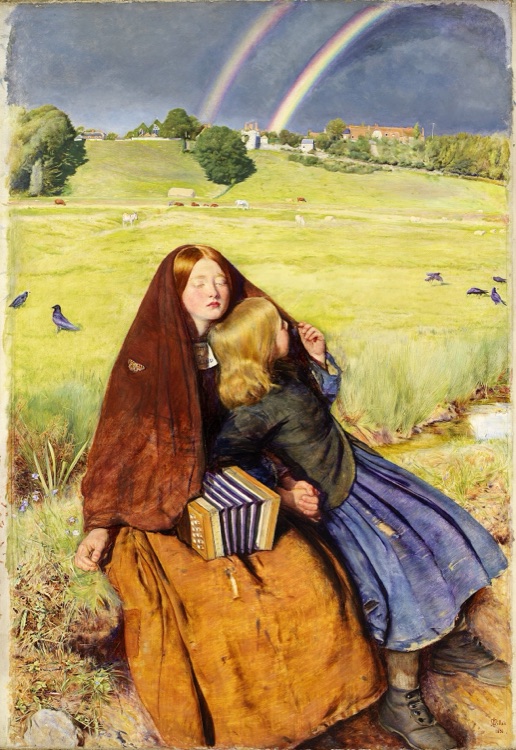
The Blind Girl 1854-56
Two sisters rest by a roadside near Winchelsea after a passing storm: the elder, blind and a professional beggar, cradles a concertina and wears a sign reading "Pity the Blind," while her younger sister gazes up at a double rainbow neither can fully share, since a butterfly has alighted, unseen by the blind girl, on her own shawl. Painted with the Brotherhood's characteristic care for weather, texture, and the exact colors of rain-washed grass, the picture channels early Pre-Raphaelite precision into a tender, accessible narrative of poverty and sensory loss, pointing toward the more sentimental genre scenes Millais would increasingly favor.
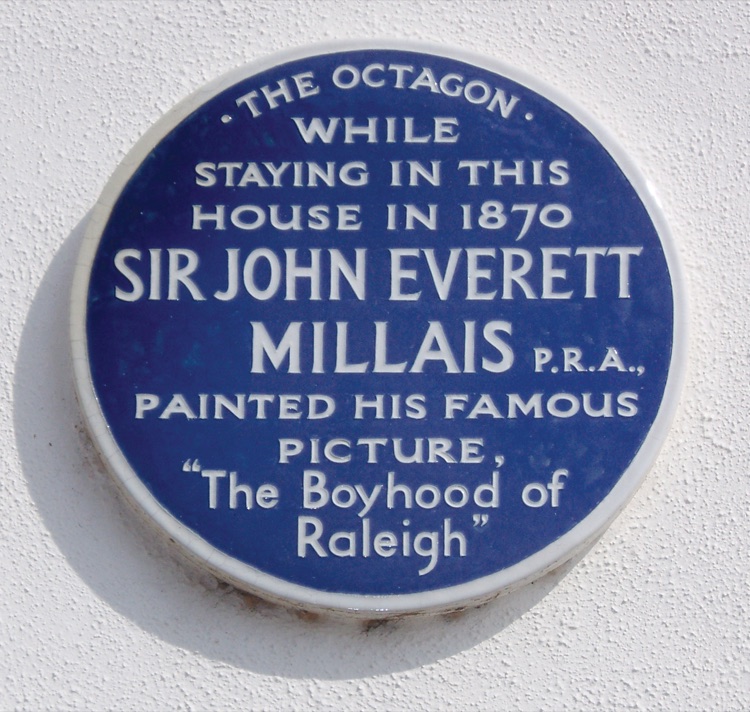
The Boyhood of Raleigh 1870
On a beach at Budleigh Salterton in Devon, a weathered Genoese sailor gestures out to sea, spinning tales of distant lands to two rapt boys, one of them the future explorer Walter Raleigh. Millais's own sons modeled for the enthralled young listeners, and the painting's warm, adventurous nostalgia for English seafaring made it enormously popular, later reproduced in schoolbooks for generations of British children. Looser and more atmospheric than his early Pre-Raphaelite work, the canvas shows Millais fully at ease in the broader, narrative-driven, crowd-pleasing mode that increasingly defined his prosperous later career.
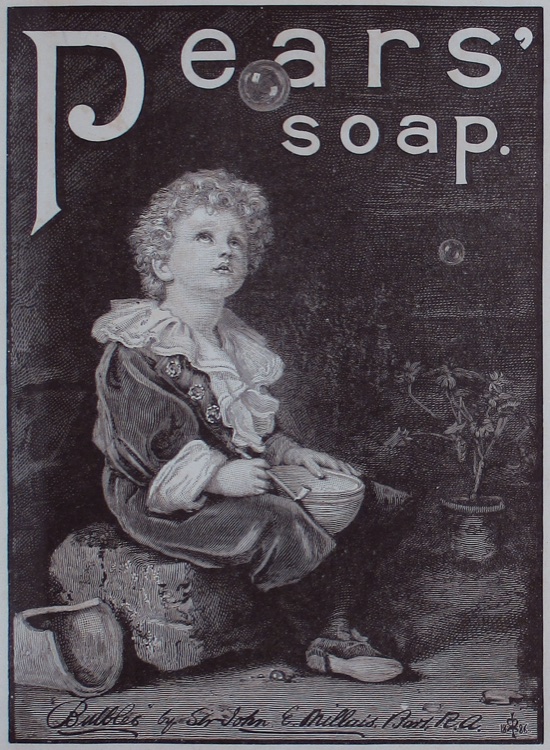
Bubbles 1886
A curly-haired boy, Millais's own grandson Willie James, gazes upward at a soap bubble balanced on a stick, an image of childhood innocence rendered in a warm, painterly softness far removed from the hard-edged detail of his Pre-Raphaelite years. Sold to the Illustrated London News, the picture was bought by Pears Soap, which added its product into the composition and turned it into one of the most famous advertisements of the Victorian age. The transformation of a tender family portrait into a commercial slogan became, for critics, the ultimate emblem of Millais's drift from PRB idealism into lucrative popular sentiment.